How to Dispose of Kitchen Knives in 5 Easy Steps
Getting rid of an old kitchen knife can be tricky: you want to keep everyone safe, but you may not know whether to trash, recycle, or donate it. You’re not alone—many people struggle with how to dispose of kitchen knives safely.
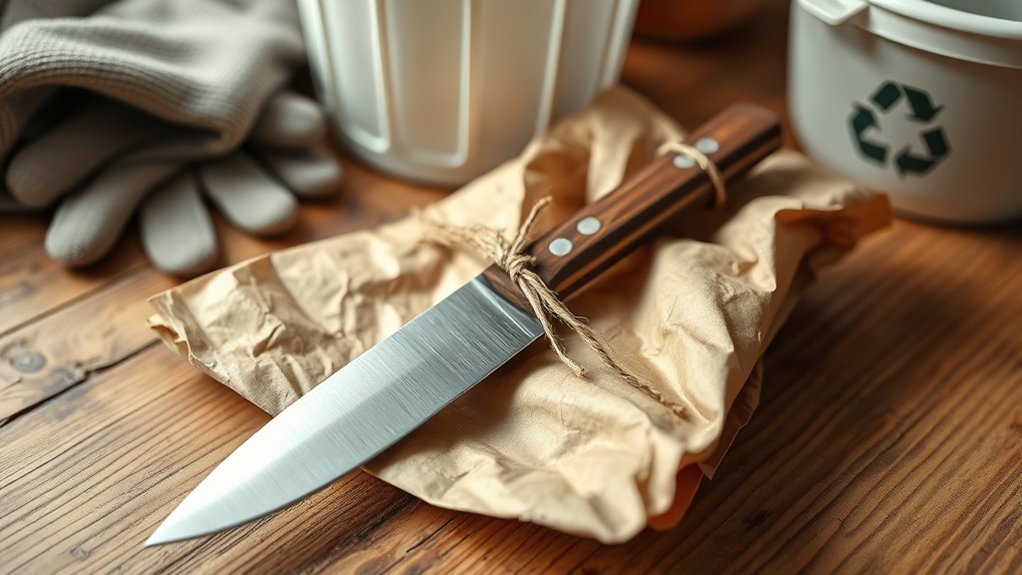
First, wrap each kitchen knife in thick cardboard, newspaper, or a towel, then tape it tightly so the blade and tip stay fully covered.
Next, decide whether to trash, recycle, or donate it based on condition and local rules.
Pack wrapped knives in a rigid box or container and label it sharp.
If the knife still works, clean and donate or recycle it.
Avoid tossing loose blades anywhere, and you’ll see a few smarter options ahead.
Key Takeaways
- Wrap each knife blade completely in cardboard, newspaper, or a towel, and tape it securely.
- Check whether your local rules allow wrapped knives in the trash, or require special sharps disposal.
- Recycle stainless steel knives only at facilities that accept metal cutlery.
- Donate clean, usable knives to thrift stores, shelters, culinary schools, or community kitchens.
- Label and pack knives in rigid, sealed containers so trash handlers are protected from sharp edges.
Wrap Kitchen Knives Safely
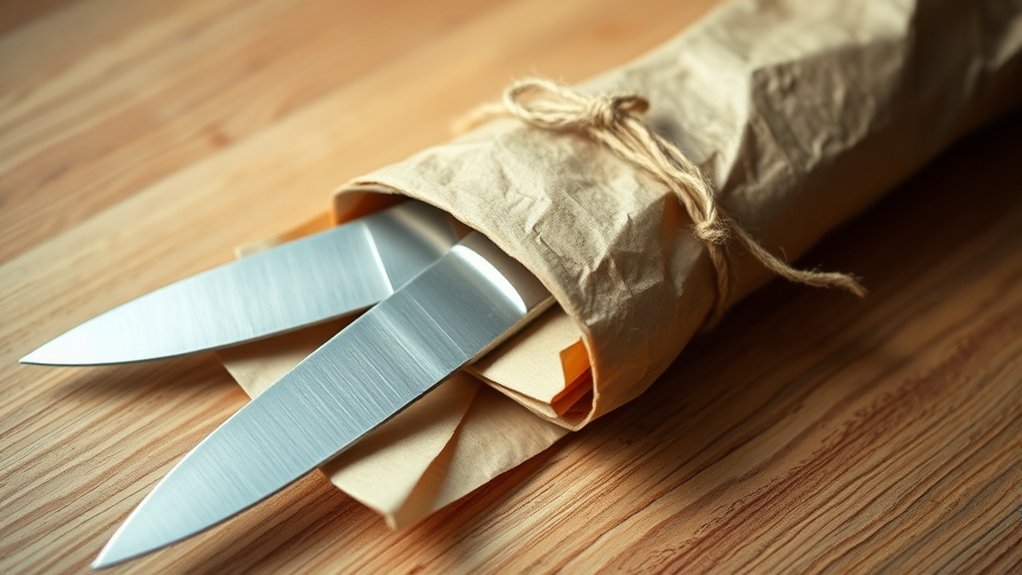
Before you throw away kitchen knives, wrap each blade securely so no one gets cut. Use thick cardboard, several layers of newspaper, or a towel to cover the edge completely, then tape it tight so the wrapping won’t slip. If the knife is especially sharp, add a second layer and label the bundle clearly. You should keep the point and edge fully hidden before you move it to a bin or drop-off point. Never leave a wrapped knife loose in a bag where it can shift and puncture the material.
Handle each knife one at a time, and keep your other hand away from the blade. If you still use some knives, separate the discard pile from your blade sharpening supplies and knife storage area so nothing gets mixed up. A secure wrap protects you, anyone cleaning up, and workers who handle the trash later.
Decide Whether To Trash, Recycle, Or Donate
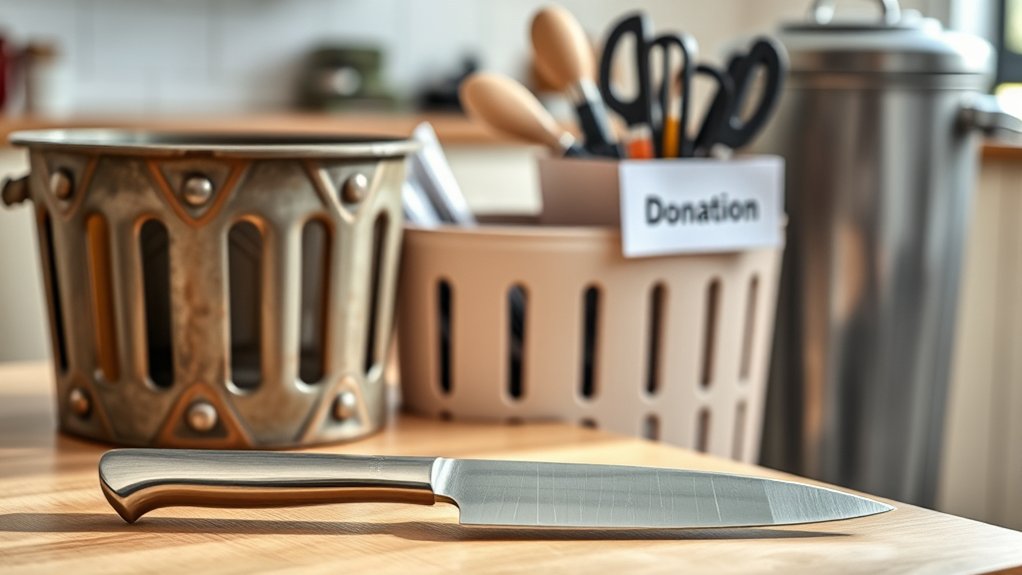
Once your knives are safely wrapped, decide the best disposal path based on their condition and your local rules. If a blade is chipped, bent, or beyond knife sharpening and blade rust removal, trash it only if your city allows wrapped sharps in household waste.
If the knife still works, ask whether a recycling center accepts stainless steel cutlery. If it’s clean, sturdy, and safe to handle, donate it to a thrift store, shelter, or culinary program that welcomes kitchen tools.
| Condition | Best choice | Why |
|---|---|---|
| Severely damaged | Trash | Unsafe to reuse |
| Stainless steel | Recycle | Metal may be reclaimed |
| Usable, clean | Donate | Extends useful life |
| Rusty but restorable | Keep or repair | Try cleaning first |
| Local ban on trashing | Follow rules | Avoid fines |
Check donation policies before you drop anything off, since some groups reject mixed sets or damaged blades.
Pack Knives For Safe Trash Pickup
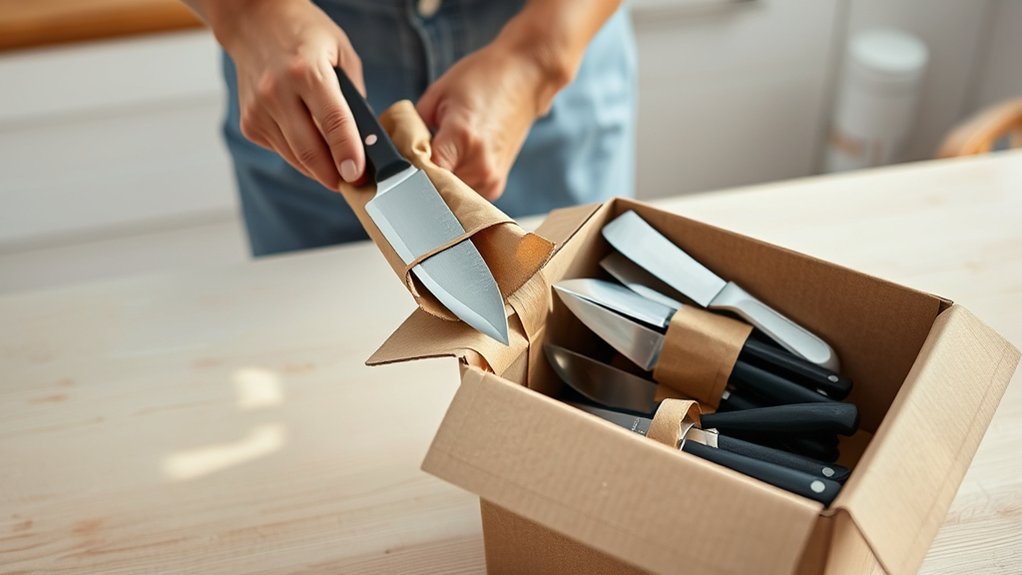
If you’re throwing knives away, wrap each blade so nobody gets cut during trash pickup. Use several layers of cardboard, thick newspaper, or heavy tape to cover every sharp edge, then secure the wrap so it can’t slip off. Keep the point and edge fully hidden, and place each wrapped knife in a rigid container or a taped box before you set it out. Label the package “sharp” so trash handlers know to use caution.
If you’re discarding a set, separate the knives so they don’t rub together and break through the wrapping. Don’t toss loose blades into a bin or bag. Check the blade material first; brittle steel or ceramic can snap, while softer metals may bend and expose a tip. If a knife still holds an edge from recent knife sharpening, double-wrap it and reinforce the handle end. Seal everything tightly, then put the package in the trash only on pickup day.
Donate Or Recycle Usable Knives
Donate any kitchen knives that are still in good working condition instead of sending them to the trash. You can give them to a neighbor, community kitchen, thrift store, or culinary school that accepts kitchen tools. Before you donate, wash and dry each blade, check the handle for cracks, and make sure the edge is usable. If the knives only need maintenance, consider knife sharpening so someone else can use them safely and effectively.
When donation isn’t possible, recycle the knives through a metal recycling program or a scrap yard that takes stainless steel and other blade metals. Wrap each knife securely and label the bundle before transport. Wear safety gloves while handling the blades, even if they seem dull. Call ahead to confirm what the drop-off site accepts, because rules vary by location. By choosing donation or recycling, you keep useful materials in circulation and reduce waste without risking unnecessary disposal.
Avoid These Knife Disposal Mistakes
Don’t toss kitchen knives loose into the trash, recycling bin, or donation box, because an exposed blade can injure anyone who handles it. Don’t wrap it in thin paper or a flimsy bag; the blade can tear through.
Instead, sheath each knife, then tape the sheath shut and secure the whole bundle in cardboard or heavy plastic. If you’re replacing a dull knife, consider knife sharpening before disposal, since a sharper edge can be easier to control during packing and transport.
Don’t mix knives with general recyclables unless your local program accepts metal cutlery. You also shouldn’t leave knives in drawers without knife storage, where someone can reach in and get cut later.
Finally, don’t assume a broken handle makes the knife safe. Treat every blade as sharp, contain it fully, and label the package if needed so waste workers know to handle it carefully.
Frequently Asked Questions
Can Old Kitchen Knives Be Sharpened Before Disposal?
Yes, you can sharpen old kitchen knives before disposal, but only if you plan to keep using them briefly. If the blade is too damaged, sharpening won’t help much.
Focus on knife sharpening only when it improves handling, not when you’re preparing for disposal safety. After that, wrap the blade securely, label it, and dispose of it carefully so you don’t risk cuts during handling or trash collection.
Are Ceramic Knives Disposed of Differently Than Metal Ones?
Yes—ceramic knives usually need different handling than metal ones. You can’t recycle them with regular Ceramic recycling streams, so check local waste rules before tossing them. Metal knives often fit standard Metal disposal methods, but you should wrap and label them to protect handlers. For both, you’ll want to tape the blade, secure it in cardboard, and place it in the proper bin or drop-off site safely.
Can Knife Sheaths Be Reused for Other Blade Storage?
Yes, you can reuse knife sheaths for other blade storage if they still fit securely and stay clean. Check Knife sheath maintenance first: wash, dry, and inspect for cracks or looseness before using them again.
If a sheath no longer protects the blade, choose Alternative storage options like blade guards, magnetic strips, or wrapped cloth sleeves. You’ll keep your blades safer and your storage more organized this way.
Should Rusty Knives Be Cleaned Before Recycling?
Yes, you should clean rusty knives before recycling, like clearing mud from a shoe before you walk indoors. You’ll make the recycling process safer and smoother by removing loose rust, grease, and food residue first.
Use rust removal methods like vinegar, baking soda, or steel wool, then dry the blade well. Check your local recycling rules, too, since some facilities won’t accept knives unless you package them securely.
What Local Rules Affect Knife Disposal Methods?
You should check local regulations first, because knife disposal rules can vary by city or county. Some places let you wrap blades and put them in the trash, while others require hazardous waste drop-offs or special metal recycling.
You’ll also need to follow any curbside collection limits, since sharp items may be banned. Call your waste authority, and don’t assume one city’s rules apply everywhere, because they often don’t.
Conclusion
By now, you’ve got the know-how to handle old kitchen knives without risking a nasty cut. Whether you’re wrapping them, recycling them, or donating them, you’re making a smart, safer choice.
Think of it as your own little Excalibur moment: you’re deciding when a blade should stay in the story and when it’s time for it to rest. Don’t rush the last step. Dispose of kitchen knives carefully, and you’ll help keep your kitchen and everyone in it protected.