
How to Unclog a Kitchen Sink in 5 Easy Steps
A clogged kitchen sink can bring meal prep and cleanup to a frustrating halt. If you’re struggling to get the water flowing again, you’re not alone—many people deal with stubborn sink clogs. These simple steps can help you unclog a kitchen sink and get back to your routine.
Start by removing the sink strainer and drain cover, then clear away any food, grease, or hair buildup.
Next, pour boiling water slowly down the drain to loosen light clogs.
If that doesn’t work, add baking soda and vinegar, wait, then rinse with hot water.
Use a plunger to push the blockage through.
If it’s still clogged, remove and clean the P-trap, and you’ll see the details that make each step work best.
Key Takeaways
- Remove the sink strainer and drain cover, then clear away visible food, grease, hair, and debris.
- Pour boiling water slowly down the drain to loosen grease and light buildup.
- Add baking soda followed by vinegar, let it fizz, then flush with hot water.
- Use a plunger to create pressure and dislodge the clog, sealing the other drain if needed.
- If the sink is still blocked, remove and clean the P-trap, then reassemble and check for leaks.
Clear the Sink Strainer and Drain Cover

Start by removing the sink strainer or drain cover so you can see what’s blocking the opening. Lift out any basket, stopper, or other kitchen sink accessories and set them aside on a towel.
Check the rim and underside for food scraps, grease, hair, or soap buildup. Use your fingers, a paper towel, or a soft brush to wipe away visible debris.
Wipe the rim and underside free of food, grease, hair, and soap buildup.
If the cover has slots or holes, run water through them in the sink to free trapped particles. For stubborn buildup, use simple drain cleaning tools like a toothbrush, small nylon brush, or plastic pick to reach tight edges without scratching the finish.
Inspect the drain opening itself and clear any gunk sitting just inside the throat. Put each piece back once it’s clean and dry.
Keeping these parts clear helps water move better and makes the rest of the unclogging process easier.
Flush the Drain With Boiling Water
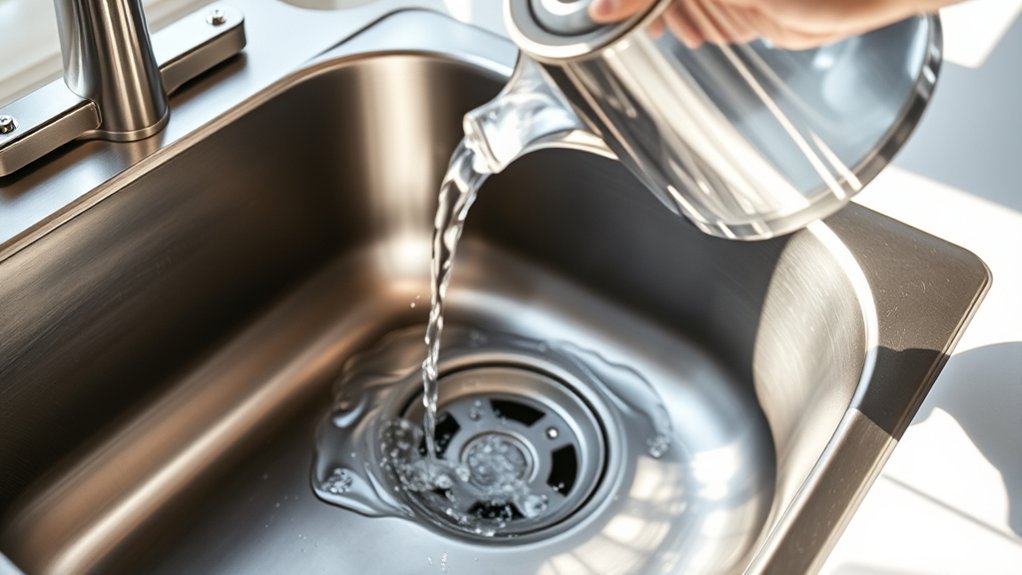
With the strainer and drain cover cleaned, pour a kettle of boiling water slowly down the drain in a steady stream. Let the heat travel through the pipe and loosen grease, soap film, and light buildup that may be slowing water flow. If the sink begins to drain better, repeat the flush once more after a minute. Keep your face and hands clear of the basin, and don’t splash the water on nearby fixtures.
This simple step fits into regular drain cleaning and can support basic Plumbing maintenance without harsh chemicals. Use it only when you’re confident your pipes can handle high heat, especially if you have metal plumbing.
If the water still backs up after this flush, stop here and move on to the next troubleshooting step. A careful rinse with boiling water often gives you quick feedback about how blocked the line really is, and it helps prepare the drain for the next method.
Try Baking Soda and Vinegar
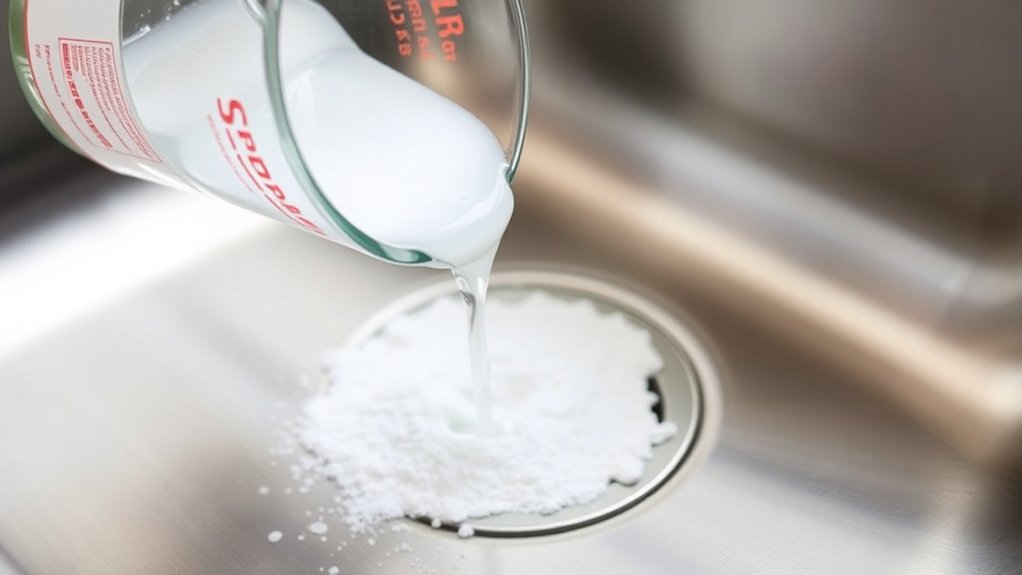
Pour about half a cup of baking soda into the drain, then follow it with a cup of vinegar. You’ll see fizzing as the Chemical reactions loosen greasy buildup and food residue.
Let it work for 10 to 15 minutes, then rinse with hot water to wash away the softened clog. This simple mix can help you avoid harsh cleaners, which supports a better Environmental impact and keeps your kitchen routine greener.
| Step | What You Do |
|---|---|
| 1 | Pour in baking soda |
| 2 | Add vinegar slowly |
| 3 | Wait for fizzing |
| 4 | Rinse with hot water |
| 5 | Check the drain flow |
If the water drains better, you’ve likely broken up a minor blockage. You can repeat the process once more if needed, but don’t overdo it.
Use this method before reaching for stronger products, and you’ll keep things easy, affordable, and cleaner overall.
Use a Plunger on the Kitchen Sink
If baking soda and vinegar didn’t clear the clog, a plunger can give the drain the extra push it needs. Fill the sink enough to cover the plunger cup, then place the plunger over the drain and seal it tightly.
Use quick, steady thrusts to build pressure, then lift and repeat. Proper plunger technique helps you avoid splashing and improves Plunger effectiveness.
If you have a double sink, block the other drain with a wet cloth so the force stays focused where you need it.
- Keep the rim sealed for every push.
- Use firm, rhythmic strokes instead of wild jabs.
- Stop and check the drain after several tries.
If water starts moving, run warm water to see whether the clog cleared. You may need a few rounds, but patience pays off.
If the sink still won’t drain, move on to the next fix.
Remove and Clean the P-Trap
Next, remove and clean the P-trap under the sink, since clogs often collect there. Place a bucket beneath it, then loosen the slip nuts by hand or with pliers. Lower the trap carefully and empty the water inside.
Use a brush, rag, or bottle brush to clear out grease, food scraps, and gunk stuck in the curve. Rinse the parts with warm water and check the washers for cracks or wear during your P trap inspection. If you spot damage, replace the seals before reassembling.
Tighten the connections snugly, but don’t overtighten them, or you could damage the threads. Once everything’s back in place, run water to test the drain and watch for leaks. If the sink still drains slowly, the blockage may be deeper in the line, and you may need pipe replacement or help from a plumber.
Frequently Asked Questions
How Do I Prevent Kitchen Sink Clogs in the Future?
You can prevent kitchen sink clogs by practicing regular Drain maintenance and being careful about what goes down the drain. Scrape food into the trash, avoid pouring grease, and use a sink strainer. Flush the drain with hot water weekly. If you notice slow draining, schedule a Pipe inspection before buildup worsens. These simple habits help you keep water flowing freely and reduce messy backups.
Can a Garbage Disposal Cause Slow Draining?
Yes, your garbage disposal can slow the drain, like a sink swallowing mud. When food scraps, grease, or fibrous bits build up, water moves like syrup.
With regular garbage disposal maintenance, you can keep the blades and lines clear. If it still drains slowly, try disposal troubleshooting: run cold water, check for jams, and clean the trap.
You’ll spot issues fast and keep your sink flowing.
What Household Items Should I Avoid Pouring Down the Drain?
You should avoid pouring grease, oil, coffee grounds, eggshells, pasta, rice, fibrous scraps, and starchy food down the drain. You should also skip chemical cleaners unless you really need them, because they can damage pipes and the disposal.
Many DIY remedies work better, like hot water, baking soda, and vinegar, but don’t use them on severe clogs. If you stay careful, you’ll reduce backups and keep water flowing freely.
When Should I Call a Plumber for a Clogged Sink?
If your sink keeps clogging, you should call a plumber when plunging, snaking, or drain cleaning doesn’t clear the blockage, or when water backs up into other fixtures. A stitch in time saves nine.
You’ll also want professional help if you smell sewage, hear gurgling, or suspect damaged pipes. Ask for plumbing inspections to catch hidden issues early and prevent costly repairs before they spread.
How Can I Tell if the Clog Is in the Main Line?
You can tell the clog’s in the main line if multiple drains back up at once, toilets gurgle, or water rises in places far from the sink. That points to a root blockage or pipe corrosion deeper in your plumbing.
If plunging or clearing the trap doesn’t help, you’re likely dealing with a main line issue. In that case, you should call a plumber before the problem worsens.
Conclusion
Now that you’ve cleared the strainer, flushed the drain, tried a fizzy fix, worked the plunger, and given the P-trap a thorough once-over, your kitchen sink should be flowing freely again. If things are still acting a little stubborn, don’t worry. You’ve got a solid head start on the next step.
With a few simple moves, you can keep your drain happy, your routine smooth, and your sink ready for whatever comes next. These steps can help you unclog a kitchen sink and keep it flowing freely.