How to Get Rid of Ants in the Kitchen Step by Step
Ants marching across your kitchen can make it hard to relax, especially when they keep coming back. You’re not alone—many people struggle to keep these persistent pests out. This step-by-step guide to getting rid of ants in the kitchen can help you tackle the problem and find the right solutions.
Start by following ant trails with a flashlight to find where they’re coming from, then wipe trails with soapy water or vinegar.
Clean counters, sweep crumbs, rinse containers, and keep food in sealed airtight storage.
Fix leaks, dry sinks, and empty trash often.
Place bait near trails, away from kids and pets, and seal cracks around doors, windows, pipes, and appliances.
If ants keep coming back, you’ve got more steps ahead.
Key Takeaways
- Follow ant trails to find entry points, nests, and food sources in and around the kitchen.
- Clean counters, floors, sinks, and pet areas; remove crumbs, spills, standing water, and trash immediately.
- Store food in sealed containers and keep pantry items, dishes, and pet bowls tightly closed or cleaned.
- Seal cracks, gaps, and openings around windows, doors, pipes, baseboards, and appliances with caulk or weatherstripping.
- Place ant bait along trails, wipe scent marks with vinegar or soapy water, and call pest control if ants persist.
Identify Where the Ants Are Coming From
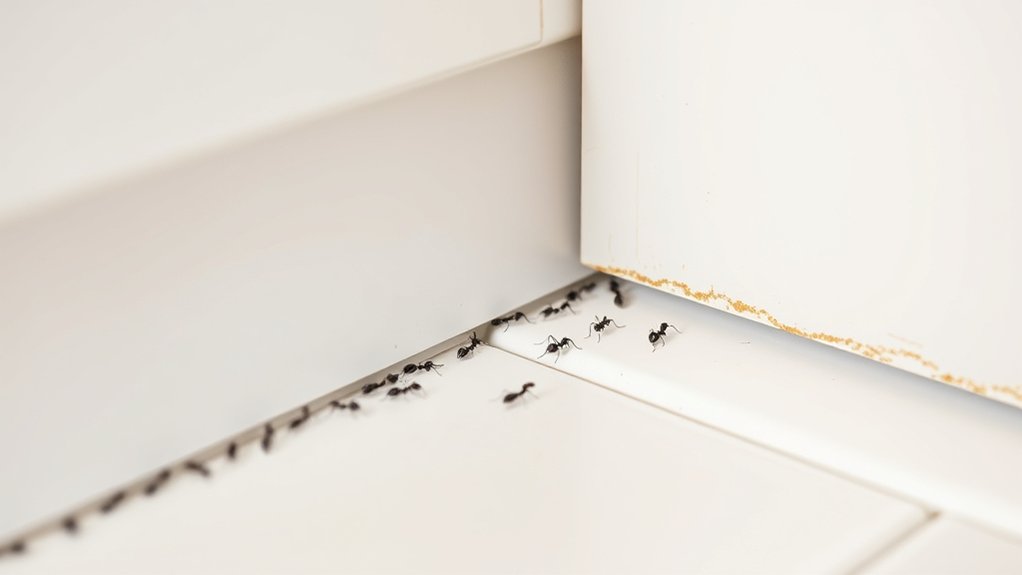
Before you can get rid of ants in the kitchen, you need to find where they’re getting in. Watch their trails closely and follow them back to the source. Check baseboards, window frames, sink edges, cracks in tile, and gaps around pipes or appliances.
Use a flashlight and move slowly so you don’t lose the line. Ant behavior often shows you the shortest route between food, shelter, and the nest, so pay attention to repeated paths and sudden turns.
Use a flashlight and move slowly so you don’t lose the line.
If you see more than one trail, note colony patterns. Different lines can reveal separate entry points or satellite nests. Mark each spot with tape so you can inspect it later.
Outside, look for soil mounds, pavement gaps, or branches touching the house. Once you know where they’re entering, you can target the problem instead of chasing random scouts around the kitchen.
Clean Up Food and Water Sources

Next, remove anything that’s attracting the ants in the first place. Wipe counters, tables, and stovetops after every meal, and sweep crumbs from floors and under appliances. Rinse sticky jars, cans, and utensils before you set them in the sink or recycling bin.
Keep food storage tight by sealing cereal, sugar, pet food, and snacks in airtight containers, and don’t leave produce or baked goods exposed on the counter. Check pantry shelves for spills, then clean them immediately.
You should also cut off water sources. Fix leaking faucets, drippy pipes, and damp spots under the sink, and dry the area after washing dishes. Empty pet bowls when you’re done feeding, and avoid leaving standing water in the sink overnight.
If you use a dish rack, empty it regularly so moisture doesn’t collect. By removing food and water, you make your kitchen far less inviting to ants and help prevent new ones from settling in.
Remove Ant Trails in the Kitchen

First, follow the ants to see where they’re coming from and where they’re going. Then wipe the trail with vinegar to remove their scent path and make it harder for them to return. Finally, seal any cracks or gaps so they can’t use the same entry points again.
Trace and Locate Trails
If you want to stop ants at the source, trace their trail to find where they’re entering and what’s drawing them in. Follow the line slowly, and watch baseboards, counters, sink edges, and gaps near appliances.
Look for the first ant and the last, because those points often reveal entry routes and nesting clues. Use ant species identification and ant behavior analysis to narrow the problem; different ants move differently and return for different foods.
| What you see | What it means |
|---|---|
| Single-file march | Active trail |
| Split paths | Search pattern |
| Repeated doorway visits | Entry point |
Once you map the route, mark it mentally so you can clean and block it next.
Wipe With Vinegar
Mix equal parts white vinegar and water in a spray bottle, then wipe down the ant trail, countertops, sink edges, and any spots where you saw activity. You’ll remove the scent markers ants use to follow each other, which helps break the pattern fast.
Spray lightly, let it sit for a few seconds, and wipe with a clean cloth. Reapply after meal prep or spills if needed.
Vinegar works as one of the simplest natural repellents, and it fits well with other pest control methods because it’s cheap, safe for most kitchen surfaces, and easy to repeat. Keep your cloth fresh and change the solution often so it stays effective.
Focus on the exact paths ants use, not just the visible insects, and you’ll make the area far less inviting.
Seal Entry Points
Once you’ve wiped away the trail, seal the entry points so ants can’t come back through the same route. Check baseboards, window frames, sink pipes, and gaps around appliances, because ant behavior often follows tiny cracks and moisture.
Use caulk, weatherstripping, or foam to close openings fast. If you spot repeated traffic, trace the path outside and block access there too. For extra protection, apply Natural repellents near seams and thresholds.
- Fill cracks with caulk.
- Tighten screens and door sweeps.
- Seal pipe openings under sinks.
- Recheck areas after cleaning.
Keep food sealed and counters dry so ants lose interest. When you remove their access, you cut off the route they use to recruit more workers.
Use Safe Ant Baits Indoors
When you need a safer way to tackle ants indoors, use ant baits instead of spraying them directly. Place the bait where you see ant trails, but keep it away from children and pets.
Indoor baiting works because worker ants carry the toxic food back to the nest, which helps eliminate more of the colony. Choose products labeled for kitchen use and follow the directions exactly.
You can use gel stations or enclosed safe traps to reduce mess and exposure. Leave the bait undisturbed, even if it seems like ants are ignoring it at first; they often need time to find it and share it.
Avoid cleaning the area with strong repellents near the bait, since that can discourage ants from feeding. Check the stations daily and replace them as needed until ant activity drops.
Once the ants disappear, remove leftover bait and wipe the area clean.
Seal Cracks and Entry Points
After you’ve handled the ants inside, stop new ones from getting in by sealing the cracks and entry points they use to enter your kitchen. Inspect baseboards, window trim, door frames, and gaps around pipes, then caulk or weatherstrip every opening you find.
Seal kitchen entry points by caulking cracks, weatherstripping gaps, and checking baseboards, trim, doors, and pipes.
This step works best when you match repairs to ant species identification, since some ants trail through tiny seams while others use larger gaps. If you spot a path, clean it first, then apply natural repellents like vinegar or peppermint oil nearby to discourage scouting.
Check screens, vents, and utility lines too, because ants often squeeze through overlooked spaces.
- Use silicone caulk for small cracks
- Add door sweeps to close floor gaps
- Replace torn screens and loose mesh
- Seal pipe openings with foam or caulk
Reinspect after rain or deep cleaning, since shifting materials can reopen routes.
Keep Ants Out of Cabinets and Pantry
Store food in sealed containers to keep ants out. Wipe up spills on shelves as soon as they happen, and check cabinets for tiny cracks or gaps where ants might get in. Seal those entry points, and your pantry will be much less inviting to them.
Seal Food Containers
Seal any opened food in airtight containers to cut off ants’ access to easy meals in your cabinets and pantry. You’ll protect your Food storage and strengthen Pest prevention at the same time.
Choose containers with tight lids, and transfer cereal, sugar, flour, snacks, and pet food right away. Ants can’t chew through sturdy plastic, glass, or metal, so you make their search harder.
- Label containers so you grab ingredients fast.
- Use stackable bins to keep shelves organized.
- Seal bags before placing them inside containers.
- Check lids for cracks or loose fits.
When you store food this way, you reduce temptations and make your kitchen less inviting. Keep every package closed after each use, and you’ll help stop ants from finding a steady food supply.
Clean Shelf Spills
Even tiny spills can draw ants into your cabinets and pantry, so wipe up crumbs, sticky drips, and powdery residue as soon as you spot them. Use a damp cloth or mild cleaner, then dry the shelf so ants don’t get a second chance.
Check jars, boxes, and canisters after you put them away, because leaking lids and torn packages can leave a trail. Keep your shelf organization simple so you can spot messes fast and reach every corner during cleanup.
For spill prevention, place baking supplies, sugars, and cereals on stable trays or bins that catch drips and crumbs. Sweep pantry floors, vacuum shelf edges, and empty the trash often. When you stay consistent, you cut off easy food sources and make your kitchen far less inviting to ants.
Block Entry Cracks
Once you’ve cleaned up food sources, turn your attention to the tiny gaps ants use to get inside. Inspect cabinet seams, baseboards, pipe cutouts, and pantry edges for cracks.
Seal openings with caulk or weatherstripping so you remove their access points and shrink the ant habitat around your kitchen. If you spot a visible trail, wipe it away with soapy water to support trail disruption and make it harder for scouts to return.
- Fill gaps around windows and doors
- Seal holes near plumbing and wiring
- Repair torn screens and loose trim
- Check behind appliances and under sinks
Recheck these areas weekly, since new gaps can form over time. By blocking entry points, you protect stored food and keep ants from settling in.
Handle Ants Around Sinks and Drains
If you spot ants near your sink or drain, wipe up every drop of water and clean the area with soap or vinegar to remove the scent trail they’re following. Then dry the basin, faucet, and counter edges, because moisture keeps them coming back.
Watch how they move so you can note Ant behavior and, if needed, use Ant species identification to choose a targeted fix. Set out a shallow dish of soapy water nearby to trap stragglers, and keep sponges, dishcloths, and scrub pads wrung out or sealed in a container.
Rinse food scraps from the drain basket, empty the trash often, and avoid leaving pet bowls full overnight. If ants keep appearing, flush the drain with hot water and a little baking soda, then follow with vinegar.
Keep the sink area clean and dry every day, and you’ll make it far less inviting for ants.
Find and Treat the Ant Nest
To really stop ants from coming back, you need to find where they’re nesting. Follow the trail of workers to baseboards, wall gaps, or outdoor cracks near your kitchen.
Nest discovery often starts by watching them at dawn or dusk, when traffic slows and routes stand out. Once you pinpoint the source, you can target the colony instead of only the scouts.
Use a targeted ant bait near the entrance so workers carry it back and share it with the nest. If you can safely reach the site, pour boiling water only into outdoor nests, or apply an insecticide labeled for ants indoors as directed.
- Trace ants to their entry point.
- Look for soil piles, wood shavings, or hidden moisture.
- Confirm colony identification by following repeated movement.
- Treat the nest, not just the floor trail.
Prevent Ants From Returning
After you’ve removed the nest, keep ants from coming back by eliminating the things that attract them in the first place. Wipe counters, sweep floors, and wash dishes right away so crumbs and grease don’t linger. Store sugar, cereal, and pet food in sealed containers, and empty trash often.
Fix leaks under the sink and dry sponges, because moisture can draw certain Ant species back into your kitchen.
Watch Ant behavior for signs of a new trail, then clean that path with soap or vinegar to erase scent marks. Seal gaps around windows, doors, and pipes with caulk, and inspect your pantry regularly for spills or torn packaging.
If you feed pets in the kitchen, pick up bowls after meals. Keep fruit in the fridge and rinse recycling before storing it. Stay consistent, and you’ll make your kitchen far less inviting to scouts looking for easy food and water.
When to Call an Ant Exterminator
Sometimes ants are more than a nuisance, and that’s when it makes sense to call a professional exterminator. If you keep seeing trails after cleaning, sealing food, and using Natural remedies, you may have a larger colony hidden in walls or under floors. Pay attention to Ant behavior: repeated scouting, nests near moisture, or ants returning despite bait can signal a problem you can’t solve alone.
When ants keep returning after cleaning and bait, a hidden colony may require professional extermination.
- You spot ants every day in multiple rooms.
- You find winged ants or piles of dirt indoors.
- You’ve tried sprays and traps, but activity keeps growing.
- You suspect carpenter ants or another destructive species.
An exterminator can identify the source, treat the infestation safely, and help you prevent future invasions. Acting early can save you time, protect your kitchen, and reduce damage before the problem spreads.
Frequently Asked Questions
How Long Does It Take to Get Rid of Kitchen Ants?
You can get rid of kitchen ants in a day or two, but full control may take 1 to 3 weeks. You’ll see faster results if you clean up food, block entry points, and use pest control methods consistently. Ant prevention matters too, because colonies return when crumbs and moisture stay available. If the infestation is large, you may need several treatments before you stop seeing ants entirely.
Are Ants in the Kitchen Dangerous to Eat?
Usually, ants in your kitchen aren’t dangerous to eat, but you shouldn’t. As the saying goes, better safe than sorry.
Ant behavior matters here: they often crawl through trash, drains, and dirt before reaching your food. That raises food contamination risks, even if the ants themselves aren’t poisonous.
If you accidentally eat one, you’ll likely be fine, but spoiled or contaminated food can still make you sick, so toss questionable items.
Can Vinegar Kill Ants Instantly?
Vinegar won’t usually kill ants instantly, but you can use it to disrupt their scent trails and send them away fast. You should spray it directly on ants and entry points, then wipe the area clean.
For better results, combine natural repellents like vinegar with other pest control methods, such as sealing cracks and removing food crumbs. That way, you’ll make your kitchen much less attractive to ants overall.
Do Ants Come Back After Cleaning?
Yes, ants can come back after cleaning if you leave food crumbs, water, or entry points behind. You need to use strong cleaning techniques and steady ant prevention to stop them for good.
Wipe surfaces, seal spills, empty trash, and store food tightly. Then, find trails and block cracks. If you don’t remove what attracts them, they’ll likely return and keep searching your kitchen.
Which Ant Types Invade Kitchens Most Often?
You’ll most often see sugar ants, pavement ants, odorous house ants, and Argentine ants in kitchens. For accurate ant species identification, check size, color, and where they trail.
Seasonal ant behavior matters too, because warm, wet weather pushes colonies indoors for food and water. Carpenter ants can also appear if wood’s damp nearby.
Watch for trails along counters, sinks, and baseboards, then target the nesting source quickly.
Conclusion
Now you know how to get rid of ants in the kitchen step by step, so act fast and stay consistent. Find where they’re coming from, clean up crumbs and spills, wipe out trails, and use safe baits to stop the colony at its source.
Seal entry points and keep your kitchen dry and tidy. Remember, an ounce of prevention is worth a pound of cure. If ants keep coming back, call an exterminator.