How to Remove Smell From Kitchen Sink Quickly
A smelly kitchen sink can make the whole room feel unpleasant, even when everything else is clean. If you’re wondering how to remove smell from a kitchen sink quickly, you’re not alone—many people struggle with lingering odors caused by hidden food scraps and buildup.
You can remove a kitchen sink smell quickly by flushing the drain with boiling water, then pouring in baking soda and vinegar to break up grime. Scrub the drain stopper, sink rim, and splash guard, since hidden food residue often causes odors.
If the smell lingers, clean the P-trap and check for leaks or buildup. Finish by tossing in lemon peels for freshness, and you’ll also learn a few easy ways to keep the odor from coming back.
Key Takeaways
- Flush the sink drain with hot water, then use baking soda and vinegar to quickly break up odor-causing buildup.
- Grind ice cubes or coarse salt in the garbage disposal with cold water to dislodge stuck food and residue.
- Clean the sink stopper, splash guard, and drain opening with dish soap and a brush to remove hidden grime.
- Run citrus peels or lemon rinds through the disposal, then rinse with hot water for a fast fresh scent.
- If odors persist with slow draining or leaks, inspect the P-trap or call a plumber for deeper plumbing issues.
How to Remove Smell From Kitchen Sink Fast
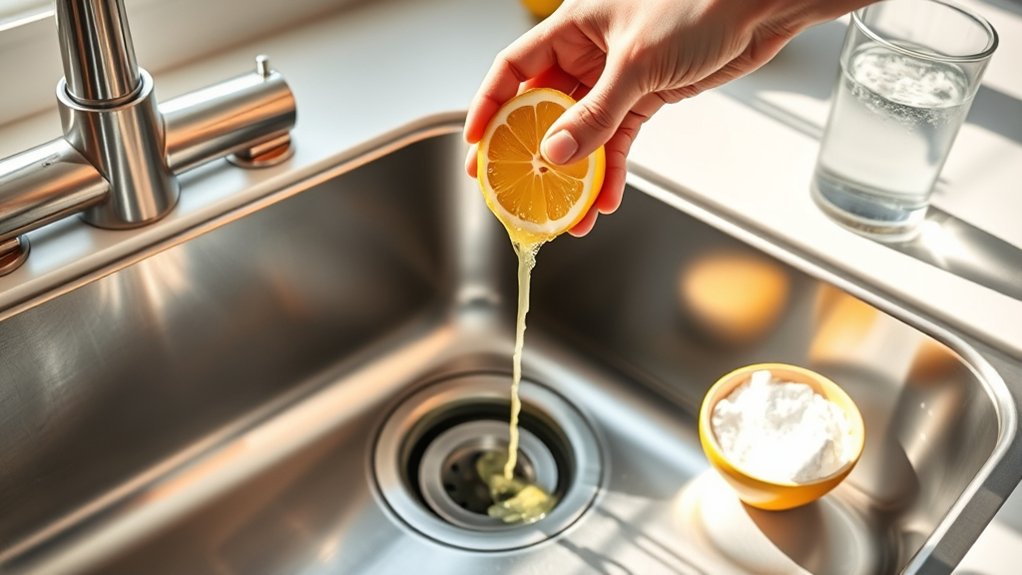
If your kitchen sink smells bad, you can usually fix it fast by flushing the drain with hot water, baking soda, and vinegar, then rinsing again after a few minutes. Scrub the sink rim, stopper, and faucet base with dish soap, because grime there can trap odor. Wipe the surrounding counter too, so your Kitchen decor stays fresh and clean.
Run cold water while you grind ice cubes or a little coarse salt through the disposal, if you have one; that can help dislodge residue. Finish by pouring more hot water down the drain to clear loosened buildup. For regular Plumbing maintenance, repeat this quick routine weekly and keep food scraps, grease, and coffee grounds out of the sink. You’ll keep the smell from returning and maintain a cleaner, more pleasant kitchen without much effort.
Find the Source of the Odor
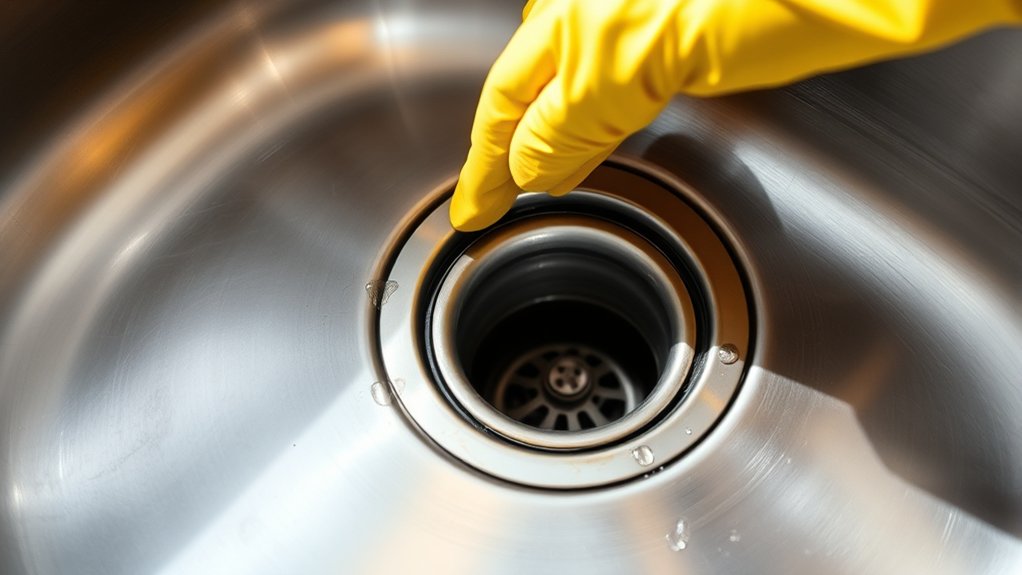
Check the drain trap first. Standing water or trapped grime can cause a strong smell. Then inspect the garbage disposal for stuck food or residue. Finally, look around the drain opening and sink edges for food buildup, and remove anything you find.
Check Drain Trap
Check the drain trap first, since that’s often where the odor begins. You can spot trouble fast by looking for standing water, gunk, or a dry trap that lets sewer gas rise into your sink.
Routine drain maintenance helps you catch buildup before it turns into a stronger smell, and simple odor prevention starts here.
- Run water to refill the trap.
- Check for leaks under the sink.
- Clear visible sludge from the opening.
- Tighten loose connections if you notice drips.
- Smell again after each quick fix.
If the odor fades, you’ve likely found the source. If it lingers, keep checking nearby parts of the drain line, but don’t skip this step.
A clean, wet trap often makes the biggest difference.
Inspect Garbage Disposal
Next, inspect the garbage disposal, since trapped food and grime there can keep the sink smelling bad even after the drain trap is wet and clear.
Turn off power first, then use a flashlight to check inside the opening and around the splash guard. During your odor inspection, notice any slimy film, dark residue, or loose debris clinging to the blades and walls.
If you smell the worst near the garbage disposal, that’s your clue the unit is holding the problem. Wipe the visible surfaces with a long brush or cloth, and clear the rubber flaps carefully.
Run cool water briefly afterward and sniff again. If the odor lingers, repeat the inspection until you find the source and eliminate it completely.
Locate Food Buildup
If the smell is still hanging around, trace it to the exact spot where food is stuck. Check the drain opening, strainer, disposal splash guard, and pipe joints for trapped food debris. Use a flashlight and feel around carefully for slimy buildup that can feed bacterial growth. Pull out visible scraps with tongs or a paper towel, then rinse the area with hot water.
- Look inside the sink drain
- Inspect the disposal blades
- Check the rubber splash guard
- Examine the P-trap connection
- Sniff near pipe seams
Once you find the source, clean it right away so the odor doesn’t return. A small hidden clump can keep your sink smelling bad until you remove it completely.
Flush the Drain With Boiling Water
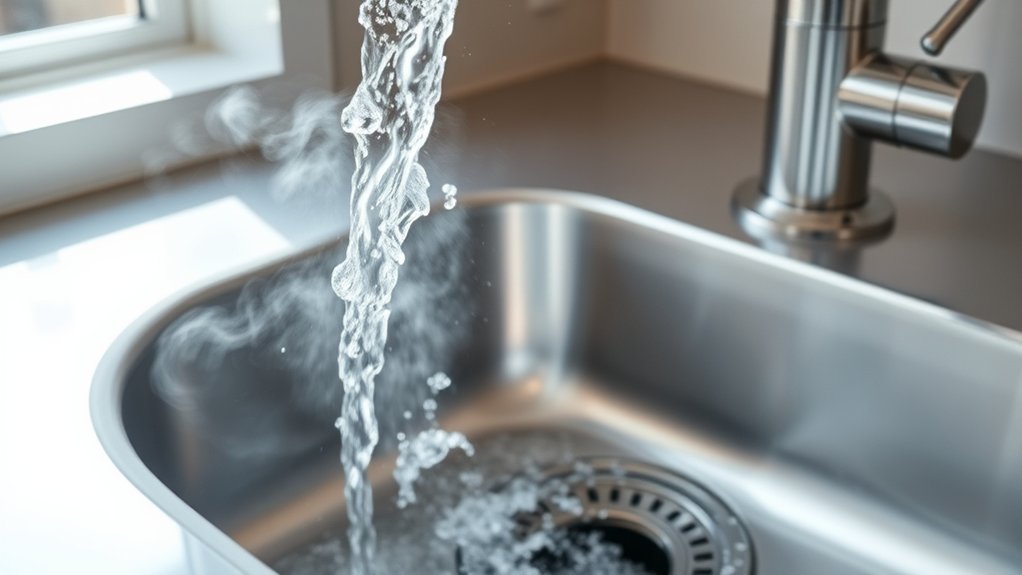
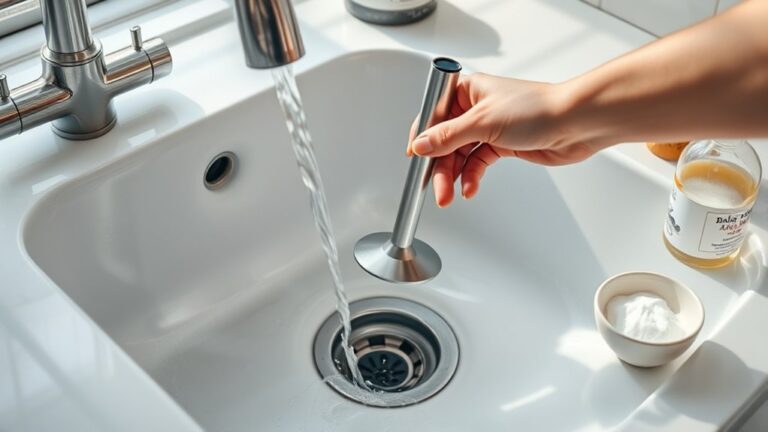
Boiling water can help break down the greasy buildup and food residue that often cause sink odors. For effective Drain maintenance, heat a kettle until the Water temperature reaches a full boil, then carefully pour the water straight down the drain in a steady stream.
Let it work for a minute, then repeat if the smell lingers. You should move slowly to avoid splashing, especially if your sink is porcelain or the pipes are older.
This quick flush helps loosen films that cling to the pipe walls and can restore fresher drainage fast. If you use a garbage disposal, run the boiling water through while the blades are off, then follow with a brief cold rinse to keep things moving.
Make this a regular habit once a week to prevent odor-causing buildup from returning and to keep your kitchen sink smelling clean.
Use Baking Soda and Vinegar
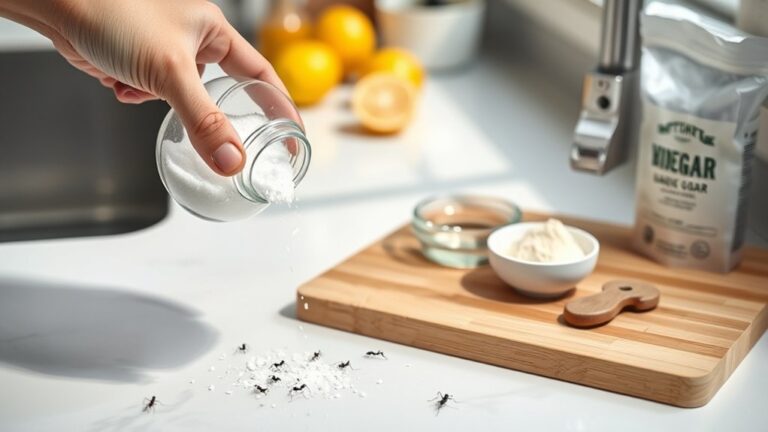
Baking soda and vinegar make a simple, effective deodorizing combo for a smelly kitchen sink. Pour about half a cup of baking soda into the drain, then add one cup of vinegar. Let it fizz for 10 to 15 minutes, and the reaction helps loosen grime that causes odor. Finish by flushing the drain with hot water to clear residue and freshen the line.
- Quick kitchen cleaning fix
- Helps with odor prevention
- Uses common pantry ingredients
- Takes only minutes
- Safe for routine maintenance
You can repeat this treatment once a week if smells keep coming back. For best results, don’t let food scraps sit in the sink, and wipe up spills fast. This easy step keeps your sink fresher between deeper cleanings and supports a cleaner kitchen overall.
Scrub the Drain Stopper and Rim
Remove the drain stopper and scrub its underside to clear away grime and trapped odors. Then wipe the sink rim thoroughly, since buildup there can also keep odors lingering. A quick clean in both spots can help your sink smell fresher.
Clean Stopper Underside
If your sink still smells after rinsing, take out the stopper and scrub both the underside and the drain rim, since grime, food particles, and slime often build up in those hidden spots. Use stopper cleaning with a small brush, dish soap, and warm water to loosen residue fast.
Focus on underside maintenance by lifting each groove, seam, and edge where odor-causing gunk hides. Rinse well, then dry the parts before you replace them.
- Remove the stopper completely
- Scrub hidden crevices thoroughly
- Target sticky buildup at the base
- Use warm, soapy water
- Reinstall only when clean and dry
Wipe Sink Rim
Next, wipe the sink rim and scrub around the drain stopper, where grime and sour-smelling residue often collect out of sight. Use a sponge or microfiber cloth with warm, soapy water, then lift the stopper and clean every crease, edge, and seam.
You’ll often find greasy film, food bits, and mildew hiding here, so don’t rush this part of sink cleaning. Rinse well and dry the rim so moisture doesn’t linger and feed odors.
If buildup remains, use a soft brush with baking soda paste for extra scrubbing power. This simple habit supports odor prevention by removing the mess that feeds bacteria.
Finish by checking the gasket and nearby lip, since hidden residue can quickly bring the smell back.
Clean the Garbage Disposal
A dirty garbage disposal can quickly make your whole sink smell, so give it a thorough cleaning. First, turn off the power and inspect the Garbage disposal for stuck scraps.
Pour in ice cubes and a handful of coarse salt, then run cold water while you switch it on. This scrubs the chamber and helps odor elimination.
Next, add baking soda, let it sit, and follow with vinegar for a quick fizzing cleanse. Flush again with cold water to rinse away residue.
You can also grind citrus peels briefly for a fresher scent, but don’t overload the unit. Wipe the splash guard with a sponge, since grime hides there and keeps smells lingering.
- Ice and salt scrub buildup
- Baking soda neutralizes odors
- Vinegar boosts cleaning power
- Citrus peels add freshness
- Wipe the guard clean
Clear the P-Trap
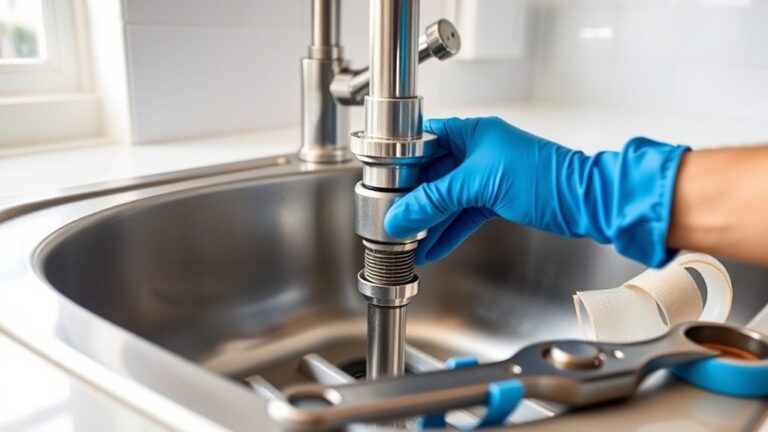
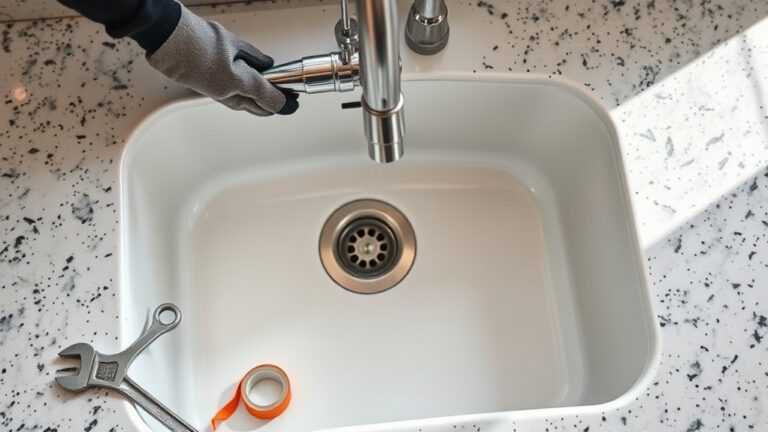
When the smell lingers after cleaning the disposal, the P-trap may be holding the culprit. Place a bucket under the sink, then loosen the slip nuts and remove the curved pipe.
You’ll likely find greasy sludge, food bits, or stagnant water inside. Empty it, scrub the interior with warm soapy water, and rinse it well.
While you’ve got it apart, check the washers and tighten any loose connections when you reinstall it. This simple P trap maintenance step often stops odors fast because trapped debris can’t keep breaking down and sending stink back up the drain.
If the pipe looks clean but the odor returns, do an odor trap inspection for cracks, worn seals, or a sagging pipe that doesn’t hold water properly.
Reassemble carefully, run water, and confirm there are no leaks. A clean, sealed P-trap keeps your sink smelling fresh without extra effort.
Deodorize the Sink With Lemon Peels
Toss a few lemon peels into your sink to leave behind a fresh citrus scent. Then pour hot water down the drain to rinse away any residue and help carry the scent through. It’s a simple way to freshen up your kitchen without using harsh cleaners.
Lemon Peel Freshening
Lemon peels can freshen your kitchen sink fast and leave behind a clean, bright scent. You can rub a fresh Lemon peel around the drain, disposal opening, and faucet base to release a lively Citrus aroma. The natural oils cling to surfaces and help mask sour odors without harsh cleaners.
- Save peels after squeezing lemons
- Rub them along the sink basin
- Press peels near the drain
- Toss small pieces into the disposal
- Repeat when odors return
If you want a stronger boost, let the peels sit for a few minutes before rinsing. This simple step keeps your sink smelling fresher and makes cleanup feel easier.
Boiling Water Flush
Pouring boiling water down the drain can help clear greasy residue and push lingering odors out of the sink fast. Heat loosens film that traps smells, so you can rinse the basin and drain in one simple step.
Carefully boil a full kettle, then pour it slowly in stages to protect pipes and improve contact with buildup. If you’ve saved lemon peels, drop a few into the sink first for a light fresh scent while the hot water works.
This quick method fits eco friendly cleaning because it skips harsh chemicals and uses what you already have. Repeat it weekly for odor prevention, especially after cooking with oil, garlic, or onion. Keep the sink dry afterward so smells don’t return.
Natural Citrus Deodorizing
If your sink still smells a bit off, lemon peels can freshen it naturally in minutes. Drop a handful of peels into the drain, then run warm water and let the oils work through the pipe walls.
The citrus essential oils help cut lingering food odors, while the peel texture gives a mild scrub without harsh chemicals. For stronger results, grind the peels in your disposal with ice and a splash of vinegar.
You can also freeze peels for a quick fruit based cleaning boost later. This simple method leaves a bright scent and helps your kitchen feel cleaner fast.
Use it after cooking fish, onions, or garlic. Repeat weekly to keep bad smells from building up again.
- Fresh lemon peels
- Warm running water
- Citrus essential oils
- Ice and vinegar
- Fruit based cleaning
Prevent Sink Odors From Returning
To keep kitchen sink odors from coming back, make a habit of flushing the drain with hot water after messy prep work and clearing food scraps from the strainer right away. Wipe the sink basin daily, because grime clings to the sides and feeds lingering smells.
Once a week, clean the stopper, flange, and visible drain edges with dish soap, then rinse well. If you want extra help, try Air freshening with a nearby bowl of baking soda or citrus peels, but skip scent masking products that only hide the problem.
| Task | Timing |
|---|---|
| Flush with hot water | After cooking |
| Empty and rinse strainer | Daily |
| Scrub sink surfaces | Weekly |
Also, run cold water briefly after greasy dishes so residue moves through instead of settling. These small habits keep your sink fresher and cut down on repeat odors.
When to Call a Plumber for Sink Odors
When the smell keeps coming back after you’ve cleaned the trap, flushed the drain, and scrubbed the sink parts, it’s time to call a plumber. You may have a deeper clog, vent issue, or damaged pipe that DIY cleaning can’t fix. A plumber can inspect the line, spot leaks, and clear buildup before it worsens. That’s smart plumbing maintenance and better odor prevention.
- Persistent sewer smell after cleaning
- Slow draining water or gurgling sounds
- Moisture under the cabinet
- Recurring clogs in the same sink
- Visible corrosion, cracks, or leaks
If you notice any of these signs, don’t wait. A plumber can test the system, repair hidden problems, and help keep your kitchen fresh. Fast action protects your pipes, saves money, and stops odors from returning again.
Frequently Asked Questions
Can Sink Odors Come From the Dishwasher Hose?
Yes, sink odors can come from the dishwasher hose. You should check for Dishwasher hose odors if you notice a sewer-like smell near the sink. A clogged, dry, or improperly looped hose can let dirty water or gases back up.
You should also inspect other Sink odor sources, like the drain, garbage disposal, and trap. Clean each part, run water often, and fix leaks to stop the smell quickly.
How Often Should I Replace the Sink Strainer?
You should replace your sink strainer every 1 to 3 years, or sooner if it’s rusted, cracked, loose, or keeping odors around. Regular Sink maintenance helps you spot wear before it causes bigger problems.
For Strainer replacement, check the seal and mesh often, especially if you rinse greasy dishes daily. If you notice leaks, slow draining, or persistent smells, don’t wait—swap it out and keep your sink working properly.
Do Metal Pipes Smell Different Than Plastic Pipes?
Yes, metal pipes and plastic pipes can smell a little different. You might notice metal pipes hold onto a sharp, musty scent if corrosion or residue builds up, while plastic pipes usually don’t add much odor themselves.
Think of your sink like a stage: the real smell often comes from trapped gunk, not the pipes. You can check both for leaks, buildup, and loose connections to find the source fast.
Can Hot Water Damage a Kitchen Sink Drain?
Hot water usually won’t damage your kitchen sink drain, but you shouldn’t pour boiling water down it regularly. You can loosen grease and support drain maintenance with warm water, yet extreme heat may stress PVC joints or old seals.
Use hot, not scalding, water for odor prevention, then flush with soap and cool water. If your drain smells persistently, check for buildup, leaks, or a failing trap.
Are Enzyme Cleaners Safe for Septic Systems?
Yes, enzyme cleaners are usually safe for septic systems, and you’ll often help your tank work better by choosing them. About 1 in 5 U.S. homes relies on septic, so septic maintenance matters.
You can use enzyme safety as a smart guide: pick non-toxic products, follow the label, and avoid bleach-heavy cleaners that can kill beneficial bacteria. If you’re unsure, check your system manual or ask a septic pro.
Conclusion
Now you know how to kick that kitchen sink smell to the curb fast. Start by hunting down the source, then flush, scrub, and refresh the drain with simple fixes like baking soda, vinegar, and lemon peels.
A clean sink should feel like a burst of fresh air, not a swampy corner of the kitchen. Keep up the routine, and those odors won’t have a chance to creep back in. With these steps, you can remove smell from your kitchen sink quickly and keep it fresh.