How Deep Should Upper Kitchen Cabinets Be?
Choosing upper kitchen cabinets can be tricky: too deep, and everyday items may be hard to reach; too shallow, and you lose valuable storage. You’re not alone—many people struggle to find the right balance.
In this product roundup, we’ll explore how deep upper kitchen cabinets should be and what to consider when choosing the best fit for your space.
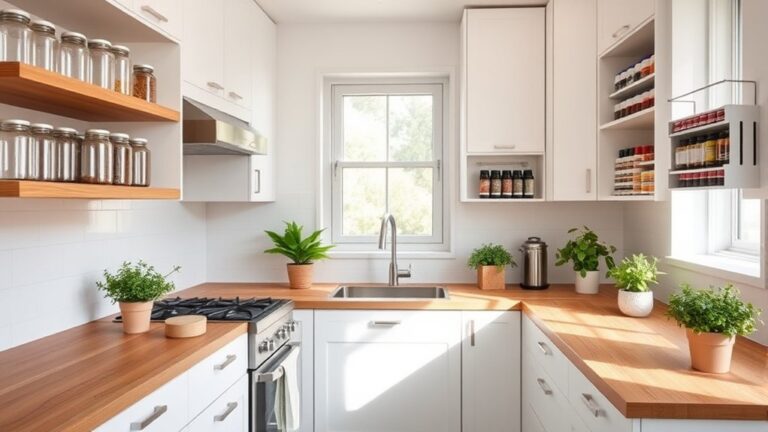
Upper kitchen cabinets should usually be about 12 inches deep, since that gives you good storage without making everyday items hard to reach.
If your kitchen is tight, shallower cabinets can improve access and make the room feel lighter.
If you store bulky dishes or special serveware, you may need custom depth.
Your countertops, backsplash, and layout can also affect the best fit, and a few smart choices can make the whole space work better.
Key Takeaways
- Standard upper kitchen cabinets are usually 12 inches deep, offering a good balance of storage and accessibility.
- Choose 12 to 14 inches deep for most kitchens to comfortably reach dishes, glasses, and everyday items.
- Shallower cabinets improve visibility and access, while deeper cabinets provide more storage but can make items harder to reach.
- Consider appliance clearances, backsplashes, and kitchen layout before choosing cabinet depth.
- Measure carefully and match cabinet depth to your height, storage needs, and daily cooking habits.
What Is the Standard Upper Cabinet Depth?
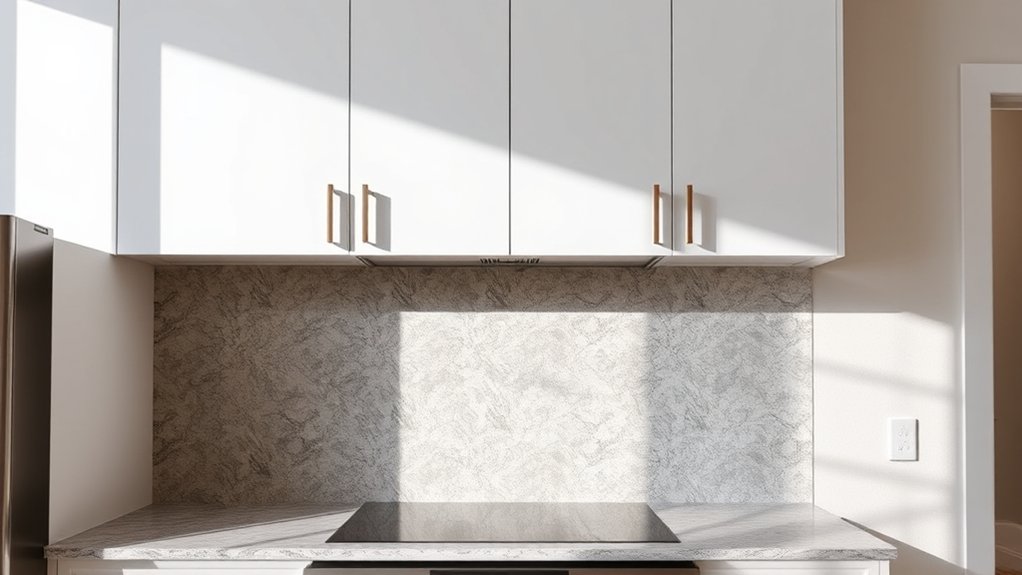
The standard upper cabinet depth is usually 12 inches, which gives you enough storage without making the cabinets stick out too far into your kitchen. You’ll see this size in many homes because it balances reach, capacity, and a clean look.
The standard upper cabinet depth is usually 12 inches, balancing storage, reach, and a clean kitchen profile.
When you choose this depth, you keep dishes, glasses, and everyday items easy to access while preserving open workspace below. If you want a more finished appearance, Decorative molding can add visual height and help the cabinets blend with your style.
You can also plan for Lighting integration so under-cabinet fixtures sit neatly and illuminate your counters without awkward gaps. In most layouts, this standard depth works well with common appliances and wall spacing, giving you a practical setup that feels intentional.
It’s a reliable starting point when you’re comparing cabinet options or planning a kitchen update.
How Deep Should Your Upper Cabinets Be?

How deep your upper cabinets should be depends on how you use your kitchen and how much reach you’re comfortable with. If you cook often, you may want a depth that keeps everyday items handy without crowding your workspace.
For smaller kitchens, shallower cabinets can help you keep a lighter, more open feel. The right choice also depends on your cabinet material and the look you want from your color options.
- Choose 12 inches for a classic, balanced profile
- Go shallower if you prefer a streamlined wall
- Pick deeper cabinets only when you need extra capacity
- Match depth to tall appliances or built-ins
- Check that doors won’t feel bulky when opened
You should also think about how the cabinets fit your overall layout. When depth feels right, your kitchen looks cleaner and works more naturally for your daily routine.
Why Cabinet Depth Affects Storage and Reach
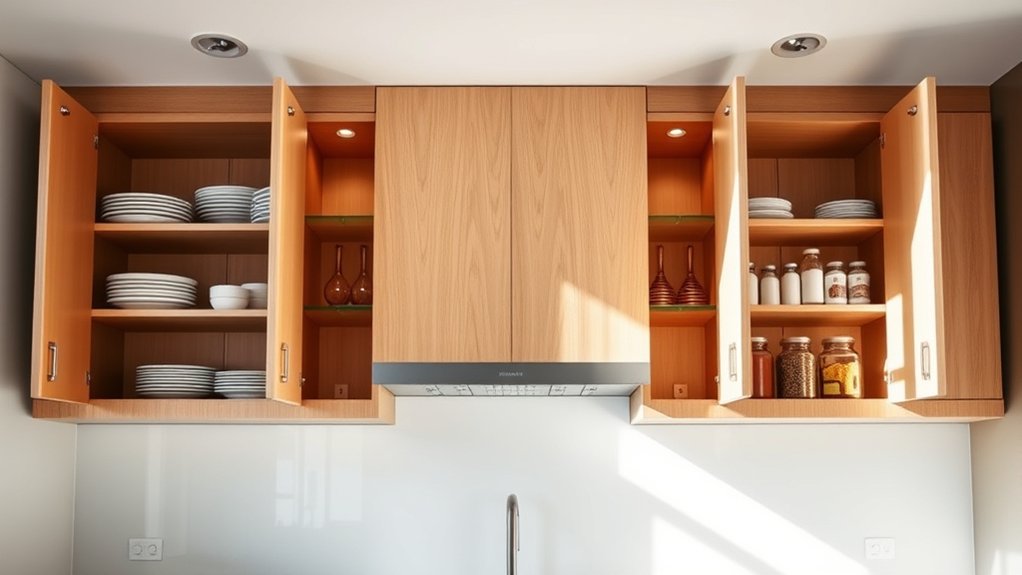
Cabinet depth directly shapes how much you can store and how easily you can reach it. If you choose a cabinet that’s too shallow, you’ll limit plates, bowls, and pantry items you can tuck away. If you pick one that’s too deep, you may hide items in the back and lose quick access during busy meals. You’ll also notice that depth changes how comfortably you move around the kitchen, especially when you open doors or grab items near the front edge.
You should think about your daily routine, what you cook most, and how often you need certain items. Your material selection can affect weight and durability, while decorative accents may add style without helping storage. When you balance capacity with reach, you create cabinets that work harder for you and keep your kitchen organized, efficient, and easy to use every day.
Upper Cabinet Depths: Standard, Shallow, and Deep
When comparing upper cabinet depths, standard cabinets offer a good balance of storage and reach. Shallower cabinets make items easier to grab, while deeper ones provide more storage but can be harder to access. Consider how each option fits your space and daily routine.
Standard Upper Depths
Standard upper kitchen cabinets are typically 12 inches deep, which gives you enough storage without making the space feel crowded. You can use this size for plates, mugs, and everyday pantry items while keeping everything easy to reach. It also helps you create a balanced look with your lower cabinets and backsplash.
- Fits most kitchens
- Supports common dishware
- Leaves room for decorative accents
- Works well with color coordination
- Matches standard wall cabinet layouts
If you want a clean, practical layout, standard depth usually delivers. You won’t have to stretch too far, and your cabinets won’t overpower the room. Choose this depth when you want dependable storage that looks neat and feels familiar.
Shallow Cabinet Benefits
Shallow upper cabinets can make a kitchen feel more open while still giving you useful storage for lighter, everyday items. You’ll reach plates, glasses, and spices with less stretch, which can improve comfort during busy routines.
Their slimmer profile also helps your walls read cleaner, so color coordination feels easier when you match cabinet finishes to paint, tile, or trim. Choose a cabinet material that suits the look you want, since visible surfaces play a bigger role with less depth.
| Benefit | Why it matters |
|---|---|
| Easier access | You can grab items faster |
| Open feel | Your kitchen looks less crowded |
| Better styling | Finishes stand out more |
| Simple upkeep | Surfaces stay easier to wipe |
Deep Cabinet Tradeoffs
Deeper upper cabinets can give you more storage, but they also come with tradeoffs you’ll want to weigh carefully. You gain room for bulky dishes, yet you may sacrifice reach, visibility, and open feel.
In smaller kitchens, deep uppers can crowd your prep space and make walls feel heavier.
- You’ll store more, but you’ll lose some convenience.
- You may need a step stool more often.
- Items in back can get forgotten.
- Vintage styles can look rich, though they’ll feel larger.
- Eco friendly materials help offset a bigger footprint.
Standard depths balance access and capacity, while shallow options keep kitchens airy. Choose deep cabinets only when you truly need extra volume and can handle the added maintenance.
How Countertops and Backsplashes Affect Depth
Because countertops and backsplashes change the usable space around your upper cabinets, they can affect how deep those cabinets should be. You need to measure from the wall surface, not just the cabinet face, because tile, stone slabs, and raised edge details can steal clearance.
If your backsplash stands proud, a standard cabinet may feel too bulky or sit awkwardly close to the counter. You can use Decorative molding to soften the shift and hide slight alignment gaps, but it shouldn’t push the cabinet too far forward.
Cabinet lighting also matters, since a deeper box can block light and cast shadows on your work area. When your countertop has a thick profile or your backsplash includes shelves, trim, or accent bands, a slimmer upper cabinet often looks cleaner.
Always test the finished projection before you install, so you keep enough room for a balanced, polished wall.
Best Upper Cabinet Depths for Dishes and Pantry Items
For dishes, choose an upper cabinet depth that fits plates, bowls, and glasses while keeping everything easy to reach. For pantry items, a little extra depth can make room for cans and boxes—but avoid going so deep that things get lost at the back. Think about shelf reach, too, so you can grab everyday items without stretching or moving things around.
Dish Storage Depths
For dishes and pantry items, upper cabinet depth should make storage easy without forcing you to reach too far back. You’ll usually want 12 to 14 inches for plates, bowls, and glassware, because that gives you room without wasting space. Deeper cabinets can hold more, but they may hide items and make daily use harder. Keep these points in mind:
- Stack plates upright when possible
- Store mugs near the front
- Group similar dish sizes together
- Leave space for serving bowls
- Match color coordination and hardware choices with nearby cabinets
You’ll get a cleaner look and faster access when the cabinet depth fits your routine. If you use everyday dishes often, choose the shallow end of the range.
Pantry Item Clearance
How much clearance do your pantry items really need? You’ll usually want upper cabinets deep enough to hold cereal boxes, canned goods, pasta, and small appliances without crowding the front edge. A depth around 14 to 16 inches works well for most pantry storage because it gives you room for labels, lids, and varied package sizes.
If you go shallower, tall boxes may tip forward; if you go deeper, items can disappear behind others. Good lighting design helps you see what’s stored inside, especially in darker corners. Material choices matter too: sturdy shelves resist sagging when you load jars and bottles.
Keep the depth consistent across your layout, and you’ll make pantry storage cleaner, simpler, and easier to organize every day.
Shelf Reach Accessibility
If you want your upper cabinets to stay easy to use, depth matters just as much as storage capacity. You should aim for 12 to 14 inches so you can reach dishes and pantry items without stretching or stacking too high. Shallower cabinets improve shelf reach accessibility, while deeper ones can hide items in the back.
- Keep everyday plates near the front
- Store bulky pantry goods on lower shelves
- Use pull-out organizers for better access
- Match cabinet depth to your height
- Consider Color schemes and Lighting options to improve visibility
When you choose the right depth, you reduce frustration and make cooking smoother. Accessible shelves also help you see inventory fast, so you waste less food and use your kitchen more comfortably.
When to Choose Custom-Depth Upper Cabinets
Custom-depth upper cabinets make sense when your kitchen needs more than the standard 12-inch projection to work well. You should consider them if you store bulky dishes, oversized appliances, or specialty serveware that won’t sit comfortably in shallow boxes.
They also help when you want better reach for everyday items without stacking them front to back. Your cabinet material matters, too, because heavier, deeper units need stronger construction and reliable mounting hardware.
You can also choose custom depth when kitchen lighting makes standard cabinets cast unwanted shadows over your countertop, since a slightly different projection can improve visibility and reduce visual bulk.
If you’re matching existing millwork or seeking a cleaner built-in look, custom dimensions can create a more seamless finish. Use them when function, durability, and appearance all need a tailored solution.
How Layout Affects Cabinet Depth
Your kitchen layout can change the right upper cabinet depth more than you might expect. If you have a galley, shallow cabinets can keep the aisle open and make reaching shelves easier.
In an L-shaped or U-shaped kitchen, you can often go a bit deeper if the walls allow and traffic stays clear. You should also think about how tall uppers line up with windows, vents, and appliances, since these features can limit depth and placement.
Layout also affects style choices like color coordination, because deeper cabinets can feel heavier in a compact room. Good lighting integration helps, too, since under-cabinet fixtures can reduce shadows and make deeper storage feel practical.
- Narrow aisles favor slimmer cabinets
- Corner runs may need special sizing
- Window walls often need shallower units
- Open plans can handle more depth
- Sink and cooktop zones need easy access
Common Upper Cabinet Depth Mistakes to Avoid
A common mistake is choosing upper cabinet depth without checking how it affects reach, clearance, and daily use. You might pick a style that looks good, but if it’s too deep, you’ll bang your head, crowd your counters, and make dishes harder to grab.
If it’s too shallow, you’ll waste storage and create clutter. Don’t ignore nearby Lighting fixtures, because oversized cabinets can block pendants or under-cabinet light.
You should also consider Cabinet materials; heavy doors and thick panels can make deep cabinets feel bulky and harder to open smoothly. Another error is matching every wall with the same depth, even when appliances, windows, or open shelving call for a different choice.
You’ll get better results when you balance storage, comfort, and visual proportion. Choose a depth that supports the way you cook, clean, and move, not just the way the cabinets look in a showroom.
How to Measure for Upper Cabinets
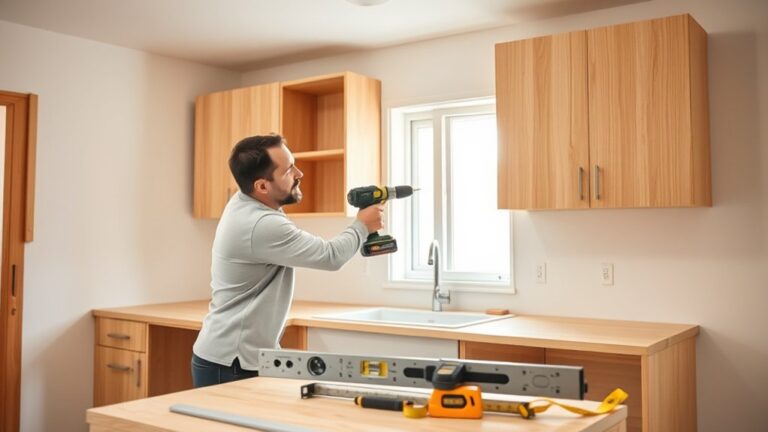
Before you buy upper cabinets, measure the wall, the counter depth, and the space from countertop to ceiling so you know what will actually fit. Start by marking stud locations, then measure the full width of each run.
Measure the wall, counter depth, and ceiling space first so your upper cabinets fit properly.
Check ceiling height at several points, since walls and floors aren’t always level. Leave room for molding, lighting, and appliance doors.
- Measure from countertop to the cabinet bottom
- Note any soffits, vents, or windows
- Record wall widths in inches
- Confirm the cabinet depth won’t block tasks
- Compare cabinet materials for weight and durability
You should also think about color coordination, because accurate measurements help you align cabinet lines with backsplashes and trim. If you’re mixing finishes, write down each dimension before ordering.
Small errors can create gaps, crowd appliances, or make installation harder. Double-check every number, then measure again.
Frequently Asked Questions
Can Upper Cabinets Have Glass Doors?
Yes, you can choose glass doors for upper cabinets, and they can make your kitchen feel brighter and more open. You’ll want to match the Glass doors with sturdy Cabinet materials so the cabinet frames support the added weight and daily use. You can also use frosted or clear glass, depending on how much you want to display. Just make sure the hinges and seals fit well for long-term durability.
Do Upper Cabinets Need Under-Cabinet Lighting?
No, you don’t need under-cabinet lighting, but you’ll likely want it. Like a well-placed spotlight on a stage, it lifts shadows, improves task visibility, and makes your kitchen feel polished. It also improves Cabinet aesthetics while supporting Storage efficiency, especially when you’re cooking or finding items on shelves. If your space already gets strong natural light, you can skip it; otherwise, lighting adds convenience and charm with little effort.
What Is the Best Height to Hang Upper Cabinets?
You’ll usually hang upper cabinets so their bottoms sit 18 inches above the countertop, giving you a comfortable working area and good clearance for appliances. If you’re tall, you might prefer a slightly higher hanging height; if you’re shorter, go lower.
Cabinet depth can affect how much reach you need, so check your layout before you install. Always mark your level line carefully, then secure the cabinets to studs.
Are Open Shelves Better Than Upper Cabinets?
Open shelves can be better than upper cabinets if you want easier access and a lighter look. You’ll gain aesthetic appeal and can showcase dishes, but you’ll sacrifice some storage optimization and need to keep things tidy.
If you cook often and need hidden space, upper cabinets usually work better. You should choose shelves for style and openness, or cabinets for more capacity and less dust.
Can Upper Cabinets Be Installed Over a Refrigerator?
Yes, you can install upper cabinets over a refrigerator, and it can feel like gaining a whole secret storage kingdom. You need to check refrigerator clearance and cabinet height so the doors open freely and the unit can vent properly. You’ll usually leave enough space above the fridge for the cabinet and a filler panel. Measure carefully, follow the appliance specs, and you won’t create a kitchen monster.
Conclusion
Upper kitchen cabinets usually work best at 12 inches deep, but your kitchen layout can change that fast. In fact, the NKBA says 15 inches is the maximum recommended depth for most wall cabinets, so going deeper can make items harder to reach and your counters feel crowded.
If you want better storage, measure carefully and think about your backsplash, appliances, and reach. The right depth helps you use every inch without making your kitchen feel cramped. For most homes, 12-inch-deep upper kitchen cabinets are a practical place to start.