How to Organize a Small Kitchen With 3 Simple Tips
A small kitchen can quickly feel cluttered, leaving you short on counter space and struggling to find what you need. If you’re looking for ways to organize a small kitchen, you’re not alone—many people face the same challenge. These simple tips can help you make the most of every inch.
Start by clearing off your countertops so you can see what you actually use. Keep only daily essentials, then wipe surfaces clean for a fresh start.
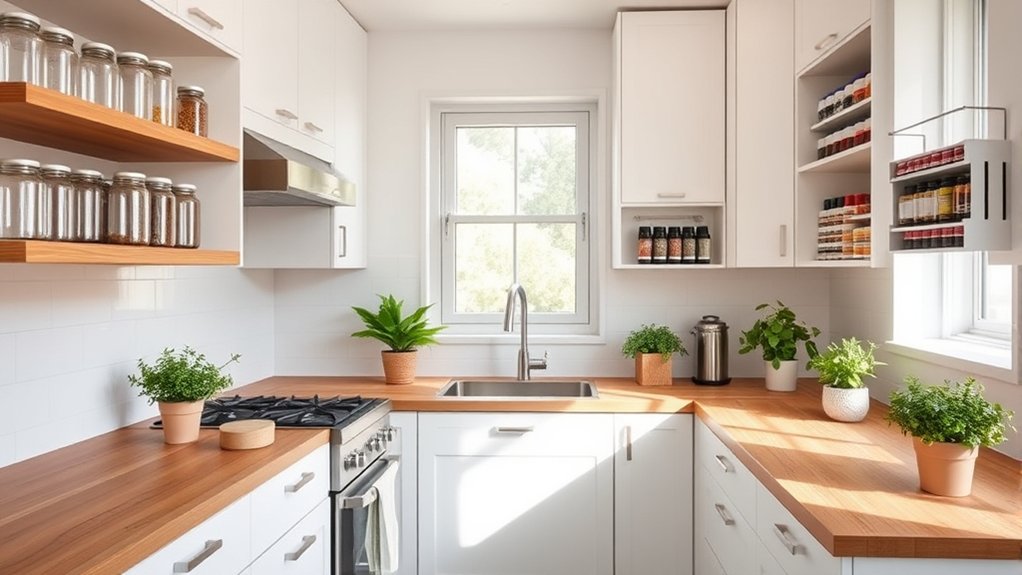
Next, add vertical storage with wall shelves, hooks, or a pot rack to free up cabinet and counter space.
Finally, create simple zones for prep, cooking, and storage so everything has a home.
These three steps make your small kitchen feel bigger, faster, and easier to use—and there’s more to investigate.
Key Takeaways
- Clear countertops first and keep only daily-use items visible.
- Use vertical storage like shelves, hooks, and pot racks to save space.
- Create zones for prep, cooking, and storage to improve workflow.
- Group similar appliances together and store extras out of sight.
- Reassess regularly to keep the kitchen organized and clutter-free.
Clear Off the Counters First
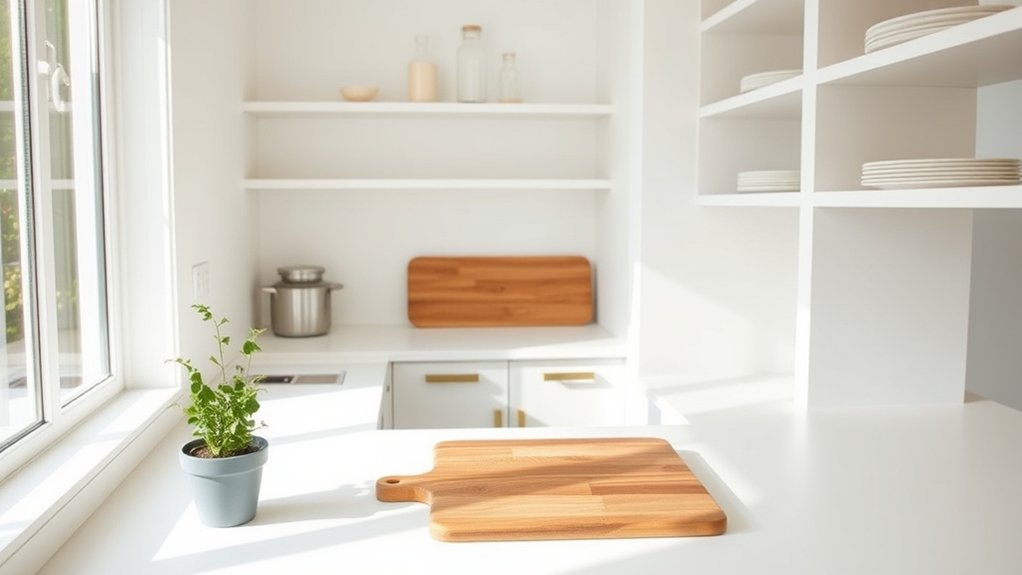
Before you tackle anything else, clear off your counters completely. Remove every item, then sort it into keep, store, or toss piles.
Clear off your counters first, then sort every item into keep, store, or toss piles.
This step shows you how much countertop clutter you’ve built up and helps you decide what truly earns space in your kitchen. Keep only the tools you use daily, such as a coffee maker, toaster, or knife block, and put the rest away.
When you limit visible items, you make meal prep easier and cleaning faster. Focus on appliance organization by grouping similar devices together and storing extras in cabinets or pantry space if you have them.
Wipe the bare surfaces before returning anything, so you start fresh. A clear counter gives your small kitchen a calmer feel and makes it easier to maintain order every day without constant rearranging.
Add Vertical Storage for Small Kitchens
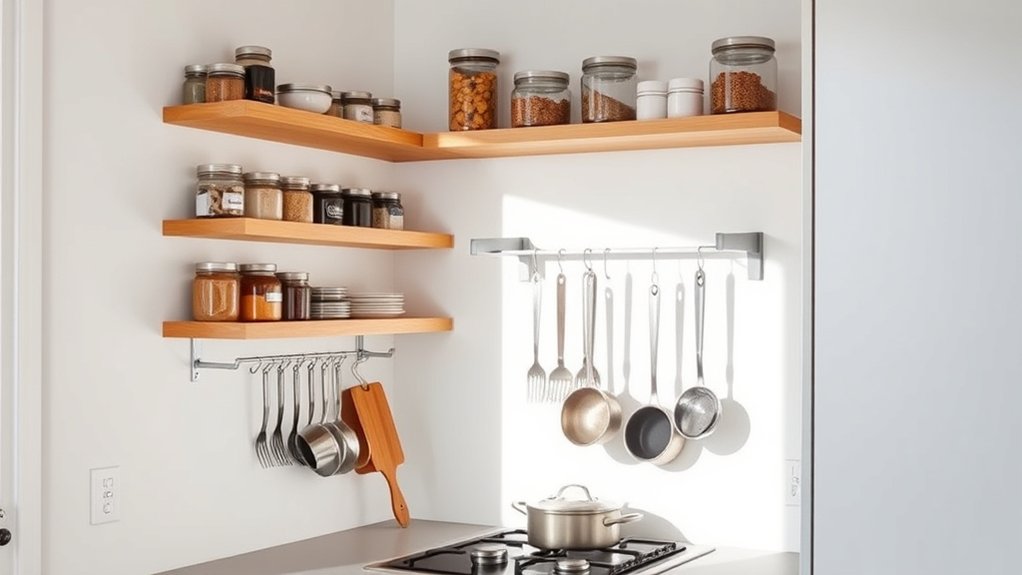
Once your counters are clear, look up for extra storage opportunities. You can turn bare walls into useful space with wall mounted shelves that hold dishes, jars, or cookbooks. Keep the heaviest items on lower shelves so you can lift them safely, and use matching bins or baskets to tame small items.
Above your cooking area, hanging pot racks free cabinet space and keep pans within easy reach. If you have room, choose a slim rack with hooks for lids, spatulas, or measuring cups. You can also add adhesive hooks inside cabinet doors or on the sides of shelves for oven mitts and utensils.
Think upward whenever you buy a new organizer, because vertical storage gives you more room without crowding the floor. A few smart additions can make your kitchen feel bigger, neater, and easier to use every day.
Create Zones for Prep, Cooking, and Storage
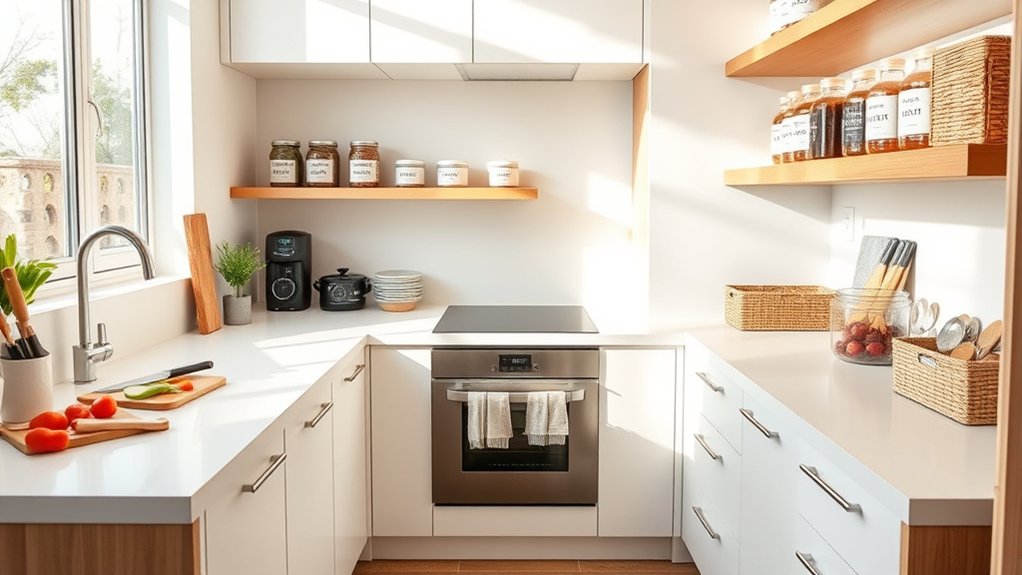
To make a small kitchen easier to use, assign each area a clear job: one spot for prep, one for cooking, and one for storage. Keep cutting boards, knives, and mixing bowls near your counter workspace so you can chop and measure without crossing the room. Place pots, pans, and spices beside the stove for fast access while you cook. Then store dry goods, cans, and backup tools together in cabinets or bins that you don’t need every day.
Use smart utensil placement to keep spoons, spatulas, and tongs within arm’s reach of the prep and cooking zones. Try appliance grouping too: park the blender, toaster, and food processor in one cabinet or on one shelf so you can grab them quickly and return them easily. When each zone has a purpose, you’ll move less, work faster, and keep your small kitchen cleaner and calmer.
Frequently Asked Questions
How Do I Organize Kitchen Drawers Efficiently?
You can organize kitchen drawers efficiently by grouping similar items and using drawer dividers to create clear zones. Put utensils, tools, and gadgets in separate sections so you can grab what you need fast.
Use utensil trays for forks, spoons, and knives, and keep rarely used items toward the back. Measure each drawer first, then choose inserts that fit snugly.
Reassess regularly and remove clutter to keep everything tidy and easy to find.
What Are the Best Containers for Pantry Items?
For pantry items, you’ll do best with clear stackable containers and airtight storage jars. They keep flour, cereal, pasta, and snacks fresh, while letting you see what you’ve got at a glance.
Choose square or rectangular shapes to save space and reduce those little clutter gremlins. Label each container, and pick sizes that fit your shelves. If you buy in bulk, airtight bins help you stay neat and waste less.
How Can I Store Pots and Pans in a Small Kitchen?
You can store pots and pans in stackable cabinets, use Stacking shelves to separate lids, and hang pieces on Magnetic racks if you’ve got metal surfaces. Nest similar sizes together, with larger pots at the back and everyday pans up front. Add a pull-out organizer or wall rail to free up space. If you keep handles facing out, you’ll grab what you need faster and avoid clutter.
Which Lighting Works Best for a Compact Kitchen?
You’ll want layered lighting: bright task lighting over counters and stove, plus soft ambient lighting to keep the room from looking like a cave pretending to be chic. Use under-cabinet LEDs, a flush-mount ceiling fixture, and maybe a small pendant if space allows. Stick with daylight or warm-white bulbs, and avoid bulky shades that eat visual space. Good lighting makes your compact kitchen feel larger, safer, and easier to use.
How Often Should I Declutter Kitchen Tools?
You should declutter kitchen tools every three to six months, and sooner if you spot Kitchen clutter building up. Check Tool frequency by noticing what you actually use each week, then remove duplicates, broken items, and gadgets you never reach for.
Keep only the tools that earn their space. If your drawers feel crowded sooner, don’t wait—sort them right away and make room for the essentials.
Conclusion
A small kitchen can feel like it’s winning the clutter war, but you’re really in charge. Once you clear the counters, use vertical storage, and set up simple zones, even the tiniest space starts acting surprisingly spacious.
Funny how a few smart moves can make cabinets, shelves, and counters finally pull their weight. You don’t need more room—you just need better order.
With these 3 simple tips for organizing a small kitchen, you can stop the chaos and make your space more useful.