How Much Do Kitchen Islands Cost in 5 Price Ranges
Choosing a kitchen island can be tricky when prices range from a few hundred dollars to well over $7,500. You’re not alone—many people struggle to balance their budget with the storage, style, and features they want.
This guide to kitchen island costs breaks down five price ranges to help you find the right fit.
Kitchen islands usually cost less than $500 for compact rolling carts or simple ready-to-assemble models.
$500 to $1,500 is the price range for sturdier islands with better storage and materials.
You’ll often pay $1,500 to $3,500 for more custom-looking pieces with thicker tops and added features.
You’ll typically spend $3,500 to $7,500 for built-in styles.
Over $7,500 is the price for high-end custom islands with premium materials, sinks, or appliances.
If you want the right fit, the details below can help.
Key Takeaways
- Under $500, kitchen islands are usually compact, ready-to-assemble, or rolling models with basic storage and work surfaces.
- From $500 to $1,500, islands offer sturdier construction, better materials, and features like drawers, cabinets, and drop-leaf tops.
- Between $1,500 and $3,500, islands often feel more custom, with quality craftsmanship, thicker countertops, and seating overhangs.
- From $3,500 to $7,500, islands typically include premium built-in designs, stronger construction, and options like outlets or sink cutouts.
- Over $7,500, custom islands use high-end materials and expert labor, often adding appliances, waterfalls, and fully tailored features.
Kitchen Island Costs: Under $500
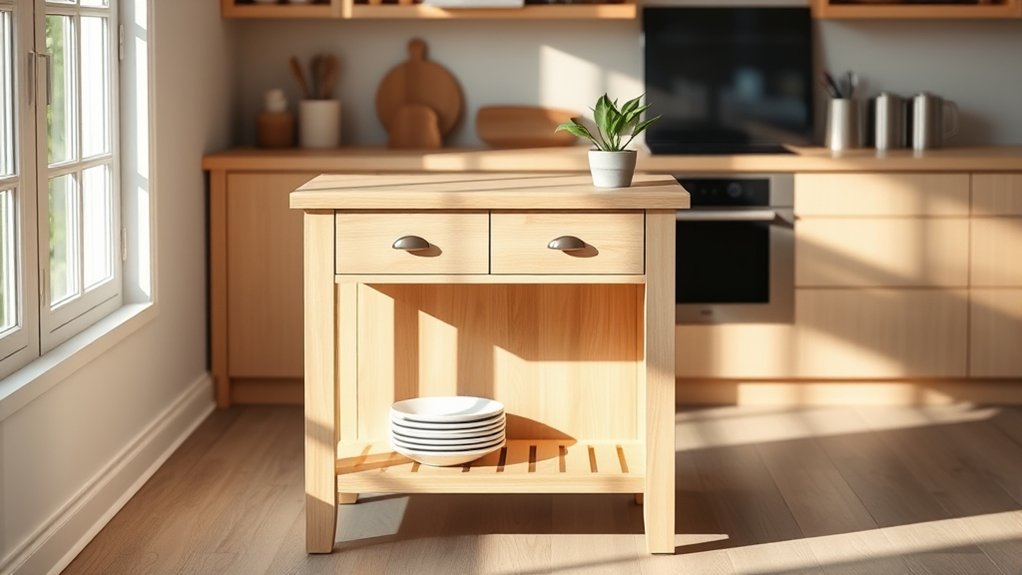
Under $500, you can still add a useful kitchen island if you focus on compact, ready-to-assemble, or rolling models. You’ll usually get basic storage, a work surface, and maybe a towel bar or wine rack.
Under $500, a compact kitchen island can still add storage, workspace, and everyday convenience.
If you want more personality, look for design customization through paint, hardware, or butcher-block tops that you can finish yourself. Material options often include MDF, particleboard, laminate, or lighter woods, and each one changes durability, weight, and appearance.
A cart-style island can move when you need extra prep space and tuck away when you don’t. You should measure carefully, because a small footprint matters more than fancy features at this price.
Check weight capacity, wheel locks, and shelf layout before you buy. If you compare finishes and construction, you’ll find an affordable island that fits your kitchen and your daily routine.
Kitchen Island Costs: $500 to $1,500
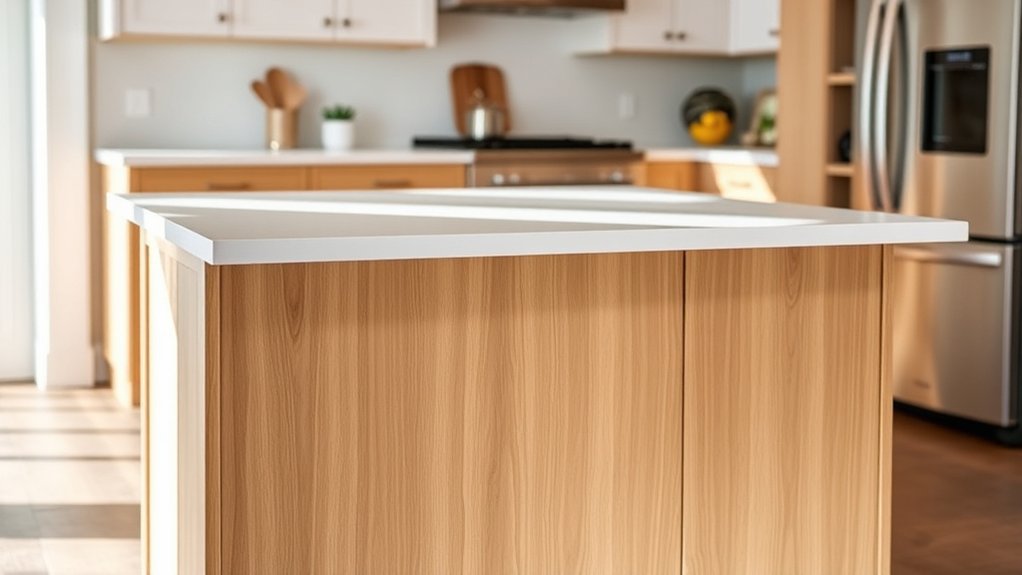
From $500 to $1,500, you can get a much sturdier kitchen island with better materials, more storage, and a finish that looks built in rather than portable. You’ll usually see solid wood, thick veneer, or durable engineered surfaces that stand up better to daily cooking and cleaning.
This range also gives you more design flexibility, so you can choose a size, color, or layout that fits your kitchen instead of settling for a basic cart. Many models add drawers, shelves, cabinets, or a drop-leaf top, which helps you store tools and prep food more comfortably.
You may also find improved material durability, with stronger frames and hardware that feel more stable during use. If you want an island that works harder and blends in better with your room, this price range gives you a practical step up without jumping into premium pricing.
Kitchen Island Costs: $1,500 to $3,500
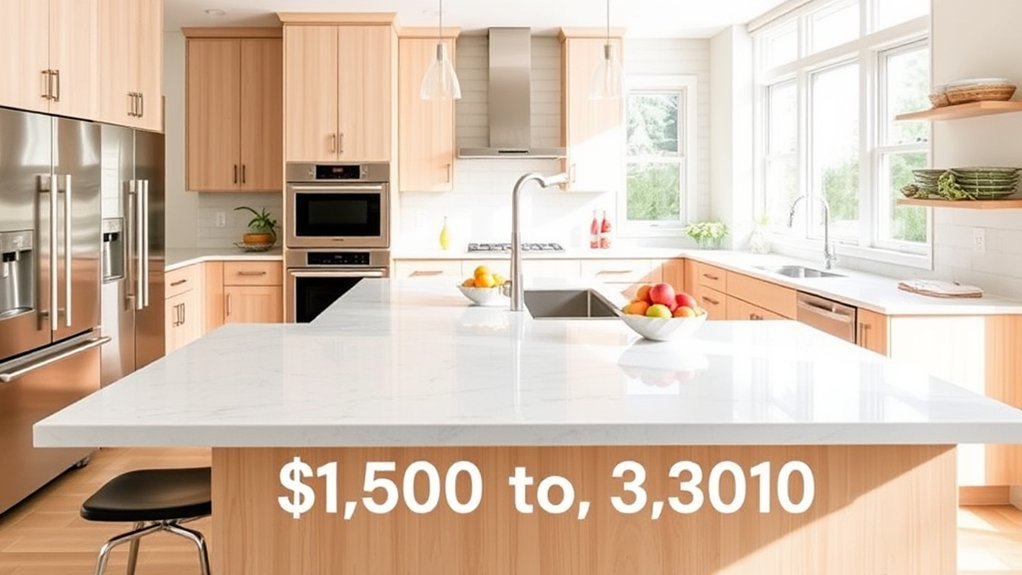
Between $1,500 and $3,500, you can expect a kitchen island that feels more custom and finished, with higher-quality materials, better craftsmanship, and more built-in features. You’ll usually see sturdier frames, thicker countertops, and better storage options like drawers, shelves, or pull-outs.
This price range often gives you more flexibility with design materials, so you can choose hardwood, stone-look tops, or upgraded laminate that better matches your kitchen. You may also get seating overhangs, decorative trim, and a more polished paint or stain finish.
At this level, installation complexities can rise if you add electrical outlets, plumbing for a sink, or extra anchoring for a larger footprint. You’ll likely pay more for labor if the island needs custom fitting or has to work around existing flooring and cabinets.
Kitchen Island Costs: $3,500 to $7,500
At $3,500 to $7,500, your kitchen island starts to move into a more premium, built-in feel, with better materials, stronger construction, and more room for customization. You can choose from richer finishes, sturdier bases, and smarter storage that fits how you cook and gather.
Material options often include hardwood, stone tops, and durable engineered surfaces, while design variations can add seating, shelving, or mixed-height sections.
- Better cabinets and drawers
- More countertop choices
- Added electrical or sink cutouts
- Custom dimensions for your space
At this price, you’re paying for fit and function, not just size. The island can blend with your kitchen instead of standing apart, and the details usually feel more polished.
If you want a piece that looks intentional and works harder every day, this range gives you a strong balance of style, durability, and practicality.
Kitchen Island Costs: Over $7,500
When your kitchen island budget climbs above $7,500, you’re usually looking at a truly custom piece with high-end materials, specialty features, and a design built to match your kitchen exactly.
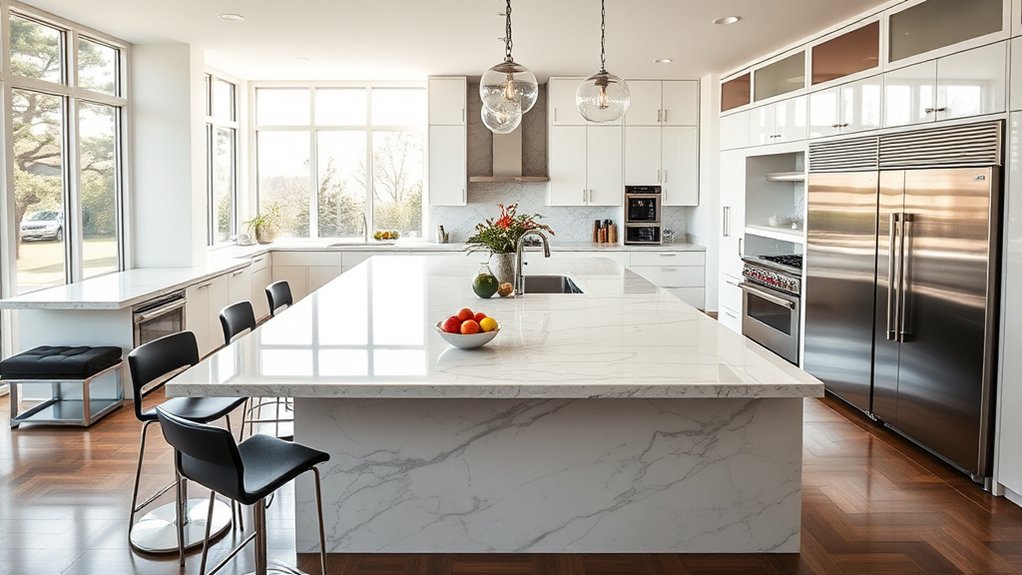
At this level, you can choose luxury materials like marble, quartzite, walnut, or reclaimed wood, and you can pair them with handcrafted cabinetry, hidden storage, and integrated appliances.
Luxury materials like marble or walnut pair beautifully with handcrafted cabinetry and integrated storage.
You’ll also pay for expert labor, detailed millwork, and a custom design that fits awkward layouts or large open-plan spaces. If you want a waterfall edge, seating for a crowd, built-in sinks, or a prep station with power and plumbing, this budget can cover it.
The final price depends on size, finish quality, and install complexity, but you’re investing in a centerpiece that adds function and visual impact. For many homeowners, that higher cost makes sense when the island becomes the kitchen’s hardest-working focal point.
Frequently Asked Questions
How Do Kitchen Island Installation Costs Vary by Plumbing Needs?
You’ll pay less if your island only needs electrical work, but plumbing installation adds a lot. If you want a sink or dishwasher, you’ll need water line costs, drain routing, and sometimes venting, which can raise labor and permit fees fast.
Simple hookups may cost a few hundred dollars, while complex installs can climb into the thousands. Always check your existing layout first, since distance from fixtures drives the bill up.
What Permits Are Required for Adding a Kitchen Island?
You’ll usually need a building permit if you’re adding wiring, plumbing, or structural changes for your kitchen island. If you include appliance integration, you may also need electrical and mechanical permits.
Your local code office may require permits for lighting options, especially if you move fixtures or add outlets. You should also check zoning or HOA rules, and your contractor can help you confirm what applies before work starts.
Can a Kitchen Island Increase Home Resale Value?
Yes, your kitchen island can boost resale value, but a clunky layout can sink it just as fast. You’ll appeal to buyers when you add functional storage, seating, decorative island features, and smart island lighting options.
Keep the design open, stylish, and practical, and you’ll make the space feel more valuable. Still, you shouldn’t expect a huge return unless the island fits your kitchen and your market well.
How Long Does Custom Kitchen Island Fabrication Take?
Custom kitchen island fabrication usually takes 4 to 12 weeks, and you’ll spend extra time if you choose a complex custom design. You’ll move faster when material selection is simple and in stock, but special slabs, hardware, or finishes can add delays.
After that, fabrication and installation often take another few days. If you want a tighter schedule, you should approve measurements, drawings, and selections quickly, and stay responsive throughout.
What Countertop Materials Are Best for Kitchen Islands?
Quartz and granite are your best all-around choices for kitchen islands because they offer durability and plenty of aesthetic options. You can also choose butcher block for warmth and easy refinishing, or porcelain for heat and stain resistance.
If you entertain often, pick a surface that resists scratches and spills. You’ll get the best results by balancing style, maintenance, and how you actually use the island.
Conclusion
No matter where your kitchen island falls in the price range, you’re really choosing the heart of your kitchen. A budget-friendly island can act like a handy workhorse, while a high-end one can feel like a centerpiece jewel.
As you weigh your options, think about how you cook, gather, and live. The right kitchen island won’t just fill space; it’ll anchor your kitchen and make every meal feel a little more connected.