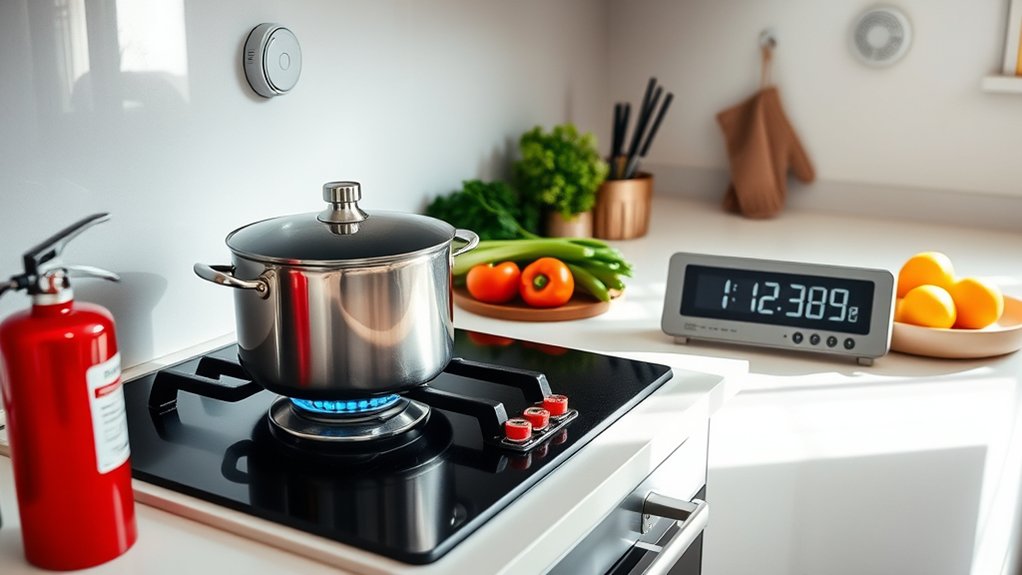
10 Essential Tips to Prevent Kitchen Fires
Cooking at home should feel comforting, not stressful—but worrying about a flare-up can take the joy out of making a meal. You’re not alone: many people struggle to know which precautions matter most. These 10 essential tips to prevent kitchen fires can help you cook with greater confidence and keep your kitchen safer.
To prevent kitchen fires, you should keep flammables like towels, packaging, and paper away from the stove, and never leave cooking unattended. Stay close when frying or broiling, turn pot handles inward, and use heavy-bottomed cookware that matches the burner.
Clean grease from burners, vents, and counters often. Know how to smother a grease fire with a lid or baking soda, keep tools nearby, and plan two clear escape routes so you’re ready if more happens.
Key Takeaways
- Never leave cooking unattended, especially when frying, broiling, or using high heat.
- Keep flammables, towels, and clutter far from the stove and oven.
- Clean grease buildup from stovetops, burners, hoods, and nearby surfaces regularly.
- Use safe cookware, dry oven mitts, and turn pan handles inward while cooking.
- Know how to smother small grease fires, and keep a fire extinguisher, smoke alarms, and escape plan ready.
Keep Flammables Away From the Stove
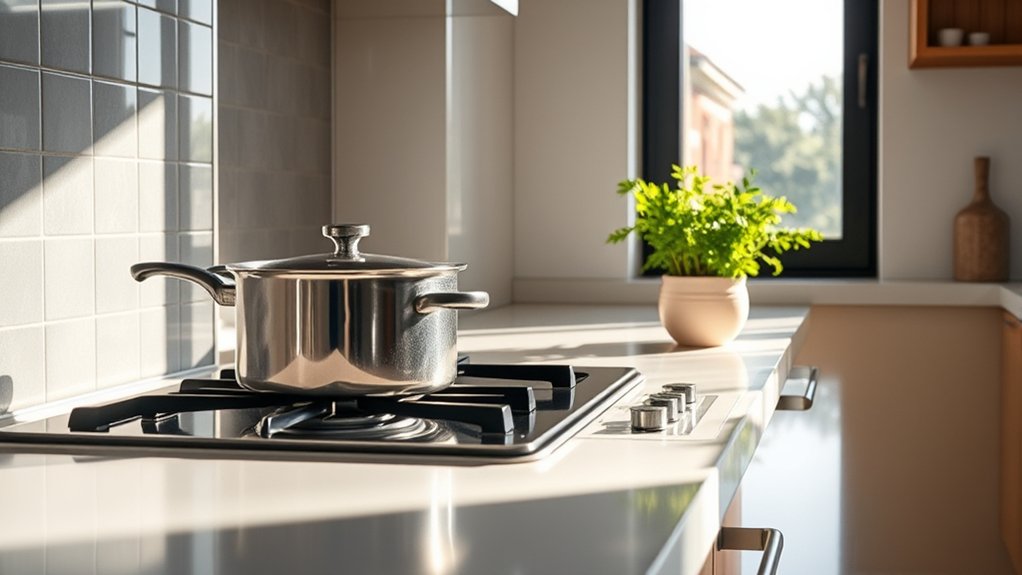
Keep flammables away from the stove so a small mistake doesn’t turn into a fire. You should treat your cooking zone like a no-storage area for paper towels, oven mitts, wooden utensils, dish cloths, and food packaging.
Keep your stove area clear—paper towels, mitts, and packaging should stay far from heat.
Move anything that can catch fire to a cabinet, drawer, or shelf well away from heat. Good flammables storage means you keep sprays, towels, and matches out of easy reach and never crowd the counter near burners.
If you use oils or cleaners, close them tightly and return them to a safe spot after each use. Check cords from blenders or mixers, too, so they don’t hang close to flames.
When you’re done with greasy rags or empty boxes, handle safe disposal right away instead of leaving them near the stove. A clear cooking area gives you fewer fire risks and more room to work carefully every day.
Never Leave Cooking Unattended
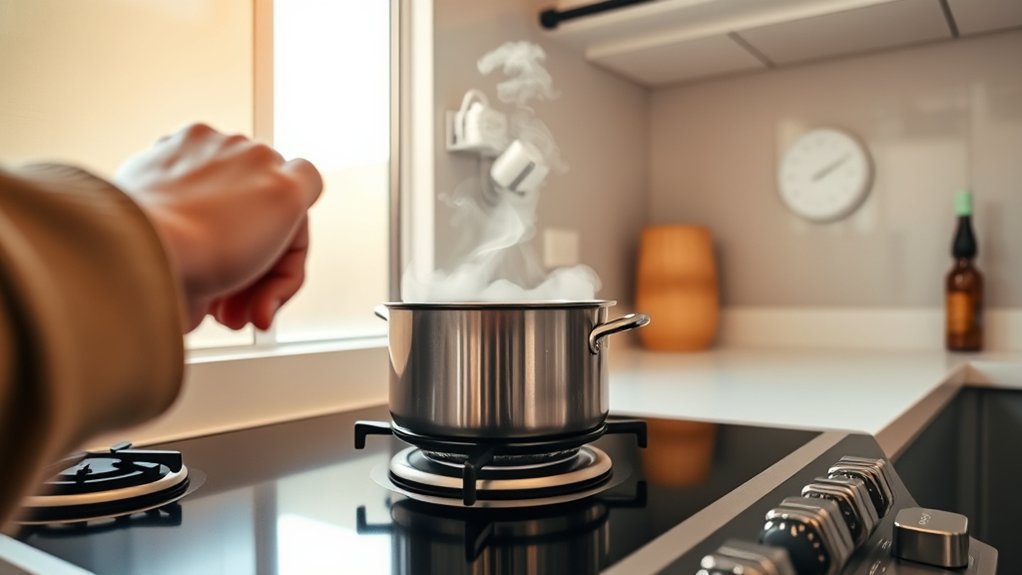
Stay in the kitchen whenever you’re cooking, even if you’ll only be gone for a few minutes. Keep an eye on the heat so you can react quickly if something starts to smoke or boil over. Paying attention can keep a small mishap from turning into a fire.
Stay in the Kitchen
Never walk away from food that’s on the stove, in the oven, or in the microwave, even for a minute. Your attention is a key part of cooking safety, because a quick distraction can turn a simple meal into a dangerous fire.
Stay in the kitchen and keep your eyes on the food until you’re done. If you need to answer the door, check a message, or help someone else, turn off the heat first.
Kitchen vigilance means you notice small changes fast and act before a problem grows. Keep oven mitts, towels, and other clutter away from the cooking area, too.
When you stay close, you protect your home, your family, and yourself from avoidable accidents.
Monitor Heat Constantly
When heat is on, stay alert from start to finish so a small flare-up doesn’t become a fire. You should watch pans, ovens, and broilers closely, because even a minute away can let oil smoke, food scorch, or flames spread.
Keep temperature monitoring simple by checking knobs, timers, and visual cues often. If you need to step out, turn off the burner or ask someone else to take over.
Use heat regulation to lower flame strength when food starts bubbling too fast or sizzling hard. Stir, rotate, and adjust as needed so heat stays steady and controlled.
Your quick response can stop grease from igniting and protect your home. Staying present isn’t optional; it’s the easiest way to cook safely every time.
Stay Close When Frying or Broiling
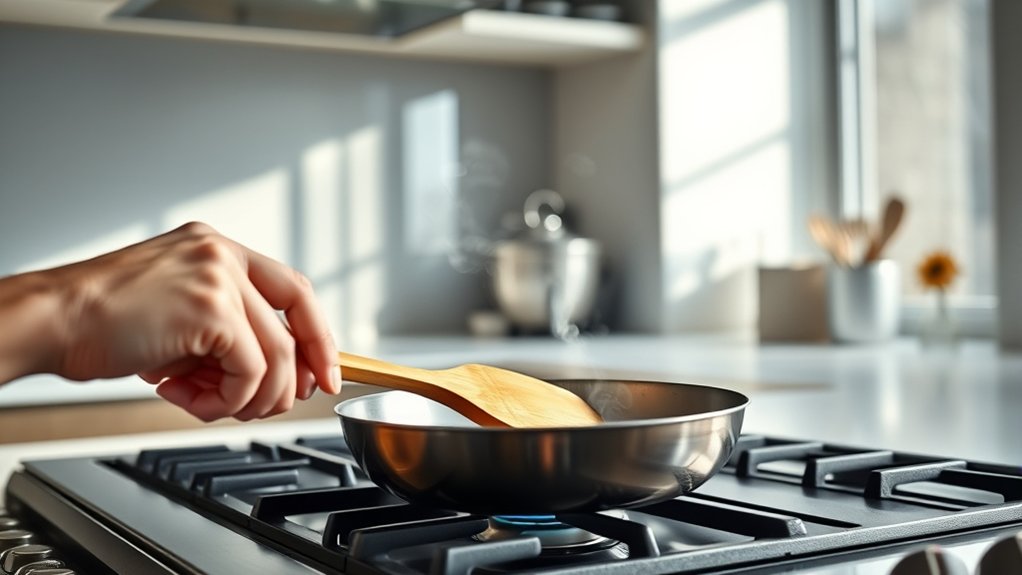
When you fry or broil, stay right by the stove and keep an eye on the food. Turn pan handles inward so you don’t bump them and spill hot oil. And never leave the heat unattended—not even for a moment.
Watch Food Constantly
Food can turn dangerous in seconds, so stay close whenever you’re frying or broiling. Don’t walk away to check messages, answer the door, or prep another dish. Watch the pan, oven, and oil closely, because small bubbles, smoke, or sudden splatter can signal trouble fast.
Good kitchen organization helps you keep tools within reach, so you’re not tempted to leave the heat unattended. Keep a timer on, but rely on your eyes, not just the clock. If food starts smoking or browning too quickly, lower the heat right away.
This habit supports food safety and gives you time to act before flames start. Staying alert also helps you avoid waste, protect your kitchen, and finish cooking with confidence every time.
Keep Handles Turned In
While you’re staying close to the stove, turn pot and pan handles inward so they don’t stick out over the edge. This simple habit improves handle placement and helps you avoid bumping cookware, spilling hot oil, or knocking a pan to the floor.
When you fry or broil, keep your workspace organized so nothing catches on a handle. Use dry oven mitts, and if you need to adjust a pan, do it carefully with one hand free.
Safety awareness matters here because a small snag can become a serious burn fast. Check that children and pets can’t reach the stove area, and remind others in the kitchen to watch where they move.
Never Leave Heat Unattended
Frying and broiling need your full attention, so stay in the kitchen the entire time heat is on. Watch the pan or oven closely, and never step away “for just a minute.” Oil can overheat fast, food can burn, and flames can spread before you return.
Keep a timer nearby, and if you must answer a call or leave the room, turn off the burner or broiler first. Avoid distractions like TV, texts, or chores that pull your attention elsewhere.
When you focus on the cooking area, you prevent accidents and catch warning signs early, such as smoke, popping oil, or strong odors. Staying present is one of the simplest ways to protect your home and keep your meal safe.
Choose Safe Cookware and Heat Levels
Choosing the right cookware and keeping heat at the proper level can greatly reduce your risk of a kitchen fire. With smart cookware selection, you help food cook evenly and avoid hot spots that can scorch oil or sauce. Strong Heat control matters just as much, because high settings can cause spills to bubble over or ingredients to ignite.
Use pans that match your burner size, and choose lids that fit well when you need to simmer.
- Pick heavy-bottomed pots and pans for steadier heating.
- Match the pan size to the burner for safer cooking.
- Lower the flame when food starts to boil fast.
- Replace warped or damaged cookware that heats unevenly.
When you stay alert and choose wisely, you make your kitchen safer and your cooking more predictable every time.
Turn Pot Handles Inward
Turn pot handles inward so they don’t jut out over the edge of the stove where they can be bumped or snagged. When you cook, check pot placement before you turn on the burner and again after you stir. Inward-facing handles lower the chance that a child, pet, or passerby will knock a pan off the stove. They also improve handle safety because you’re less likely to brush a hot grip while reaching for nearby utensils.
Use this quick guide:
| Situation | Action |
|---|---|
| Front burner | Turn handle to the side |
| Back burner | Angle handle inward |
| Crowded counter | Move the pot first |
| Stirring often | Reset handle after stirring |
| Finished cooking | Park handles away from edges |
Make handle checks part of every recipe, especially when you multitask. A few seconds of attention can prevent spills, burns, and accidents.
Test Smoke Alarms in the Kitchen
Even with pot handles turned safely inward, every kitchen still needs a working warning system. You should test your smoke alarms regularly so they can alert you fast when heat or smoke rises.
Start by pressing the test button, then listen for a strong, clear sound. If the tone is weak or absent, replace the batteries or the unit. Keep sensor testing on a monthly schedule, and check the manufacturer’s instructions for any extra steps.
- Test each alarm once a month.
- Confirm alarm placement covers the kitchen approach.
- Replace batteries when the alarm chirps.
- Swap out expired units right away.
You’ll protect your home better when alarms work as intended. If you cook often, make sure nearby alarms aren’t too far from the action, but also won’t trigger from every small puff of steam.
A few quick checks can save time, stress, and far greater damage.
Clean Grease Buildup From Surfaces
Grease that builds up on stoves, backsplashes, and countertops can catch fire fast, so wipe it away before it becomes a hazard. You should make surface cleaning part of your daily routine, especially after frying or sautéing.
Use a degreasing cleaner or warm soapy water, then dry the area to keep residue from lingering. Focus on knobs, handles, vents, and seams where splatter hides.
| Area | What to Clean | How Often |
|---|---|---|
| Stovetop | Burners, grates | After use |
| Backsplash | Splatter spots | Daily |
| Countertops | Sticky film | Daily |
| Range hood | Filters, exterior | Weekly |
Consistent grease removal lowers fire risk and keeps your kitchen fresher. Don’t let a thin film turn into a stubborn layer; quick wipes save time later.
Check cloths and sponges, too, so they aren’t spreading grease around.
Know How to Put Out a Grease Fire
If a grease fire starts, you need to act fast and stay calm. Never throw water on it, because it can spread the flames and make the situation worse. Use smart grease fire safety and focus on fire suppression techniques that smother the fire instead of feeding it.
Act fast, stay calm, and never use water on a grease fire—smother it instead.
- Turn off the heat immediately if you can do it safely.
- Cover the pan with a metal lid or baking sheet to cut off oxygen.
- If flames remain small, sprinkle baking soda over the fire; don’t use flour or sugar.
- If the fire grows, leave the area and call emergency services right away.
You should keep your movements steady and avoid panic. If smoke thickens or flames climb beyond the pan, step back and let trained responders handle it. Knowing these fire suppression techniques helps you protect your kitchen, your home, and yourself when seconds count.
Keep Grease-Fire Tools Within Reach
Keep your fire extinguisher easy to grab, and make sure you know how to use it before you need it. For small grease flare-ups, keep baking soda nearby—but never use water. Also, have a lid and oven mitts within reach so you can cover the pan and smother the flames safely.
Fire Extinguisher Access
Even with careful cooking, a grease fire can spread fast, so you need a fire extinguisher designed for kitchen use within easy reach. Choose smart fire extinguisher placement near an exit, not beside the stove, so you can grab it without crossing flames. Good emergency preparedness means you know where it is before smoke fills the room.
- Mount it where you can spot it instantly.
- Keep the path to it clear at all times.
- Check the gauge and seal regularly.
- Make sure everyone in your home knows how to use it.
When you stay ready, you cut response time and protect your kitchen from a small flare-up turning into a major disaster.
Baking Soda Ready
A small container of baking soda can make a big difference when a grease fire starts, so store it where you can grab it fast. Keep it dry, sealed, and easy to reach, because seconds matter for kitchen safety. You don’t need clutter; you need a clear spot near your cooking area.
| Item | Quick Access Spot |
|---|---|
| baking soda | top pantry shelf |
| spoon | beside the canister |
| clear jar | counter corner |
| label | front-facing |
| reminder note | near the stove |
When flames stay small, you can use baking soda to help smother them before they spread. Keep your focus on calm action, and don’t search drawers in panic. A prepared setup gives you confidence and helps you protect your kitchen faster.
Lid And Mitts
Store one heavy lid and a pair of oven mitts within arm’s reach of your stove so you can act fast if grease flares up. This setup supports lid safety and helps you smother flames without panic.
- Keep the lid nearby, not buried in a cabinet.
- Grab mitts with dry hands for better mitt handling.
- Slide the lid over the pan to cut off oxygen.
- Turn off the heat and leave the pan alone.
Don’t lift the lid unless the fire’s out. If flames grow, back away and call emergency services. You’ll move faster when your tools stay ready, and that quick response can stop a small flare-up from becoming a dangerous kitchen fire.
Plan a Safe Exit for Kitchen Emergencies
When seconds count, you need a clear way out of the kitchen. Map emergency escape routes with at least two exits from the room, and keep them free of chairs, toys, and cords. If a fire flares up, you shouldn’t hunt for a path; you should already know it.
Post a family evacuation plan where everyone can see it, and practice it until each person can leave fast, stay low, and meet outside at a safe spot. Teach children not to grab belongings.
If smoke blocks one door, use the other route without hesitation. Keep a phone near the exit so you can call for help once you’re outside. Make sure windows open easily, but don’t rely on them as your main escape.
In a kitchen fire, your goal is simple: get out, stay out, and let firefighters handle the danger quickly.
Frequently Asked Questions
How Often Should Kitchen Fire Safety Drills Be Practiced?
You should practice kitchen fire safety drills at least twice a year, and more often if you cook frequently or run a busy home kitchen. Your fire drill frequency should fit your safety practice schedule, so everyone stays ready and knows what to do fast.
You’ll build confidence, spot problems early, and reduce panic during real emergencies. Review escape routes, extinguisher use, and alarm steps each time.
What Kitchen Appliances Need Regular Electrical Cord Inspections?
You should inspect the cords on your toaster, microwave, oven, refrigerator, coffee maker, blender, and any countertop cooker regularly. Appliance maintenance and electrical safety matter because damaged cords can spark quickly.
About 51,000 home electrical fires happen each year in the U.S., so you can’t ignore wear, fraying, or loose plugs. Check cords monthly, keep them away from heat, and replace faulty appliances right away to protect your kitchen.
Which Fire Extinguisher Type Is Best for Home Kitchens?
You should choose a Class K fire extinguisher for your home kitchen, especially if you cook with oils and fats. It handles grease fires better than standard ABC models.
If you can’t get a Class K, keep an ABC extinguisher nearby for general fires. Make sure you check fire extinguisher maintenance regularly and include fire safety education in your household so everyone knows how to use it fast.
How Can Children Be Taught to Respond During a Kitchen Fire?
You can teach kids to respond by practicing a simple Fire response plan: stay calm, stop, drop, and get out fast. You should show them where exits are and which route to use.
Stress Child safety by telling them never to hide, touch hot items, or grab pans. You’ll want to practice calling 911, meeting outside, and staying away until an adult says it’s safe.
When Should Kitchen Fire Safety Equipment Be Replaced?
You should replace kitchen fire safety equipment as soon as it’s expired, damaged, or fails inspection. About 60% of home fire extinguisher failures come from poor upkeep, so you can’t ignore wear.
Check fire extinguisher maintenance dates monthly, and swap units after use or if pressure drops. Also replace faded kitchen fire safety signs right away, since clear warnings help you act fast when seconds count and safety depends on visibility.
Conclusion
By keeping flammables away, staying alert, and using the right cookware, you make your kitchen far safer. Watch your pots, turn handles inward, and wipe up grease before it builds.
Keep grease-fire tools close and know how to use them fast. Most of all, plan your escape route before trouble starts. A little care now can help prevent kitchen fires and save your home from going up like a knight’s castle in a dragon’s breath.