
How to Clean a Kitchen in 3 Simple Steps
A messy kitchen can make even a simple cleanup feel overwhelming, especially when you’re not sure where to start. You’re not alone—many people struggle to keep up with kitchen cleaning, but the right supplies can make the job easier.
For an efficient kitchen clean, gather microfiber cloths, a scrub brush, a sponge, rubber gloves, all-purpose cleaner, dish soap, and disinfectant. Keep them in a caddy for easy access.
Next, spray and wipe counters, the sink, faucets, appliance buttons, and other high-touch spots, rinsing and drying as you go.
Finally, sweep first, then mop the floor with warm water and floor-safe cleaner, working toward the exit. Stay with it to pick up a few useful finishing touches.
Key Takeaways
- Gather microfiber cloths, cleaner, gloves, and a caddy before you start for quick, organized cleaning.
- Clear counters, then wipe the sink, faucets, appliances, and other high-touch surfaces with spray cleaner.
- Sweep the kitchen floor first to remove crumbs and debris before mopping.
- Mop with warm water and floor-safe cleaner, working from the farthest corner toward the exit.
- Finish by drying surfaces, removing spots under appliances, and keeping counters clear for easier future cleaning.
Start With the Right Kitchen Cleaning Supplies
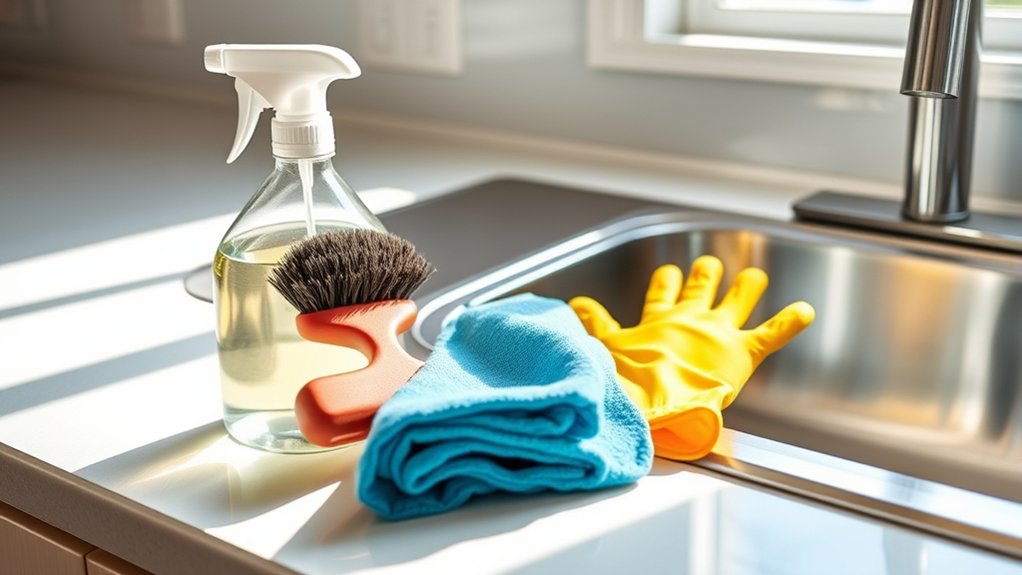
Before you tackle the mess, gather the right kitchen cleaning supplies so you can work efficiently. You’ll move faster when your Cleaning tools are ready, including microfiber cloths, a scrub brush, sponges, rubber gloves, and an all-purpose cleaner. Keep a bottle of dish soap nearby for greasy spots and a disinfectant for high-touch areas. Choose tools that suit your surfaces so you don’t damage finishes or waste time switching products.
Next, set up smart Storage solutions. Use a caddy, bin, or bucket to keep everything in one place, and label any refills so you can grab them quickly next time. If you clean often, store your supplies under the sink or in a nearby cabinet for easy access. When each item has a clear home, you’ll spend less time searching and more time cleaning. With the right setup, you’ll make the whole job smoother, faster, and far less stressful overall.
Clean Counters, Sink, and Small Appliances

Now that your supplies are ready, wipe down the counters, sink, and small appliances to remove crumbs, splatters, and grease. Spray a cleaner on each surface, then use a microfiber cloth to lift grime without streaks.
Pay extra attention to faucet handles, appliance buttons, and the edges around the sink. If you’re organizing utensils, clear the countertop first so you can clean underneath items you use every day.
- Wipe the toaster, microwave, and coffee maker
- Scrub the sink basin and drain
- Clean handles, switches, and knobs
- Sanitize high-touch spots after disinfecting cutting boards
Use a damp cloth to rinse away cleaner from food-prep areas, then dry everything so water spots don’t form. For stubborn buildup, let the cleaner sit briefly before wiping.
When you finish, your counters should look bright, your sink should smell fresh, and your small appliances should feel ready for daily use.
Finish by Mopping the Kitchen Floor
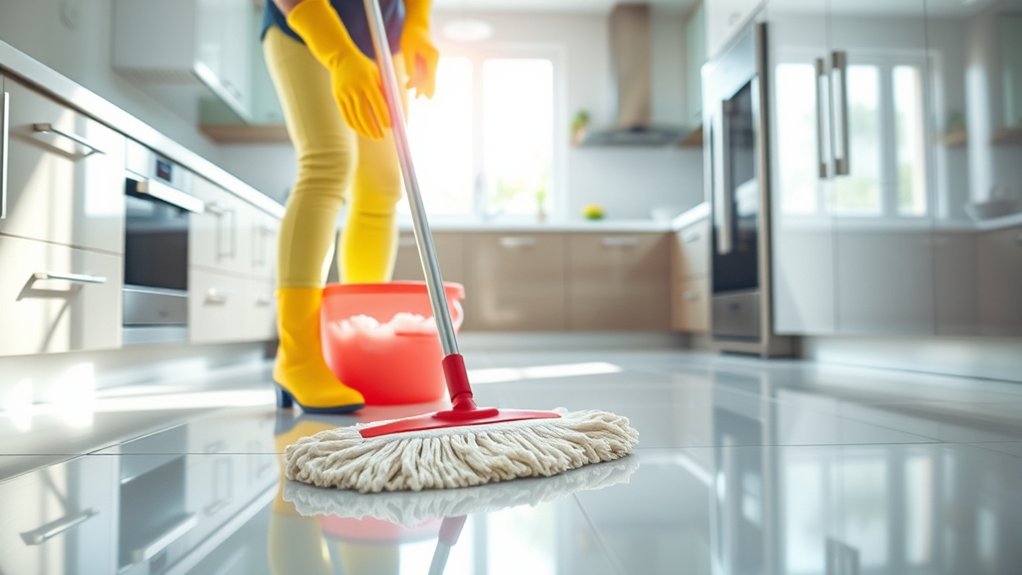
With the counters and sink clean, finish the job by mopping the kitchen floor to pick up crumbs, sticky spots, and dust that settled while you cleaned. Sweep first if you see larger debris, then fill a bucket with warm water and a floor-safe cleaner.
Dip your mop, wring it well, and work from the farthest corner toward the exit so you don’t step on wet spots.
| Spot | Action |
|---|---|
| Under appliances | Slide the mop edge beneath crumbs |
| High-traffic areas | Give them an extra pass |
| Near the trash can | Remove splashes and odors |
This last step supports appliance maintenance by clearing grime around the fridge and stove, and it complements countertop organization because fewer items on counters means faster cleanup.
Let the floor dry completely before replacing rugs or chairs, and enjoy the fresh, finished kitchen.
Frequently Asked Questions
How Often Should I Deep Clean Kitchen Cabinets?
You should deep clean kitchen cabinets every 3 to 6 months, depending on how much cooking you do. If you cook often, wipe spills and grease monthly to support kitchen organization and cabinet maintenance.
For lighter use, twice a year usually works well. Don’t forget to clean handles, hinges, and shelf corners, since buildup can hide there. Regular care keeps your cabinets looking fresh and lasting longer.
What’s the Best Way to Clean Greasy Range Hoods?
You’ll get the best results by washing the hood with warm water, dish soap, and a microfiber cloth, then using grease removal techniques like baking soda paste for stubborn spots.
For range hood maintenance, you should remove and soak filters, wipe the fan cover, and dry everything well. In a knightly twist, treat the hood like a shield: clean it often so grime can’t seize your kitchen.
How Do I Remove Odors From a Kitchen Trash Can?
You can remove odors from your trash can by emptying it, washing it with hot soapy water, and scrubbing the inside and lid. Rinse well, then spray a mix of vinegar and water for better odor removal.
Let it dry fully before adding a clean liner. Sprinkle baking soda at the bottom of the trash can to absorb lingering smells, and take out garbage regularly.
Can I Clean a Microwave With Vinegar Safely?
Indeed, you can clean a microwave with vinegar safely if you use it correctly. You’ll mix equal parts water and vinegar in a microwave-safe bowl, heat it briefly, then let the steam loosen grime. Mind Microwave safety: don’t overheat the mixture, and always use oven mitts. Vinegar cleaning works well for odors and splatters, but you should wipe afterward and avoid harsh scrubbing on delicate surfaces.
How Should I Sanitize Reusable Kitchen Sponges?
You should sanitize reusable kitchen sponges by soaking them in diluted bleach for a minute, then rinsing well and air-drying completely. You can also microwave a damp sponge for one minute or run it through the dishwasher on a hot cycle.
For better dishwasher maintenance, place it on the top rack. Follow sponge replacement tips: swap it out when it smells, tears, or stays slimy.
Conclusion
With the right supplies in hand, you’ve already won half the battle. Wipe down your counters, sink, and small appliances until they shine like polished glass, then sweep and mop the floor so it feels fresh underfoot.
In just three simple steps, you’ve turned kitchen chaos into calm. Keep this easy routine in your back pocket, and your kitchen will stay as bright and welcoming as a sunlit morning. With these tips for how to clean a kitchen, you can keep it feeling fresh and inviting.