How to Measure Kitchen Sink in 3 Easy Steps
Choosing a new kitchen sink can be exciting, but figuring out whether it will fit your countertop and cabinet can be stressful. You’re not alone: many people struggle to get the measurements right.
This guide to how to measure a kitchen sink in 3 easy steps will help you measure with confidence and avoid costly surprises.
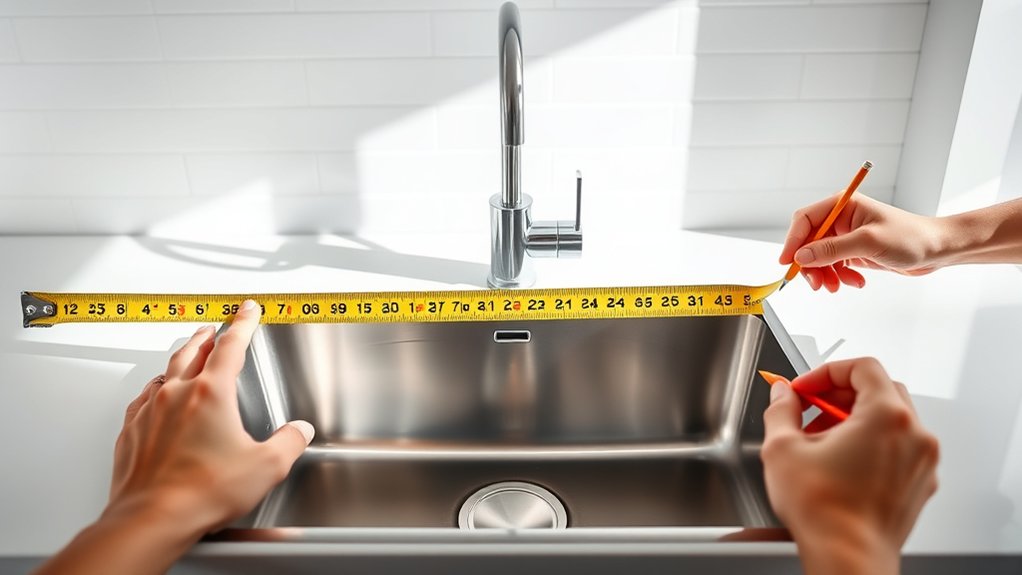
To measure a kitchen sink in 3 easy steps, start by measuring the cutout length and width from edge to edge, then note the widest points if the opening isn’t perfectly square.
Next, measure the sink depth and check the clearance below for plumbing, faucet hardware, and installation space.
Finally, measure your cabinet’s inside width, depth, and height so the new sink fits properly.
With a few more details, you can avoid costly surprises.
Key Takeaways
- Measure the sink cutout’s length and width at the widest points, and note any irregular shapes.
- Check the sink’s depth from rim to bottom to ensure enough clearance below the countertop.
- Match the sink style to the cutout, including undermount, drop-in, or farmhouse requirements.
- Verify cabinet width, depth, and height to confirm the sink will fit properly.
- Confirm drain and faucet locations align with existing plumbing and installation space.
Measure the Sink Cutout Size

Before you buy or install a new sink, measure the existing cutout in your countertop so you know what will fit. Use a tape measure to find the cutout’s length and width from edge to edge, then record the numbers in inches. Measure at the widest points, since older countertops can shift or wear unevenly. If the opening isn’t perfectly rectangular, check both sides and note the smallest dimension. Compare those measurements with the new sink’s specifications to confirm the rim will cover the opening.
Pay attention to sink mounting details, because an undermount, drop-in, or farmhouse style may require a different cutout shape. Also confirm drain placement so the sink lines up with your plumbing and cabinet layout. If the opening is close to the sink size, choose a model with enough overlap to hide rough edges. A careful measurement now helps you avoid costly returns and makes installation go smoothly.
Check Sink Depth and Clearances

Once you know the cutout size, measure the sink’s depth and make sure it fits the space below. Use a tape measure to check from the rim to the deepest point, then compare that number with your available clearance.
Measure the sink’s depth from rim to bottom, then confirm it fits your available clearance.
You’ll want enough room for water resistance around seams, plus space for drains, traps, and any installation tools you’ll use during setup.
- Measure depth at the center and along the sides.
- Check clearance for the faucet hardware and plumbing lines.
- Leave room for easy cleaning and maintenance access.
- Confirm the basin won’t interfere with nearby panels or shelves.
If the sink sits too deep, it can crowd the area underneath and complicate hookups. If it’s too shallow, it may splash more and limit usefulness.
Aim for a balanced fit that gives you comfort, function, and enough space to work.
Check Cabinet Fit and Sink Type

Next, check whether your cabinet can support the sink style you want, since the fit changes a lot between undermount, drop-in, farmhouse, and corner sinks. Measure the cabinet’s inside width, depth, and height, then compare those numbers with the sink’s required footprint and basin size.
Undermount sinks need solid support and a cutout that matches your Countertop materials, while drop-in sinks need enough rim space to rest securely. Farmhouse sinks usually demand a deeper apron-front cabinet and extra reinforcement because they’re heavy, and corner sinks need angled cabinet layouts that often limit storage.
Also, confirm that your Plumbing connections line up with the drain opening and faucet holes before you buy. If the sink sits too close to the back wall or drawer rails, you’ll have installation problems later. When in doubt, check the manufacturer’s specs first.
Frequently Asked Questions
How Do I Clean a Kitchen Sink Effectively?
You can clean your kitchen sink effectively by rinsing it, sprinkling baking soda, and scrubbing with a soft sponge. For better Cleaning tips, use dish soap for grease and vinegar for mineral buildup.
Focus on stain removal by letting stubborn spots sit with paste a few minutes before scrubbing again. Rinse well, dry with a microfiber cloth, and wipe the faucet and drain too. That keeps your sink fresh and shiny.
What Materials Are Kitchen Sinks Commonly Made From?
Kitchen sinks are commonly made from stainless steel, cast iron, composite granite, fireclay, and solid surface materials. You’ll want to compare each option’s material durability, noise, and upkeep before you buy. Stainless steel is lightweight and affordable, while cast iron feels classic and tough.
If you care about eco friendly options, look for recycled stainless or responsibly sourced composites. Your choice depends on style, budget, and how hard you use your sink.
How Often Should I Replace My Kitchen Sink Faucet?
You usually don’t need to replace your kitchen sink faucet often—unless you enjoy surprise drips and the thrilling sound of wasted water. Faucet lifespan typically runs 15 to 20 years, and replacement frequency depends on leaks, corrosion, or poor performance. If it’s wobbling, staining, or fighting you every morning, you should replace it sooner. Otherwise, keep it maintained, and you’ll likely get years of decent service.
Can I Install a Sink Without Professional Help?
Yes, you can install a sink without professional help if you’re comfortable with plumbing, tools, and careful measuring. A DIY installation can save money, but you’ll need to shut off water, seal connections, and check for leaks.
If the job involves tricky countertops, heavy sinks, or complex plumbing, professional assistance may be worth it. You’ll avoid costly mistakes and finish with better results.
What Sink Style Best Matches My Kitchen Design?
You’ll find the best sink style by matching your kitchen’s overall look and workflow. If your theory is that farmhouse sinks fit only rustic spaces, test it against sleek apron-front designs in modern rooms—you might be surprised. For clean lines, choose undermount or stainless steel.
For classic warmth, try fireclay or granite composite. Let your Kitchen decor guide you, and make sure your Plumbing fixtures complement cabinetry, counters, and everyday use.
Conclusion
Now that you know how to measure a kitchen sink, you can see the truth of the theory: a quick, careful check prevents costly mistakes. When you measure the cutout, depth, and cabinet fit, you’re not just gathering numbers; you’re setting up a smoother installation.
So grab your tape measure, confirm your sink type, and make sure everything lines up before you buy. A few minutes now can save you hours later.