10 Tips to Organize Your Kitchen Cabinets Efficiently
Cluttered cabinets can make even simple meals feel like a chore, and you’re not alone—many people struggle to keep kitchen essentials organized. The right products can make it easier to find what you need and make the most of your space.
To organize your kitchen cabinets efficiently, start by decluttering and removing duplicates, expired food, chipped dishes, and broken tools. Sort similar items together, then create zones for baking, prep, and cooking.
Use shelf risers and clear bins to save space and spot small items quickly. Keep everyday dishes and cookware at eye level, use cabinet doors for extra storage, and label shelves clearly.
With a simple system, you’ll make daily cooking easier and uncover even smarter ways to keep it that way.
Key Takeaways
- Declutter cabinets by removing duplicates, expired food, chipped dishes, and broken tools before organizing.
- Group similar items together and create zones for baking, prep, cooking, dishes, and food storage.
- Store everyday essentials at eye level and keep heavier or rarely used items on lower or higher shelves.
- Use shelf risers, clear bins, adjustable shelving, and door storage to maximize cabinet space.
- Label shelves and bins clearly, then maintain cabinets weekly by wiping, resetting, and updating labels.
Declutter Kitchen Cabinets First
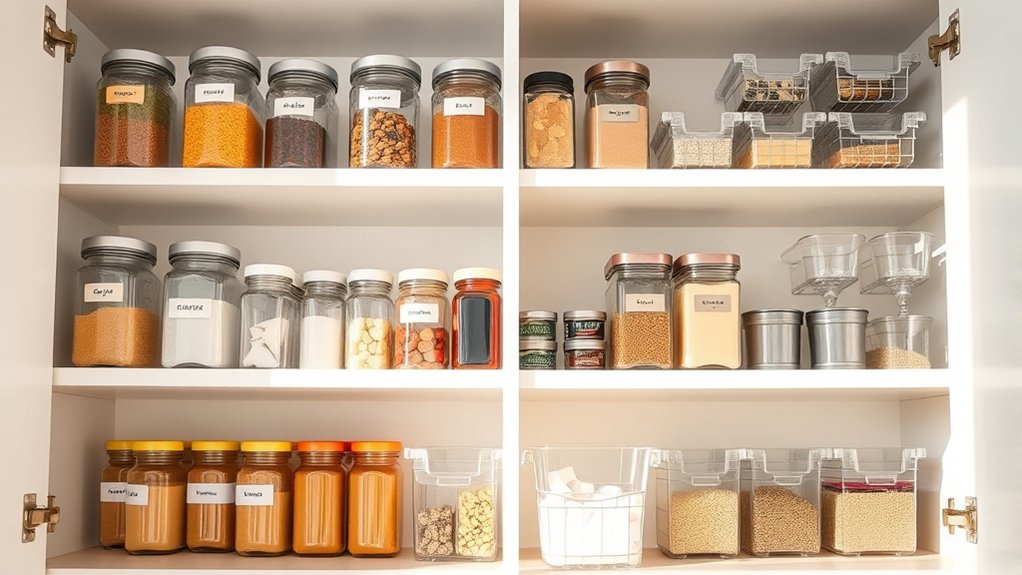
Before you organize your kitchen cabinets, declutter them first so you can work with only what you actually use. Pull everything out, then check each item for duplicates, expired food, chipped dishes, and broken tools.
Declutter first so you can organize only the kitchen items you actually use.
Keep the pieces that earn a place in your daily routine, and let go of the rest. As you empty each shelf, wipe it with simple Cabinet cleaning techniques so you start fresh.
A clean surface helps you see how much space you really have and prevents old crumbs or grease from slowing you down. If you also handle Pantry organization, use the same mindset: keep what serves you, remove what doesn’t, and avoid saving “just in case” items that crowd your cabinets.
When you finish, you’ll have fewer things to manage, clearer shelves, and a much easier path to an organized kitchen that works for you every day.
Sort Kitchen Cabinets by Item Type
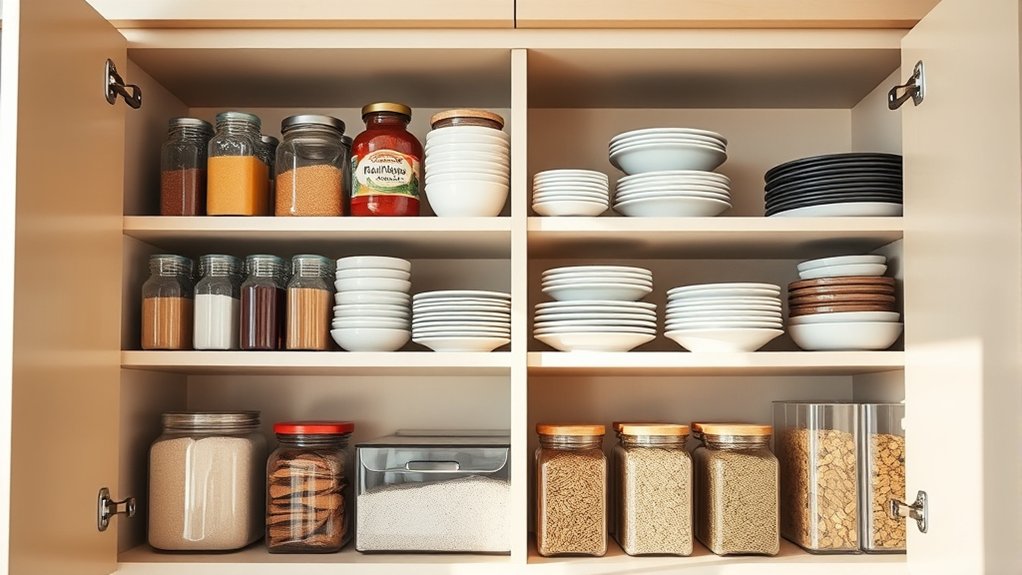
Once you’ve decluttered, sort your kitchen cabinets by item type so everything has a clear home. Group similar items together, and you’ll find what you need faster while keeping your shelves visually calm.
Item categorization helps you build a simple system that matches how you cook and clean. Use organizational tools like bins, labels, or small baskets to separate categories without creating clutter.
- Place plates, bowls, and mugs together.
- Store cooking utensils in one section.
- Keep baking supplies in a dedicated cabinet.
- Group food storage containers with their lids.
As you organize, think about frequency of use. Put everyday items at eye level and less-used pieces higher or lower. This setup reduces searching and makes put-away easier after meals.
When each cabinet holds one clear category, you’ll keep your kitchen efficient, tidy, and easy to maintain.
Use Shelf Risers to Double Storage Space
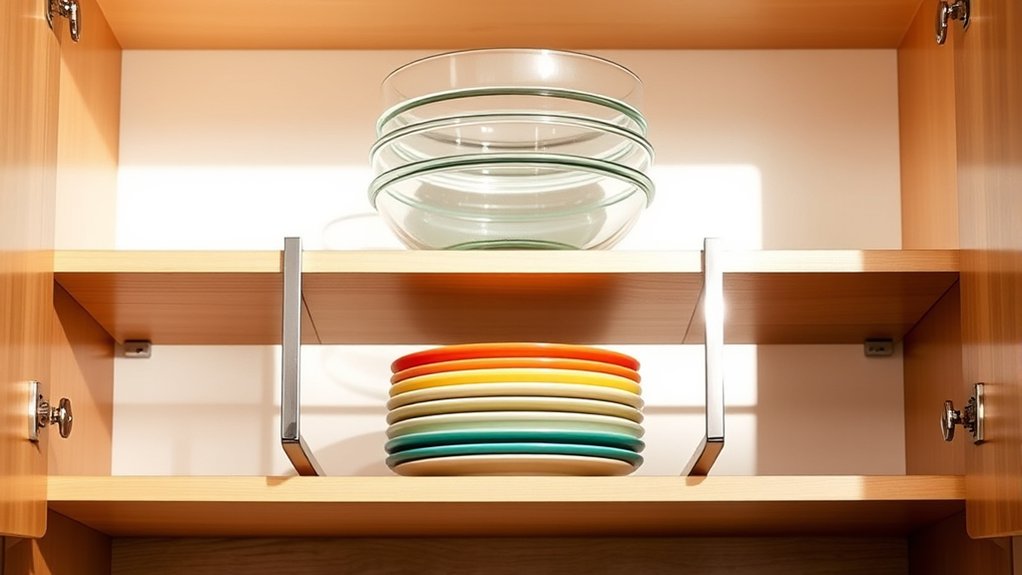
Shelf risers instantly add a second tier inside your cabinets, so you can stack plates, bowls, mugs, or pantry items without wasting vertical space. You’ll make better use of every shelf and reduce the need to pile dishes on top of one another.
Choose risers that match your cabinet depth and height, then place taller items underneath and lighter pieces above. This kind of vertical stacking keeps everything visible and easy to reach, which saves time during meal prep and cleanup.
If your cabinets have adjustable shelving, move a shelf higher or lower to create the ideal clearance for the riser and the items you store on it. Use risers in deep cabinets, corner spaces, or spots where a single shelf leaves too much empty air.
Add Clear Bins for Small Items
Clear bins help you group small kitchen items like spice packets, snack bags, clips, tea packets, and wraps so they don’t get lost in the back of your cabinets. Use Clear bins to turn chaotic shelves into tidy, simple zones for small items, and you’ll save time every day.
- Sort similar items together before you load any bin.
- Pick bin sizes that match the items you store most often.
- Label each bin so you can grab what you need fast.
- Stack or line up bins to make the most of cabinet depth.
Transparent sides let you see contents at a glance, so you won’t buy duplicates or forget what you already have. You can also slide bins out easily when you need a refill, then tuck them back without disrupting the rest of your cabinet. Keep this system flexible, and adjust it as your kitchen habits change.
Keep Everyday Items at Eye Level
Keep your everyday essentials—like plates, mugs, and spices—at eye level so they’re easy to grab. That way, you’ll save time and avoid stretching or bending while you cook. It’s a simple change that makes your cabinets work better for you every day.
Prioritize Daily Essentials
Start by giving your daily essentials the prime real estate in your cabinets: eye level. You’ll reach for these items most, so keep them front and center to save time and reduce clutter. Focus on what powers your routine, from breakfast bowls to dinner plates.
For meal prep, place mixing bowls, measuring cups, and food containers where you can grab them quickly. In utensil storage, keep spatulas, spoons, and tongs in a nearby bin or drawer insert.
- Plates and bowls
- Everyday glasses
- Coffee mugs
- Go-to pantry staples
This setup helps you cook faster, reset faster, and keep your kitchen feeling organized without extra effort.
Eye-Level Accessibility
When you place the items you use most at eye level, you make your cabinets work for you instead of against you. Keep plates, mugs, spices, and snacks where you can grab them without stretching or bending. This simple shift speeds up meal prep and keeps your kitchen calmer.
In pantry organization, group breakfast foods, cooking staples, and lunch supplies on the middle shelf so you see them first. For utensil arrangement, store your spatulas, ladles, and whisks in a nearby drawer or shallow bin at the same height. You’ll waste less time searching and more time cooking.
Save higher shelves for backups and lower shelves for bulky appliances or rarely used items. Quick access always makes daily routines easier.
Store Heavy Items on Lower Shelves
Keep heavy pots, appliances, and bulk pantry items on lower shelves to reduce strain and improve safety. They’re easier to reach there, and you can set them down securely so they won’t shift when you open the cabinet. Reserve the lower shelves for heavier items to help prevent falls.
Lower Shelf Safety
Keeping heavy items on lower shelves helps make your kitchen safer and easier to use. You’ll reduce strain, keep your balance, and cut the risk of dropping jars, mixers, or bulk supplies. This also supports child safety, since little ones can’t easily reach dangerous cookware or heavy containers. It can even limit fire hazards by keeping bulky appliances and clutter away from hot zones and cords.
- Put cast-iron pans on the bottom.
- Store flour, rice, and canned goods low.
- Keep pots near the floor for easy lifting.
- Reserve upper shelves for lighter dishes.
When you organize this way, you move more confidently and clean faster. Lower shelves should work for your body, not against it.
Stable Item Placement
Storing heavy items on lower shelves gives your cabinets more stability and makes daily use safer. You should place cast-iron pans, large mixing bowls, and small appliances near the cabinet base so weight stays balanced.
When you’re organizing, check each shelf’s load and avoid stacking bulky items too high. Adjusting shelf heights can help you create room for tall, dense containers without forcing them into awkward positions.
Use bins or dividers for securing loose items like lids, bakeware, or jars so they don’t shift when you open the door. Keep heavier goods grouped together, but leave enough space to lift them out smoothly.
This setup reduces strain on hinges, prevents tipping, and helps your cabinets stay orderly and sturdy over time.
Easy Access Zones
Once your heavier items are safely placed low, think about how often you reach for each item. Put daily staples in easy access zones at eye level, and keep less-used cookware above. You’ll reduce strain and speed up cooking.
Use lower shelves for cast-iron pans, bulk flour, and small appliances you don’t need every day; this supports appliance organization and keeps cabinets balanced. Reserve upper spaces for lightweight dishes and seasonal extras.
- Store pots and mixers on bottom shelves.
- Keep snacks and spices within arm’s reach.
- Place food preservation supplies near prep areas.
- Label zones so you can reset them fast.
When you group items by use, you’ll find what you need quickly and return it without hassle.
Use Cabinet Doors for Extra Storage
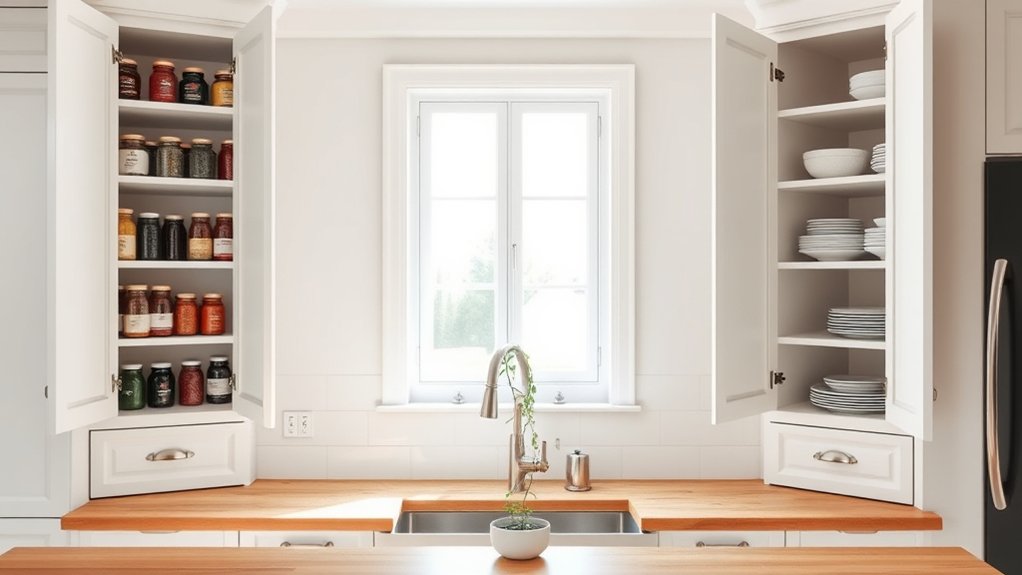
Cabinet doors can do more than just close off your supplies—they can give you valuable extra storage, too. You can turn the inside of each door into a smart home for lids, spices, wrap, or cleaning tools. Add hooks, slim racks, or pouches so you use space you’d otherwise waste.
Hidden compartments work well for rarely used items, while adjustable shelving inside the cabinet lets you fit taller bottles or stacks of containers without crowding.
| Door Area | Best Use | Benefit |
|---|---|---|
| Upper half | Spices | Fast grabbing |
| Lower half | Wraps | Easy reach |
| Full door | Tools | Clear access |
Choose sturdy hardware so the setup stays secure. Keep heavier items inside the cabinet, and reserve the door for lightweight supplies. When you use both sides of the cabinet, you free shelf space and make your kitchen feel calmer, cleaner, and easier to manage.
Label Shelves and Storage Zones
Add clear labels to your shelves for snacks, spices, and dishes. Use zone markers to give each area a purpose, so you’ll always know where things belong. Together, labels and markers make it easier to find what you need, save time, and keep clutter under control.
Shelf Labels
When you label each shelf and storage zone, you make it much easier to keep your kitchen cabinets organized day after day. Use custom shelf labels so you can assign clear homes for dishes, snacks, baking supplies, and cleaning items. Color coded labels add quick visual cues, so you’ll spot what belongs where without second-guessing yourself.
- Choose short, readable names.
- Place labels at eye level.
- Match each label to one category.
- Update labels when your needs change.
You’ll save time when putting groceries away, and everyone in your home can follow the same system. Keep the wording simple, stick to it, and your shelves will stay neat with far less effort.
Zone Markers
Zone markers make it easy to see exactly where each item belongs, so your cabinets stay orderly with less effort. Use zone markers to group similar items and keep every shelf focused on one task.
You can add color coding to speed up sorting and make each area stand out at a glance. When you assign zones, you’ll know where to store baking supplies, snacks, dishes, and cleaning tools without second-guessing.
| Zone | Purpose |
|---|---|
| Top shelf | Rarely used items |
| Middle shelf | Everyday dishes |
| Lower shelf | Heavy cookware |
| Pantry zone | Dry goods |
| Cleaning zone | Supplies and tools |
Review your labels often, and adjust them as your routines change.
Set Up Baking, Prep, and Cooking Zones
Grouping your cabinets by task makes cooking smoother and cleanup faster. Place your baking zone near the mixer and measuring tools, your prep zone beside cutting boards and bowls, and your cooking zone close to pots, pans, and spices. This layout saves steps and helps you move through each recipe with less stress. It also supports better Baking techniques because you can grab the right tools quickly.
- Store flour, sugar, and pans together for easy baking.
- Keep knives, peelers, and mixing bowls in your prep zone.
- Set pots, lids, and utensils near the stove.
- Tuck recipe organization items, like cookbooks or printed cards, where you plan.
When each zone matches the work you do there, you’ll cook faster and waste less time searching. You’ll also notice that ingredients and tools feel more intuitive to reach, which makes daily meal prep feel simpler and more enjoyable.
Keep Your Kitchen Cabinet System Organized
Even a great cabinet layout won’t stay useful unless you keep it organized. You need to reset each shelf regularly, returning items to their assigned zones after every meal.
Use clear bins, shelf risers, and labels as organizational tools so you can spot what’s missing and avoid piling similar items together. Keep everyday dishes, glasses, and cookware in easy-to-reach spots, and move rarely used pieces higher or lower.
When you buy groceries, check for duplicates before putting them away. This habit stops clutter before it starts.
You should also schedule quick cabinet maintenance once a week: wipe shelves, toss expired food, and realign containers that have shifted. If a section feels crowded, remove one item before adding another.
Frequently Asked Questions
How Often Should Kitchen Cabinets Be Reorganized?
You should reorganize your kitchen cabinets every 3 to 6 months, or sooner if clutter builds up. You’ll stay ahead of expired food, duplicate items, and awkward storage by doing quick resets regularly. Add Shelf labeling so you can spot where everything belongs, and use Adjustable shelving to fit changing dishware or pantry goods. If you cook often, check cabinets monthly and tidy the busiest spots each week.
What Cabinet Materials Are Easiest to Keep Clean?
You’ll find laminate, thermofoil, and painted wood cabinets easiest to keep clean. In a cabinet material comparison, laminate resists stains and wipes down fast, while thermofoil handles spills well with little effort. Painted wood looks great, but you’ll need gentler care.
For better cleaning routine tips, use a soft cloth, mild soap, and dry surfaces right away. Avoid harsh scrubbers, and you’ll keep your cabinets looking fresh with less work.
How Can I Prevent Pests Inside Kitchen Cabinets?
You can prevent pests inside kitchen cabinets by keeping food in airtight containers, wiping spills right away, and checking for crumbs often. Use pest prevention habits like taking out trash regularly and storing pet food securely.
Seal cabinet gaps, repair cracks, and add cabinet sealing around edges and pipes so insects can’t get in. If you spot signs of pests, act fast and clean thoroughly before they spread.
What Lighting Works Best Inside Dark Cabinets?
LED strips usually work best inside dark cabinets because they cast even, low-profile light and use very little energy. You’ll get the best results with battery-powered or hardwired under cabinet lighting that turns on when you open the door.
About 80% of homeowners prefer LEDs for their long life and brightness. Choose warm white if you want softer visibility, or cool white if you need sharper contrast.
Should Cabinet Contents Change by Season?
Yes, you should change cabinet contents by season. You’ll use seasonal storage to keep holiday dishes, soup bowls, or grilling gear within easy reach when you need them. Make simple cabinet adjustments as your routine shifts, moving rarely used items higher or lower.
You’ll free up space, reduce clutter, and make cooking easier all year. Keep everyday plates, mugs, and pantry staples front and center, no matter the season.
Conclusion
With a little effort, you can turn crowded cabinets into a system that actually works for you. Start by decluttering, then group similar items, add shelf risers and clear bins, and keep daily essentials within easy reach. If you think organizing will take too long, keep in mind that a few simple changes now can save you time every day.
Stick with the system, and your kitchen cabinets’ll stay neat, practical, and easy to use. These tips to organize your kitchen cabinets efficiently can help you keep them that way.