7 Easy Tips to Organize Your Kitchen
A cluttered kitchen can make even simple meals feel stressful, especially when everyday essentials are hard to find. You’re not alone—many people struggle to keep their kitchen tidy and functional. These easy tips to organize your kitchen can help you make the most of your space.
To organize your kitchen, start by clearing clutter from counters and keeping only daily essentials within reach. Next, create zones for prep, cooking, cleaning, and serving so everything has a place.
Sort cabinets by how often you use items, and add drawer dividers for small tools. Use vertical space with shelves, hooks, and racks, then label pantry containers clearly. Finish with a quick daily reset, and you’ll soon find even smarter ways to keep it all working smoothly.
Key Takeaways
- Clear kitchen counters by storing daily clutter and keeping only essential items within easy reach.
- Create functional zones for prep, cooking, cleaning, and serving to streamline kitchen tasks.
- Organize cabinets and drawers by use frequency, and use dividers to keep tools neat.
- Maximize vertical and hidden storage with shelves, hooks, racks, and cabinet-door organizers.
- Maintain order daily by resetting counters, putting items away, and cleaning as you cook.
Declutter Your Kitchen Counters
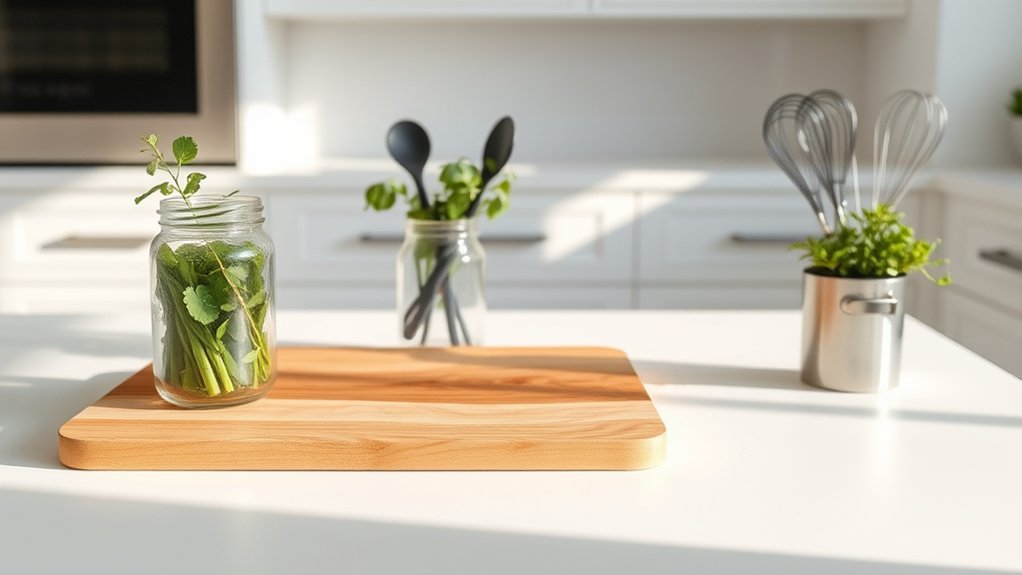
Clearing your counters is one of the fastest ways to make your kitchen feel organized again. You can start by removing anything you don’t use every day, like mail, random gadgets, and decorative clutter.
Clear your counters by removing daily clutter, and your kitchen will instantly feel more organized.
Keep only the essentials within reach so your workspace feels open and easy to clean. If small items keep piling up, use countertop accessories like a utensil crock or paper tray to contain them neatly.
Move rarely used appliances into appliance storage, whether that’s a cabinet, pantry shelf, or closet. This frees up valuable surface space and helps you see what really belongs out.
Wipe the counters once they’re clear, then put back only what supports your routine. When you limit what stays visible, your kitchen looks calmer and works better.
A clean counter also makes cooking faster because you won’t have to move things around every time you need room.
Create Kitchen Zones That Work
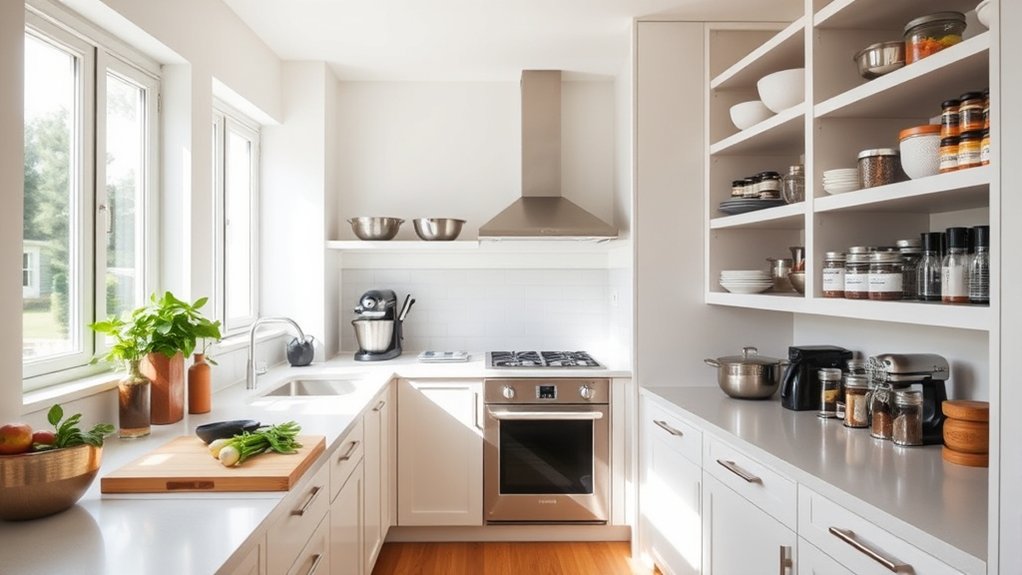
A well-organized kitchen works best when each area has a clear job, so group items by task instead of spreading them across the room. Start by dividing your space into prep, cooking, cleaning, and serving zones.
Keep cutting boards, knives, and mixing bowls near your prep area so you can move quickly. Place pots, pans, and utensils close to the stove to make cooking smoother.
Near the sink, store dish soap, sponges, and drying tools for easy cleanup. In your serving zone, keep plates, glasses, and serving tools within reach.
Smart storage helps you protect each zone’s purpose without crowding it. Use drawer dividers, bins, and labels to keep everything in its place.
Zone customization lets you adjust each area to fit how you actually cook and clean, so your kitchen feels efficient and natural every day.
Organize Cabinets by Use Frequency
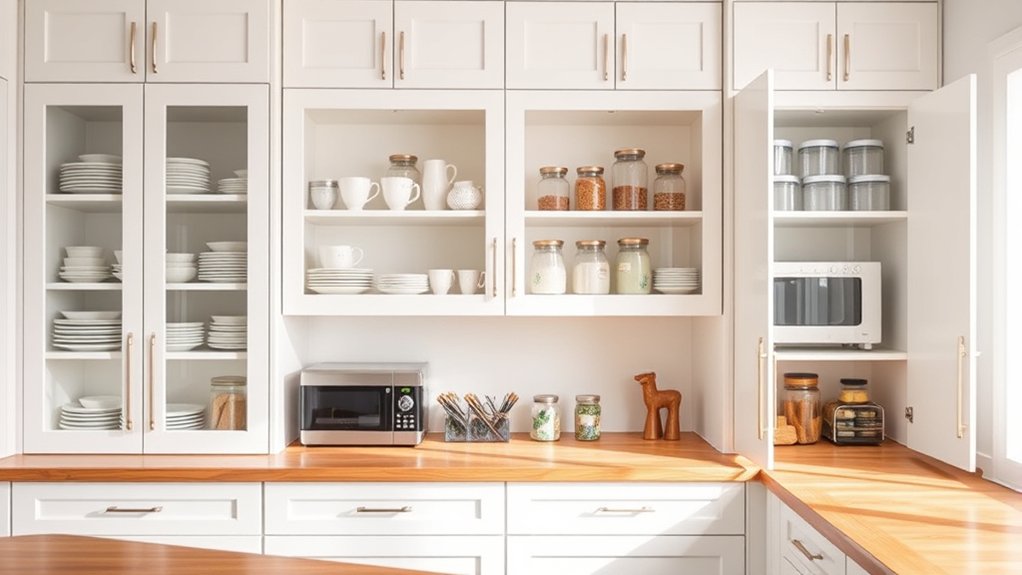
Once your kitchen zones are set, arrange your cabinets by how often you use each item so the things you reach for most stay front and center. Keep everyday plates, bowls, mugs, and cooking oils at eye level, where you can grab them fast. Move holiday dishes, extra bakeware, and rarely used gadgets to higher shelves or lower corners. This simple appliance grouping helps you free prime space for what truly earns a spot there.
Next, think about utensil sorting by task. Store spatulas, spoons, and tongs near the stove, while serving pieces can live closer to the table or dining area. Group similar items together so you don’t waste time searching during meal prep.
As you place each item, ask yourself whether you use it daily, weekly, or only occasionally. That quick check keeps your cabinets practical, tidy, and easy to maintain every day.
Add Drawer Dividers for Small Items
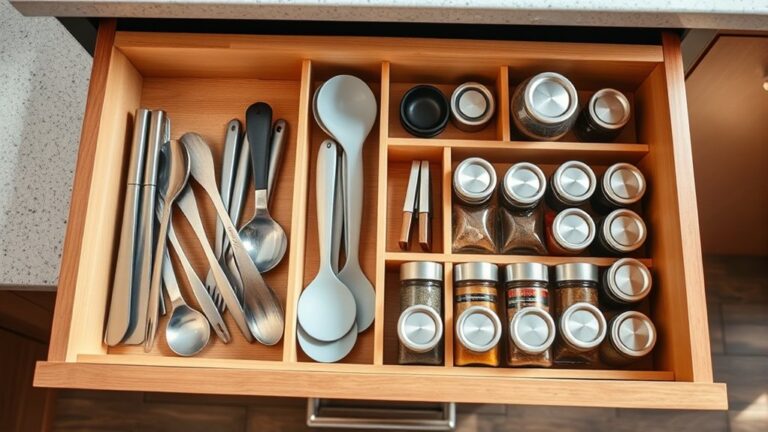
Drawer dividers help you keep the small stuff under control, so you’re not digging through a jumble every time you need a tool. They make drawer customization simple, and they turn utensil sorting into a quick habit instead of a daily chore.
Choose dividers that fit your drawer depth and match the items you use most. Keep one section for measuring spoons, one for peelers, and another for bag clips.
| Item | Best Divider Use |
|---|---|
| Measuring spoons | Narrow slot |
| Peelers | Shallow section |
| Bag clips | Small bin |
| Whisks | Long compartment |
| Corn cob holders | Tiny tray |
You’ll spend less time searching and more time cooking when every piece has a clear place. For the best results, review each drawer regularly and remove tools you don’t need.
Clean, labeled sections help you stay organized and make your kitchen feel calmer every day.
Use Vertical Space for Kitchen Storage
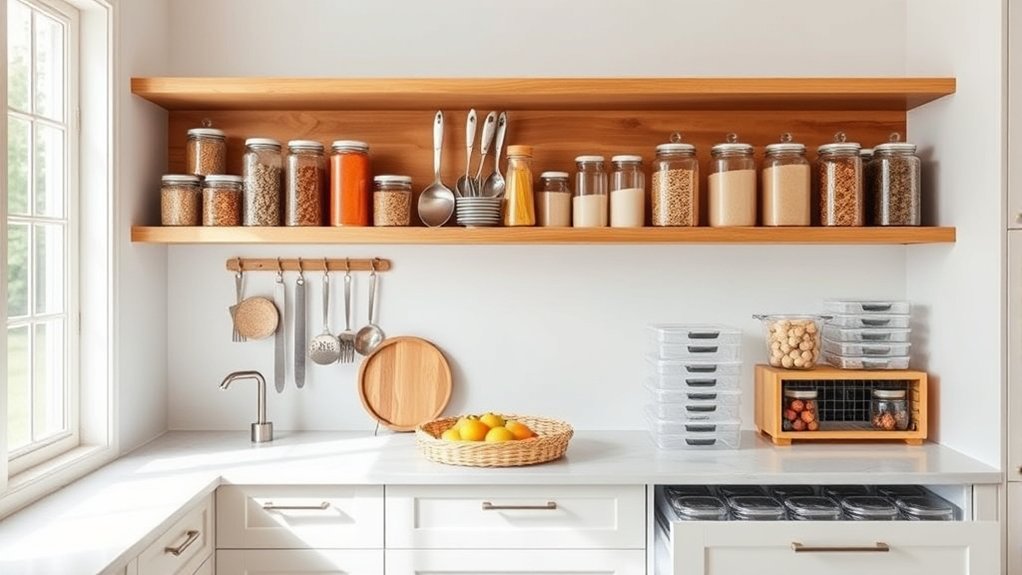
When your drawers are under control, look up for extra storage opportunities on your walls, cabinet doors, and inside pantry spaces. You can mount vertical shelving to free counters and keep everyday items within easy reach.
Open shelves work well for bowls, mugs, and spices, while slim racks help you stack cutting boards or baking sheets without crowding cabinets. Hanging pots from a sturdy rail or ceiling rack also saves valuable cabinet room and adds a practical, lived-in look.
- Use hooks on cabinet doors for measuring cups or lids.
- Install a narrow shelf above the sink for soap and scrubbers.
- Add a wall rail for hanging pots and utensils you use often.
Simplify Pantry Storage With Clear Labels
Clear labels can turn a messy pantry into a space you can actually use, because you’ll know exactly what’s inside each container at a glance. Choose a simple labeling system that matches how you shop and cook, then stick with it for bins, jars, and baskets.
Use bold, easy-to-read text for flour, rice, pasta, snacks, and baking supplies so you don’t waste time searching. If you decant staples into matching jars, container uniformity will make the shelves look cleaner and help you spot low supplies fast.
Label both the front and top of containers if you store them on high shelves. Keep names specific, like “brown sugar” instead of just “sugar,” to avoid mix-ups.
You can use adhesive labels, chalk markers, or a label maker, whichever feels easiest for you. When every container is clearly marked, you’ll reach for what you need faster and keep your pantry simpler overall.
Keep Your Kitchen Organized Daily
To keep your kitchen organized every day, try a quick reset at the end of the day. Put things back where they belong and wipe down surfaces as you go to keep the counters clear. Loading the dishwasher and sweeping up crumbs are small tasks, but they’ll help you stay ahead of the mess.
Daily Reset Routine
A quick daily reset keeps your kitchen from sliding back into clutter, and it only takes a few minutes. You can protect your progress by putting things back where they belong after each use. Tidy dishes, wipe spills, and return small tools to their spots so tomorrow starts smoothly.
When you finish meal prep, check that containers are closed and stored, and tuck extra gadgets into appliance storage instead of leaving them out.
- Load or rinse dishes right after meals.
- Put ingredients away as soon as you’re done.
- Sort leftovers and clean tools before you leave the room.
This simple routine helps you keep order without a big cleanup. Keep it consistent, and your kitchen’ll stay calm, functional, and easy to use every day.
Clear Counter Habit
Once your daily reset is in place, keeping counters clear becomes the next easy habit for a tidy kitchen. You can protect your work space by giving every item a home and returning it there after each use.
Keep only the essentials you reach for daily, like a coffee maker or fruit bowl, and let everything else live in a cabinet or drawer. When you notice counter clutter, pause and put it away before moving on.
This small act supports habit formation because your kitchen stays easier to use, wipe down, and enjoy. You’ll cook with less distraction and feel more in control. Over time, a clear counter becomes your default, not a special effort.
Quick Cleanup Tasks
Quick cleanup tasks keep your kitchen organized day to day by stopping messes before they spread. You can wipe spills right away, rinse dishes after use, and sort ingredients as you finish cooking.
During meal prep, keep bowls, knives, and cutting boards moving through a quick wash cycle so clutter doesn’t build up. A two-minute reset after dinner helps you put away leftovers, empty the sink, and clear the table.
- Toss expired items from the fridge each week.
- Wipe appliance handles to support appliance maintenance.
- Return spices, lids, and tools to their spots.
When you make these small actions routine, your kitchen stays easier to use, safer to move through, and faster to clean.
Frequently Asked Questions
How Do I Organize a Small Kitchen With Limited Cabinet Space?
Use vertical space with wall racks, magnetic strips, and over-the-door organizers, then keep only essentials in your cabinets. Group similar items in clear bins, and store stackable containers to save room. Add simple Kitchen decor like hooks or shelves that work hard and look good. For better Cooking tips, keep daily tools near the stove and sink, and rotate rarely used items elsewhere so you’ve got room to move.
What Are the Best Storage Solutions for Awkward Corner Cabinets?
You’ll get the best results with pull-out trays, lazy Susans, and tiered inserts for awkward corner cabinets. These corner cabinet optimizations help you reach items without digging.
Add custom shelving to match your cabinet’s depth and shape, and you’ll waste less space. Use clear bins to group similar items, and label everything so you can grab what you need fast. If the corner’s deep, store rarely used items there.
How Can I Organize Kitchen Utensils Without Overcrowding Drawers?
You can keep utensils from turning your drawers into a jungle by sorting them into utensil dividers and moving some items onto magnetic strips. Keep only daily essentials in the drawer, then store extras in a countertop crock or wall-mounted holder.
Group similar tools together, and you’ll find what you need fast. This setup gives you breathing room, cuts clutter, and makes your kitchen feel calmer and easier to use.
Which Containers Work Best for Storing Dry Ingredients Long-Term?
Airtight containers work best for storing dry ingredients long-term. You’ll want BPA-free plastic, glass, or stainless steel options with tight-sealing lids, because they keep out moisture, pests, and odors. For meal prep, choose clear containers so you can spot flour, rice, or oats fast. You should also pick stackable sizes to save space and label each one with the purchase date and contents.
How Often Should I Deep Clean Kitchen Storage Areas?
Deep clean kitchen storage areas every three to six months, and you’ll keep grime from growing. You should also follow cleaning routines weekly for spills and crumbs, while sticking to maintenance schedules monthly for shelves, bins, and pantry corners.
If you store dry ingredients, check for leaks, pests, and stale stock each season. This steady schedule keeps your storage sanitary, simple, and stress-free without letting messes multiply.
Conclusion
When you clear the clutter, your kitchen becomes more than a room—it becomes the heart of calm in your home. Each labeled jar, tidy drawer, and open counter is a small promise that you’re in control.
Like a well-tended garden, your kitchen thrives when you give it attention each day. Keep the zones simple, the shelves intentional, and the habits steady, and you’ll always have a space that welcomes you back. These easy tips to organize your kitchen can help you keep it that way.