How to Snake a Kitchen Drain in 3 Easy Steps
A slow or clogged kitchen drain can quickly turn a simple cleanup into a frustrating chore. You’re not alone—many people struggle with stubborn clogs, and the right drain snake can make the job easier.
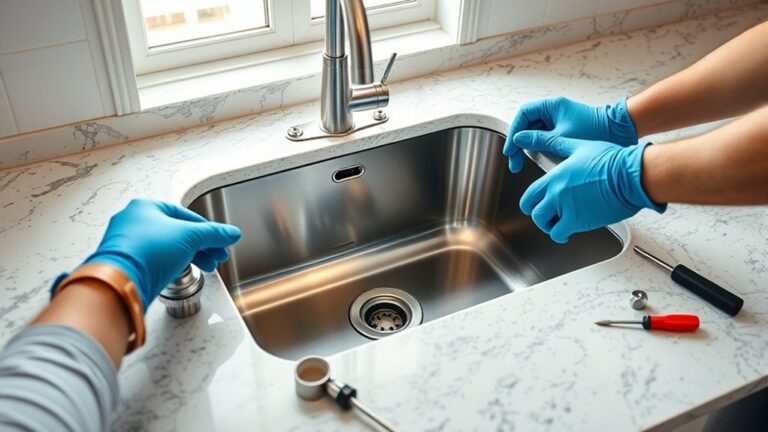
First, place a bucket under the trap, clear the cabinet, and remove standing water from the sink. Unplug the disposal if you have one, then put on gloves and eye protection.
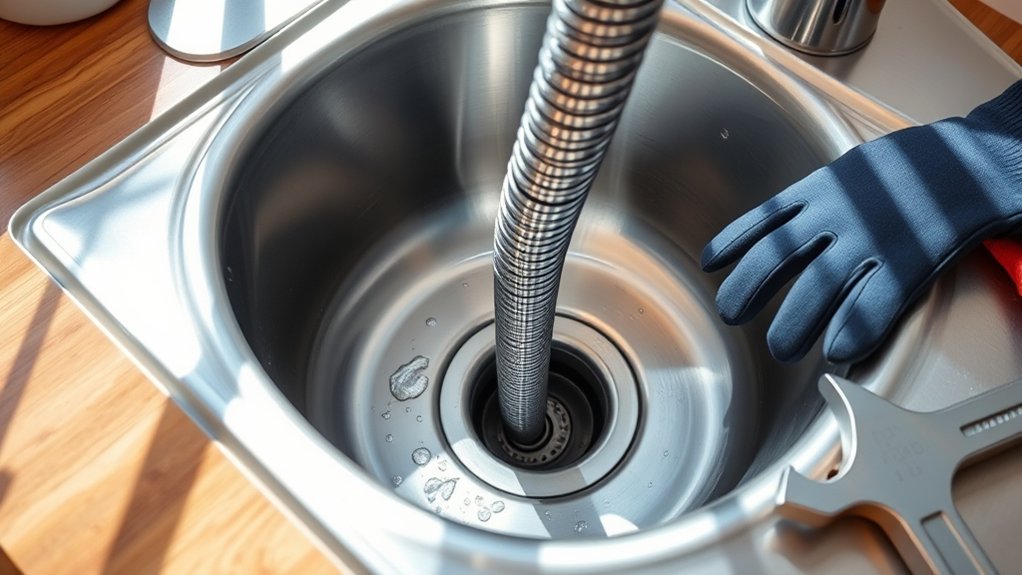
Next, feed a small hand auger or zip snake into the drain and turn it clockwise as you push gently through the clog.
Finally, flush with hot water and test the flow. If it still drains slowly, there’s more you can do.
Key Takeaways
- Gather a small hand auger or zip snake, wear gloves, and place a bucket and towels under the trap.
- Remove standing water, clear cabinet space, and inspect pipes for leaks before starting.
- Feed the snake into the drain, turn clockwise, and apply steady pressure until you feel the clog break up.
- Retract the snake, clean debris off it, and repeat if needed without forcing the pipe.
- Flush with hot water, then test drainage and watch for slow flow, gurgling, or backups.
Gather the Right Drain Snake and Prep the Sink
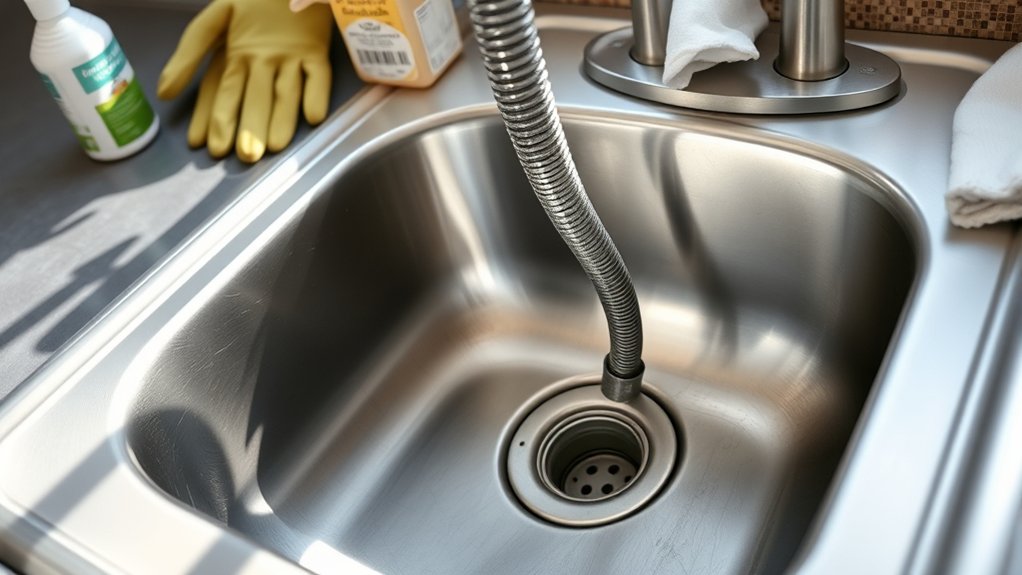
Before you snake the drain, choose the right tool for the job: a small hand auger or zip-style drain snake usually works best for a kitchen sink. Set a bucket under the trap, clear dishes and cleaners from the cabinet, and lay down towels to catch drips.
Choose a small hand auger or zip-style snake, and prep the sink with a bucket and towels.
Then shut off the faucet and unplug the disposal if you have one. You should also remove standing water from the basin with a cup or sponge so you can work cleanly.
Next, inspect the visible pipes for leaks, loose joints, or corrosion; that quick pipe inspection helps you avoid worsening an existing problem. Keep gloves nearby and wear eye protection if you’ll be working under the sink.
Good drain maintenance starts with preparation, because a tidy workspace lets you move faster and reduce mess. When you’ve got the right snake, a clear sink, and access to the trap, you’re ready for the next step.
Clear the Clog With a Drain Snake
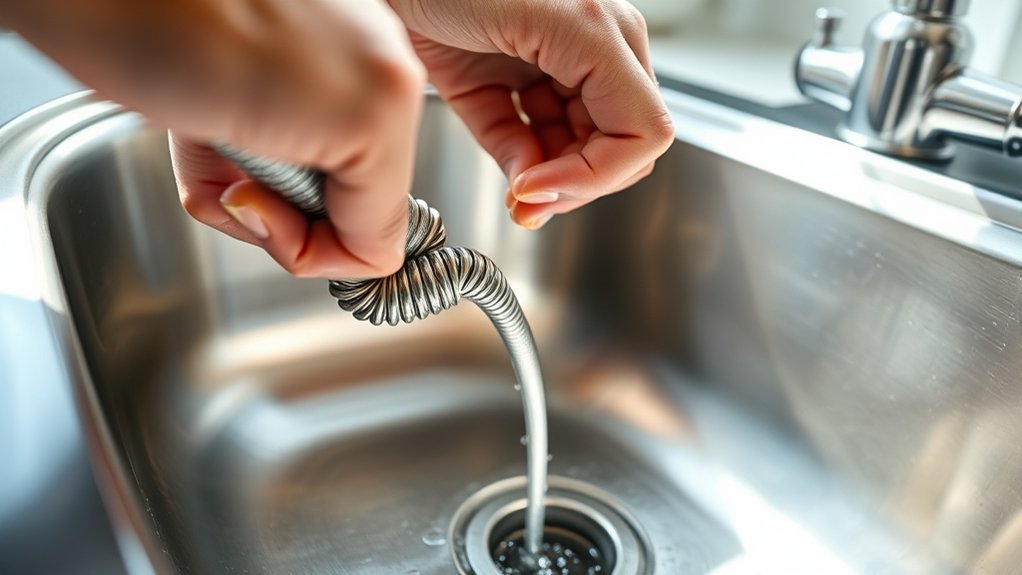
Feed the drain snake into the drain opening and work it gently down the pipe until you feel resistance. That resistance usually means you’ve reached the clog. Turn the handle clockwise as you push, so the auger bites into the blockage instead of sliding past it. Keep steady pressure and let the snake do the work; forcing it can damage the pipe and break your plumbing safety routine.
- Twist slowly to grab grease, food, or hair.
- Pull back a little, then advance again if the snake stalls.
- Stop if you hit a hard bend and try a different angle.
When the snake catches debris, retract it carefully and wipe it clean before reentering. You may need a few passes to break the clog apart. If the drain still feels blocked, compare your results with alternative cleaning methods rather than pushing harder.
Flush the Kitchen Drain and Check Flow
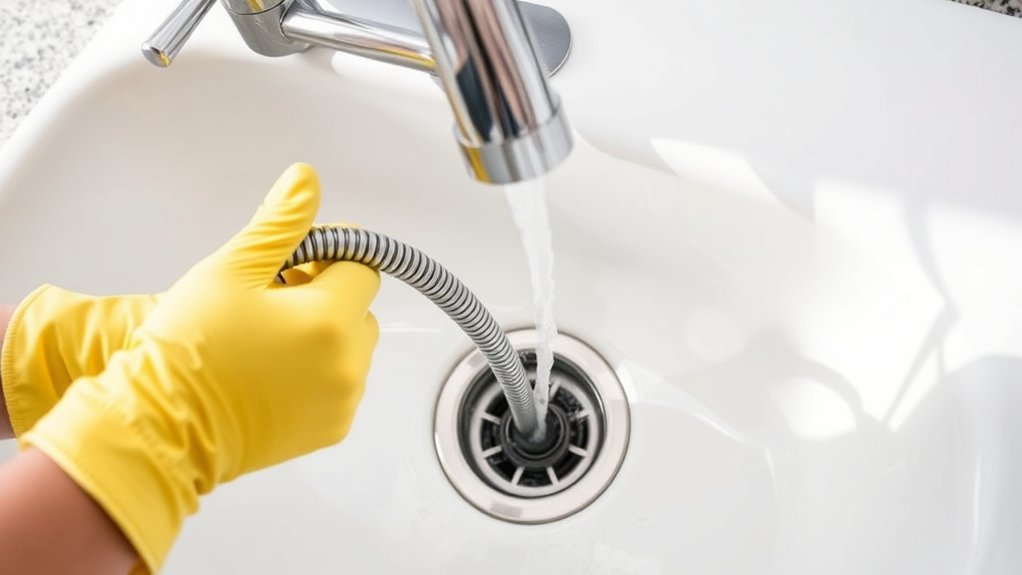
Once the clog breaks loose, run hot water down the drain for several minutes to flush out loosened debris and grease. Watch the sink closely and listen for gurgling, slow draining, or backup, because those signs tell you whether the line still has a partial blockage. If the water drains freely, you’ve likely cleared the pipe. If it stalls, repeat the snaking process with your drain cleaning tools and flush again.
Stay mindful of plumbing safety while you test the drain. Keep the area dry so you don’t slip, and avoid using boiling water on PVC pipes. You can also fill the sink and release it all at once to check the flow under pressure. When the water moves quickly and the trap stays quiet, you’ve done the job right. Finish by rinsing away residue and wiping up any mess around the basin.
Frequently Asked Questions
Can I Use a Drain Snake on a Garbage Disposal?
Yes, you can use a drain snake on a garbage disposal, but you should turn off the power first and use caution. You’re best off checking for a simple drain clog before forcing the snake into the unit. If the Garbage disposal blade area feels jammed, clear it manually or reset it. Don’t push hard, since you could damage the disposal. If the clog stays, call a plumber.
What Size Snake Works Best for Kitchen Drains?
A 1/4-inch to 3/8-inch snake usually works best for kitchen drains, but the right size depends on the clog. You’ll get the easiest Drain cleaning with a flexible 1/4-inch cable for small blockages, while a sturdier 3/8-inch snake helps with tougher grease buildup. Don’t wait too long—the wrong size can snag or stall. For better Pipe maintenance, start small, then move up only if you need more power.
How Often Should Kitchen Drains Be Snaked?
You should snake your kitchen drain only when you notice slow draining, gurgling, or recurring clogs, not on a rigid schedule. For preventative maintenance, you can flush it monthly with a cleaning solution and hot water to reduce buildup.
If you cook with lots of grease or food scraps, you’ll likely need to snake it a few times a year. Don’t overdo it, or you could wear out the pipes unnecessarily.
Is a Drain Snake Safe for PVC Pipes?
Yes, a drain snake is usually safe for PVC pipes, like a careful hand easing open a stuck drawer. You should match the snake to the pipe material and avoid forcing it.
Use safety precautions by turning slowly, wearing gloves, and stopping if you feel resistance. You can damage PVC if you crank hard or use a sharp auger.
If the clog won’t budge, call a plumber before you crack anything.
When Should I Call a Plumber Instead?
Call a plumber when your sink keeps clogging after DIY alternatives, water backs up into other fixtures, or you smell sewage. You should also call if you’ve already tried snaking and it won’t clear, or if you’re dealing with old, fragile pipes. Common mistakes like forcing the snake, using harsh chemicals, or ignoring recurring clogs can turn a small problem into expensive damage.
Conclusion
Now your kitchen drain’s back on track, like a narrow trail cleared after a storm. You chose the right snake, worked the clog loose, and sent water through to prove the path is open again.
If the flow still stumbles, don’t force it—try again or call in help. A healthy drain is like a quiet river: it moves best when you keep it clear, steady, and cared for before trouble grows. With the right care, snaking a kitchen drain can help keep things flowing smoothly.