How to Kill Ants in the Kitchen Step by Step
Ants in the kitchen can turn a small spill into a frustrating parade across your counters. If you’re struggling to get rid of them, you’re not alone. This step-by-step guide to how to kill ants in the kitchen can help you tackle the problem and keep them from coming back.
Start by finding where ants enter your kitchen, then seal cracks around baseboards, pipes, windows, and cabinets.
Next, remove food and water by wiping crumbs, grease, sugar, pet food, and spills right away.
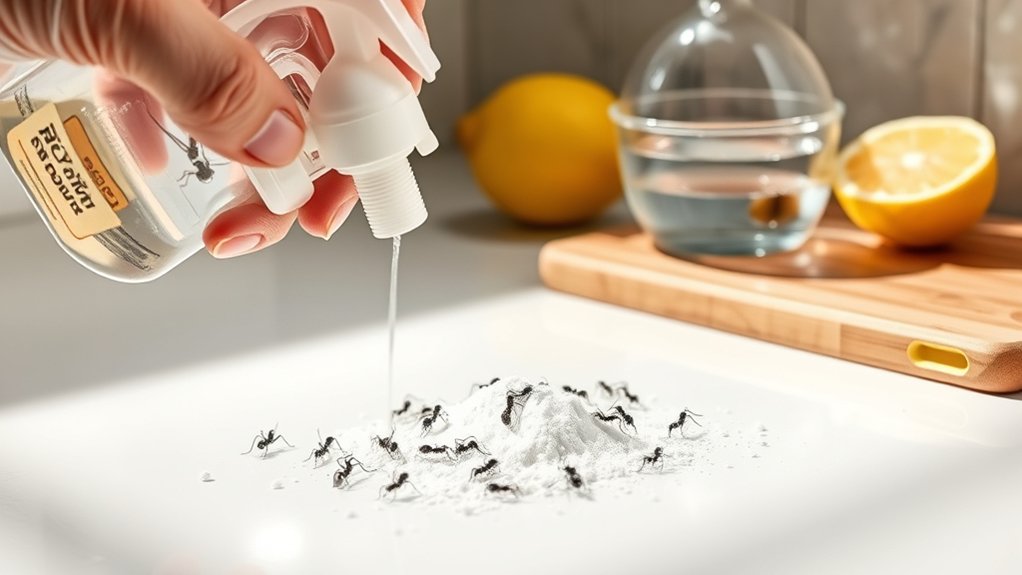
Clean ant trails with hot soapy water or vinegar to erase scent paths.
Place bait near active trails and entry points so ants carry it back to the colony.
Then treat problem spots carefully, and you’ll see how to keep them from coming back.
Key Takeaways
- Trace ant trails to find entry points, nests, and paths along baseboards, sinks, pipes, windows, and cabinets.
- Clean up all food, crumbs, grease, and spills immediately, and dry sinks, counters, and pet bowls.
- Wipe trails with hot soapy water, vinegar, or lemon juice to remove scent marks and disrupt navigation.
- Place ant bait near active trails, entry points, and under sinks, then let workers carry it back to the colony.
- Seal cracks and gaps with caulk or steel wool, and keep inspecting kitchen hotspots to prevent ants returning.
Identify Where Kitchen Ants Are Coming From
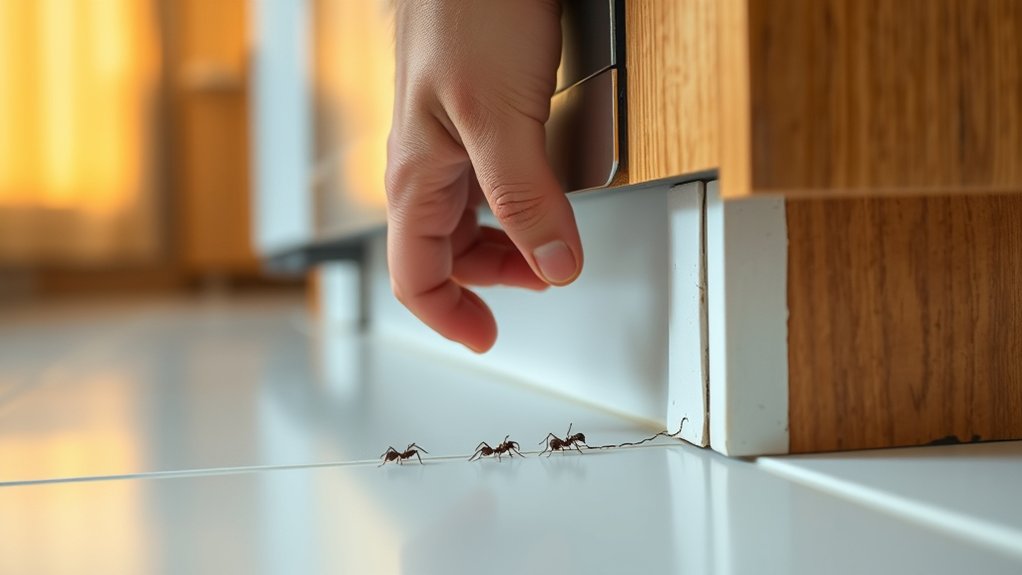
Before you can get rid of kitchen ants, you need to track down where they’re coming from. Watch their trails closely and follow them to cracks, baseboards, sink gaps, windows, or entry points near pipes.
Ant behavior usually reveals the route workers use between their colony and your kitchen, so don’t crush them right away. Instead, observe where they move, how fast they travel, and whether they disappear into walls, cabinets, or floors.
Ant trails can reveal the route between colony and kitchen—watch where they go before crushing them.
These clues help you locate nesting sites or at least the access points leading to them. Check for moisture-prone areas, hidden voids, and places behind appliances where ants can move unseen.
Use a flashlight to inspect dark corners and trace repeated paths at different times of day. If you spot several trails, map them out so you can identify the main source.
Once you know where they’re entering, you can target the problem more effectively and stop the infestation at its origin.
Remove Food and Water Sources
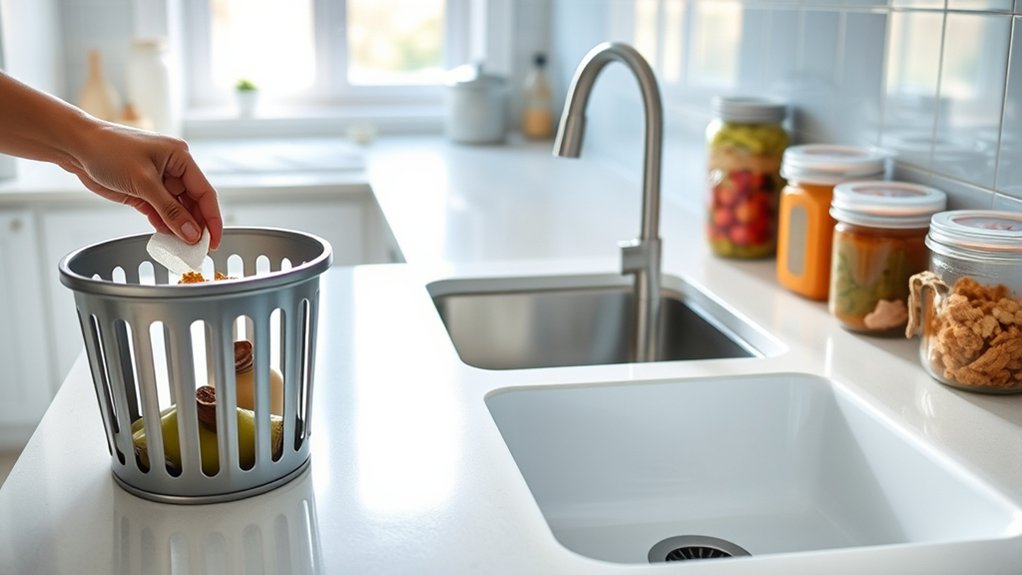
Next, cut off the ants’ easiest reasons for staying in your kitchen by removing food and water sources. Put every crumb-prone item away in sealed containers, and keep your Food storage tight, dry, and organized.
Wipe spills right away, empty pet bowls after meals, and don’t leave fruit, bread, or snacks exposed on counters. If you store recyclables indoors, rinse sticky cans and jars before setting them aside.
Check for standing water under the sink, around the dishwasher, and near the fridge, then fix leaks fast. Practice Water exclusion by drying sinks, closing bottles, and using lids on wet items.
You should also empty trash often and use bins with snug-fitting covers. The less access ants have to sugar, grease, and moisture, the faster they lose interest in your kitchen and move on to easier places nearby.
Clean Ant Trails From Kitchen Surfaces
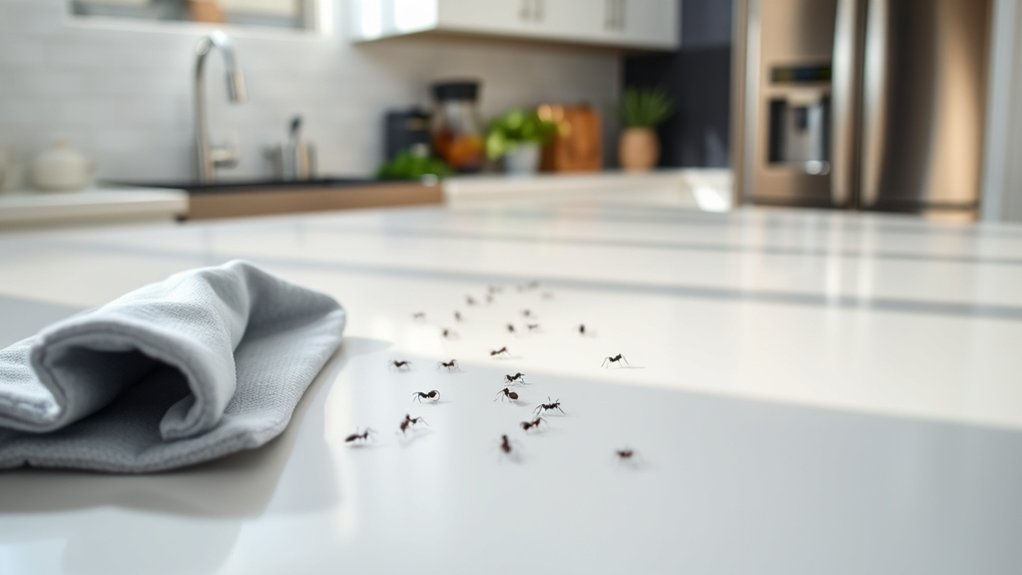
First, look for ant trails on counters, floors, and along baseboards. Then wipe those areas thoroughly with soap and water or a kitchen-safe cleaner to remove crumbs and residue. This also helps erase the scent trails, making it less likely that other ants will follow the same paths.
Locate Ant Trails
Where are the ants coming from? You can spot the source by watching ant behavior and following trail patterns across counters, baseboards, and sinks. Move quietly and look for steady lines of workers, especially near crumbs, pet food, and tiny gaps. Once you see a route, mark it mentally so you don’t lose it.
- You’ll feel relieved when the line appears.
- You may feel frustrated by how quickly they move.
- You can feel in control once you identify the path.
- You’ll know exactly where to target next.
Keep your eyes on entrances, not just the ants in front of you. A clear trail tells you where the colony is active and which kitchen areas need attention first.
Wipe Surfaces Thoroughly
Once you’ve found the trail, wipe away every trace of it with hot, soapy water or a vinegar solution. Scrub counters, backsplashes, cabinet edges, and floors where ants moved, then rinse and dry the area well.
Use a clean cloth or sponge so you don’t spread residue around. Pay extra attention to crumbs, sticky spills, and grease, since ants return to food sources fast.
If you prefer Natural remedies, vinegar works well for light cleaning and leaves surfaces fresh. Repeat this step after cooking or food prep until the kitchen stays spotless.
Consistent wiping supports Pest prevention by removing the easy access points ants use to investigate your kitchen. Keep cleaning supplies handy, and make this a daily habit.
Remove Scent Markers
After wiping up crumbs and spills, focus on the scent trails ants leave behind so the colony doesn’t keep following the same route. Spray and wipe counters, backsplashes, and cabinet edges with soap and water to erase ant scent removal marks fast. Then follow with vinegar or lemon juice for Natural repellents that help disrupt the trail and freshen the space.
Recheck baseboards, sink rims, and appliance seams, because ants often return there first.
- You stop the march before it starts.
- You protect food prep areas from repeat invasions.
- You feel relief when the kitchen smells clean again.
- You make every later treatment work better.
Use Ant Baits to Kill the Colony
Choose an ant bait that matches the ants you’re seeing. The right bait helps them carry poison back to the colony. Place it near trails and entry points, away from other food, so ants are more likely to take it. Then be patient—eliminating the colony takes time.
Choosing The Right Bait
To wipe out the colony, you need bait that the ants will actually carry back to the nest. When choosing bait, match it to the ants’ preference: sweet gels for sugar ants, protein baits for grease-loving species.
Read the label and prioritize bait effectiveness over quick knockdown sprays, because sprays may scatter workers and leave the queen safe. Use fresh, sealed products so the scent stays strong and the formula stays active.
- You save time by targeting the whole colony.
- You feel relief when the trail starts disappearing.
- You avoid wasted effort on the wrong bait.
- You give yourself a real shot at long-term control.
If one bait gets ignored, try a different active ingredient. Patience matters, but the right bait can turn a kitchen invasion into a win.
Placing Baits Strategically
Place ant baits right along the trails you’ve seen, especially near baseboards, under sinks, behind appliances, and next to entry points. You want workers to find bait fast and carry it back to the nest.
Keep the area clean, and don’t spray Natural deterrents or DIY repellents nearby, because they can keep ants from taking the bait. Use multiple stations, but space them out so ants can move naturally.
Check placements after a day and move any ignored baits closer to active traffic.
| Spot | Why it works |
|---|---|
| Baseboards | Follows travel routes |
| Under sink | Near moisture |
| Behind fridge | Hidden traffic zone |
| Entry points | Stops new scouts |
| Cabinet edges | Catches foragers |
Waiting For Colony Elimination
Once the baits are in place, give them time to work. You may still see ants for a few days, but that’s normal. Workers carry poison back to the nest, share it, and weaken the colony from inside.
Watch colony behavior closely, because steady traffic means the bait’s working. Don’t spray over the bait or clean it away too soon; you’ll interrupt the process.
Keep food sealed and counters dry so ants stay interested in the bait. Ant nesting sites can take time to collapse, but patience pays off.
- You’ll feel progress even before you see it.
- You may notice fewer trails each day.
- You can trust the bait to reach hidden ants.
- You’ll soon reclaim your kitchen.
Spray Ant Entry Points Carefully
If you use a ready-to-spray ant treatment, aim it only at the cracks, gaps, and other entry points where ants are getting inside. Don’t flood counters, appliances, or food-prep surfaces; you want the product where traffic starts, not where you cook.
Use a light, controlled spray along door frames, sink edges, baseboards, and wall penetrations, following the label exactly. If you’ve already done ant nest identification, you can focus your treatment on the routes they use most.
You can also pair this step with natural repellents, such as vinegar or peppermint oil, to discourage new scouts from returning, but keep them separate from any chemical spray unless the label allows mixing.
After application, step back and watch for activity. If ants keep appearing, note where they enter and recheck that area later. The goal is to interrupt their access without overspraying or creating unnecessary mess in your kitchen.
Seal Cracks and Tiny Openings
Look closely for hidden entry points around baseboards, pipes, windows, and cabinet edges—ants can squeeze through the smallest gaps. When you find any, seal them with caulk or another suitable filler. This blocks their path and helps keep them out of your kitchen.
Identify Hidden Entry Points
Even after you wipe up crumbs, ants can keep coming back through tiny gaps you might not notice at first. To stop them, study ant behavior and watch where they travel, especially along walls, under appliances, and near pipes. Entry point detection starts with patience and a flashlight. Look for trails, scattered workers, or tiny dark spots that mark frequent use.
- You may feel frustrated seeing them return.
- You might miss a gap behind the stove.
- You can spot movement near baseboards.
- You’ll feel relief once you trace the route.
Check window frames, sink edges, and cabinet seams. When you find the hidden opening, mark it so you can address it next.
Seal Gaps And Cracks
Once you’ve found the entry points, seal them right away so ants can’t keep using the same route. Use caulk for wall gaps, baseboards, and countertop seams, and apply weatherstripping around windows and doors.
For larger openings, patch with steel wool before sealing to block access. Focus on areas near sinks, pipes, and appliances, since moisture often attracts ants.
Understanding ant behavior helps you target the spots they prefer and stop trails before they spread. Check your kitchen regularly, because new cracks can appear as your home settles.
This simple step strengthens pest prevention by cutting off movement, food access, and nesting opportunities. Keep your sealant handy and inspect problem areas after cleaning, repairs, or heavy use.
Clean Ant Hotspots Near Sinks and Appliances
Ants often trail along hidden crumbs, grease, and moisture around sinks, dishwashers, and refrigerators, so you’ll want to clean those hotspots thoroughly. Focus on the edges, drips, and seams where an indoor pest can follow ant behavior and keep returning.
Wipe cabinet bases, faucet rims, and appliance feet with warm, soapy water, then dry every surface so you don’t leave a damp path behind.
- Scrub under the sink where spills hide.
- Clean behind the refrigerator and dishwasher.
- Empty and rinse sink strainers daily.
- Check for sticky residue around handles.
When you remove these attractants, you make the kitchen less inviting and break the routine ants use to scout for food and water. Stay consistent, because a spotless zone near fixtures helps you spot new activity fast and respond before a small trail turns into a bigger problem.
Wipe Up Sugar, Grease, and Pet Food
Sugar, grease, and pet food are some of the biggest magnets for ants, so wipe spills up as soon as you spot them. Use a damp cloth or paper towel to remove sticky drips from counters, tables, and floors before ants find them.
Wipe up sugar, grease, and pet food spills right away before ants can follow the trail.
For sugar removal, sweep up granules, then follow with a cleaner that breaks down residue so nothing sweet is left behind. Don’t forget grease from cooking; it can trap crumbs and keep feeding trails active.
After meals, check around pet bowls and complete pet food cleanup by picking up loose kibble, wiping the area, and emptying any spilled water that may mix with food residue. Rinse cloths often so you don’t spread the mess.
If you keep these surfaces clean, ants have fewer reasons to return, and you’ll make your kitchen much less appealing to them.
Treat Cabinets and Other Problem Areas
Next, check cabinets and other hidden problem spots where ants like to travel and nest. Open every door, pull out bins, and inspect corners, hinges, and shelf edges for crumbs, spills, or tiny trails. Wipe surfaces with soapy water, then dry them well so ants lose easy access to food.
For stubborn spots, use a kitchen-safe insect spray or bait placed along back seams, not where you store dishes. This focused ant control works best when you treat cracks, gaps, and warm spaces behind appliances.
- Feel the relief of seeing fewer ants
- Stop the crawl that makes you cringe
- Protect your clean cabinets from fresh invaders
- Regain peace in the kitchen fast
Keep your effort targeted and calm. Smart pest prevention here can turn a frustrating cleanup into a real win, because you’re cutting off the places ants use most.
Keep Kitchen Ants From Coming Back
To keep ants from coming back, focus on the habits that draw them in and the small gaps they use to get inside. You should wipe counters after every meal, sweep crumbs from floors, and rinse sticky jars before you store them.
Wipe counters after every meal, sweep crumbs from floors, and rinse sticky jars before storing them.
Seal food in tight containers and take out trash often so scouts can’t find easy meals. Watch ant behavior near sinks, baseboards, and windows; if you spot a trail, follow it to the entry point and close it with caulk or weatherstripping.
Fix leaks and dry sponges, because ants need water as much as food. Keep pet bowls clean and don’t leave fruit out overnight.
For lasting pest prevention, inspect your kitchen weekly and refresh baits or barriers when needed. Consistency matters more than one-time cleanup, so make these steps part of your routine and you’ll make your kitchen far less inviting.
Frequently Asked Questions
What Kind of Ants Are Most Common in Kitchens?
The most common ants in kitchens are sugar ants, odorous house ants, and pavement ants. You’ll also see Argentine ants and pharaoh ants, depending on your region.
These ant species love crumbs, sweets, and moisture, and their foraging behavior brings them straight to counters, sinks, and pantry shelves. If you spot a trail, you’re probably dealing with a nearby nest or a scout searching for food.
Are Kitchen Ants Dangerous to Humans or Pets?
Kitchen ants usually aren’t dangerous to you or your pets, but you shouldn’t ignore them. You may get bites or contamination if they crawl on food, and some species can sting or trigger allergies.
Use ant prevention by sealing crumbs, storing food tightly, and fixing leaks. If the problem grows, try safe pest control methods or call a professional to protect your kitchen and keep everyone comfortable.
How Long Does Ant Bait Usually Take to Work?
Ant bait usually takes a few days to two weeks to work, and you might notice fewer ants almost by coincidence just as you place it. You should let worker ants carry the bait back to the colony. Natural remedies can help with light activity, while DIY traps may slow them down. Don’t spray nearby, or you’ll disrupt the bait. Stay patient, and you’ll usually see steady results soon.
Can Ant Infestations Spread to Other Rooms?
Yes, ant infestations can spread to other rooms if you don’t stop them quickly. You’ll often notice signs in kitchens, bathrooms, or near pet food.
Check for entry points like cracks, windows, and pipes, then seal them. Ants follow scent trails, so activity in one room can lead to several.
Clean up crumbs, store food tightly, and use bait to reduce the colony before it grows.
When Should I Call a Professional Exterminator?
Call a professional exterminator when you keep seeing ants after using DIY prevention tips and pest control options, or when trails spread fast, nests hide in walls, or you spot carpenter ants. If you’re chasing your tail with sprays and bait, it’s time to bring in help. You’ll save time, protect food areas, and stop a small problem from becoming a bigger infestation that’s hard to control.
Conclusion
Now that you know how to kill ants in the kitchen step by step, stay alert and act fast if they return. Cut off food, water, and entry points, and keep surfaces spotless so your kitchen doesn’t become an open door for them.
Ant control works best when you target the colony, not just the scouts. With steady cleanup and prevention, you can turn your kitchen from an ant highway into a quiet, pest-free space.